After our last attempt at a 500 km (310 mi), we decided to upgrade some of our gear.
Gear upgrade
Power meter pedal
During last week’s ride, I noticed my calorie estimate was wildly off. I normally burn about 2000 kcal per 100 km (62 mi), so for our 260 km (162 mi) ride, this should have landed somewhere around 5200 kcal.
Garmin, however, calmly informed me I had burned 2800 kcal. That’s about half of what I expected.
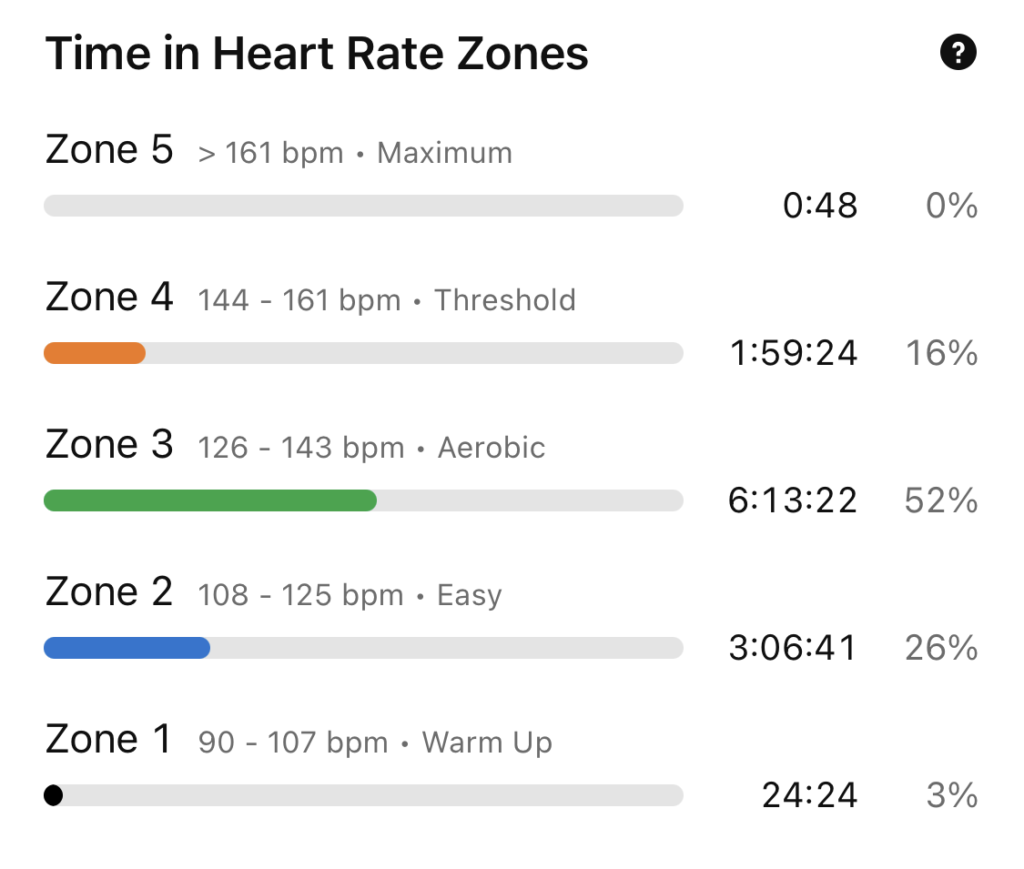
A quick glance at my power zones confirmed I hadn’t spent 14 hours crocheting in zone 1. I was in sustained zone 3. Conscious, producing work, and experiencing progressive regret related to route planning.
Let’s do some math.
- 1 kcal = 4184 J, so 2800 kcal = 11,715.2 kJ
- Time: 14 hours = 50,400 seconds
- A watt is a joule per second (J/s), so average power: 11,715,200 J / 50,400 s ≈ 232 W.
Now, muscles are beautifully inefficient. Only about 20 to 25% of that becomes mechanical power. The rest is turned into heat, which explains why endurance athletes resemble poorly insulated radiators. So my actual pedal power would be somewhere around 45 to 60 W.
45 to 60W… Absolutely not.
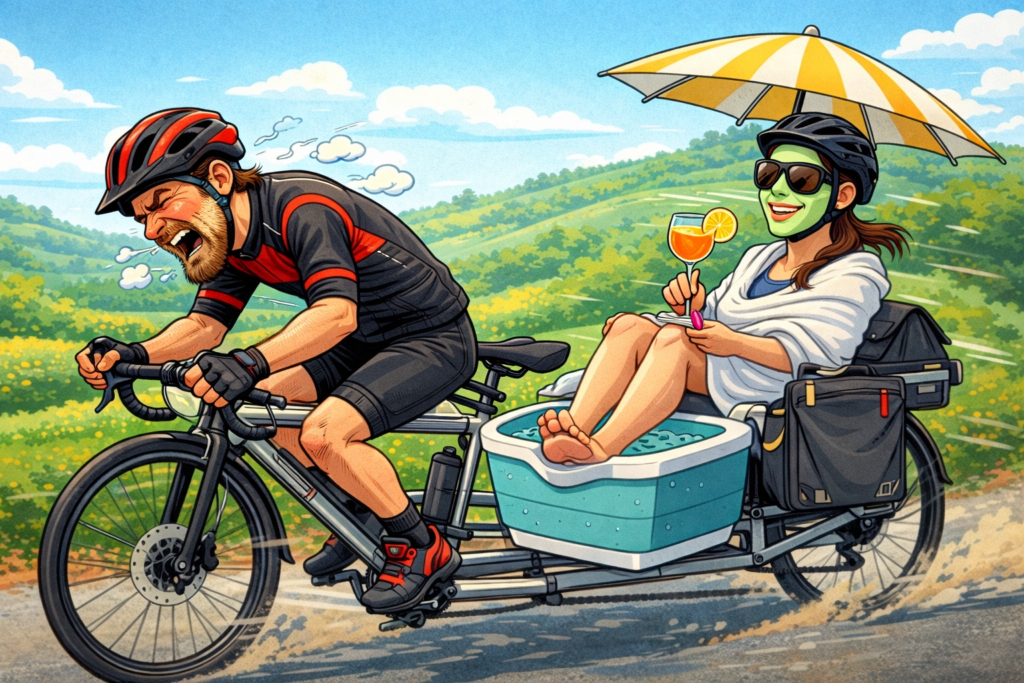
There is no physiological reality in which I rode 260 km (162 mi) at 45 W unless assisted by divine towing. I’ve completed around 75 indoor trainer sessions. I know what 60 W feels like. It resembles checking emails while sipping a cocktail on a sunny beach. I am also not delusional. I tolerate suffering, but I do not sustain threshold effort for 14 hours unless unless I have a formal appointment with the afterlife. I know I was riding at approximately 80% of my FTP, and my heart rate data would like to testify in support of that claim.
So something is off. Wildly off. My working theory is that Garmin’s algorithm does not fully understand tandem riding and has quietly decided I am decorative.
After several weeks of indecision, this was the tipping point, and I ordered a one-sided power meter pedal from Favero. The goal: numbers I can actually trust for fueling, rather than Garmin’s metabolic guesswork and non-evidence-based snacking.
For the uninitiated: power meter pedals measure how hard you push on your pedals, in watts. You can get:
- Dual-sided (both legs measured independently).
- One-sided (left pedal only, Watts are doubled)
Dual-sided is more accurate, but comes with three notable complications:
- It costs nearly twice as much. I already felt slightly unhinged paying 360 CHF (450 USD, 400 EUR) for a pedal that will be ridden through everything nature can offer at hours that should be illegal, for lengths of time that are incompatible with good judgment. Paying 500 CHF crosses a psychological threshold I am not equipped to process.
- Two pedals means two batteries. I already struggle to keep the Di2 alive. At this point, the bike is less a mechanical object and more a collection of devices that require ongoing life support, where nearly every critical component on the bike requires charging, which is less than ideal when you’re out for ultra distances. Last week alone, we had to charge the Di2 twice mid-ride because I forgot to do it beforehand, which I think qualifies as sufficient evidence.
- Most importantly: I possess an encyclopedic knowledge of rare, mostly lethal conditions that present with left-right leg asymmetry. I do not need data that invites diagnostic creativity. The past few weeks have been stressful, and I am already investing enough energy in keeping my training aligned with my goals. I will not be adding self-inflicted medical paranoia to that list.
So one-sided it is. Enough data to function. Not enough to diagnose myself with something that requires a case report.
The pedals arrived within two days. After an embarrassing amount of time spent figuring out how to charge them, we installed them on the tandem.
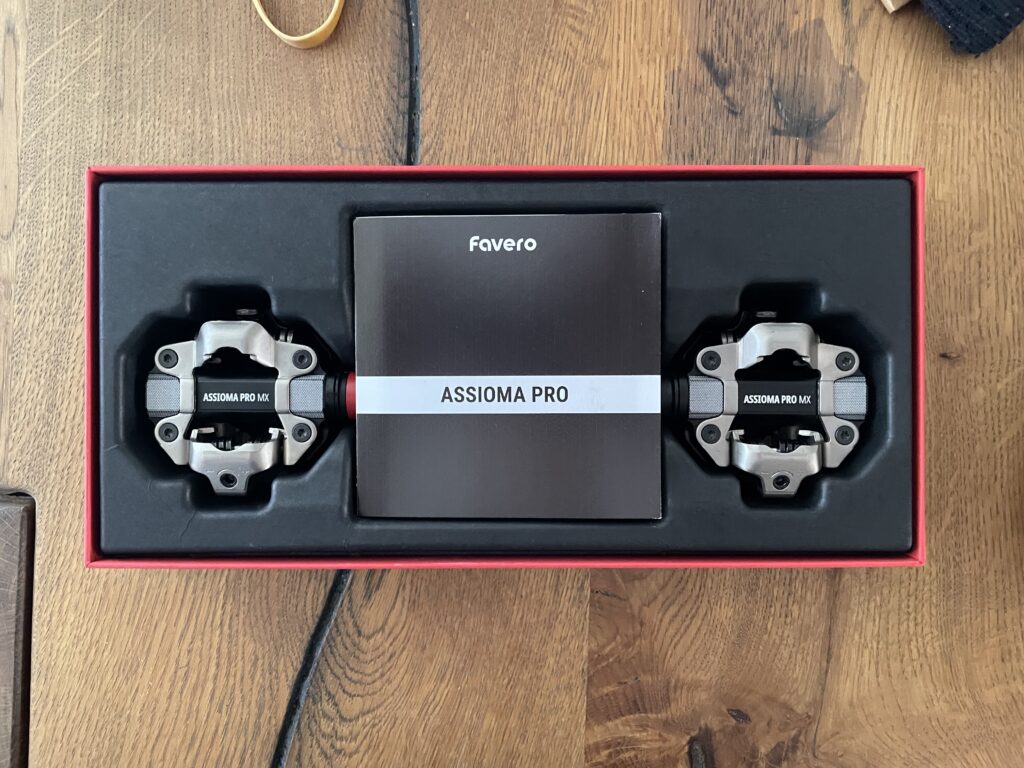
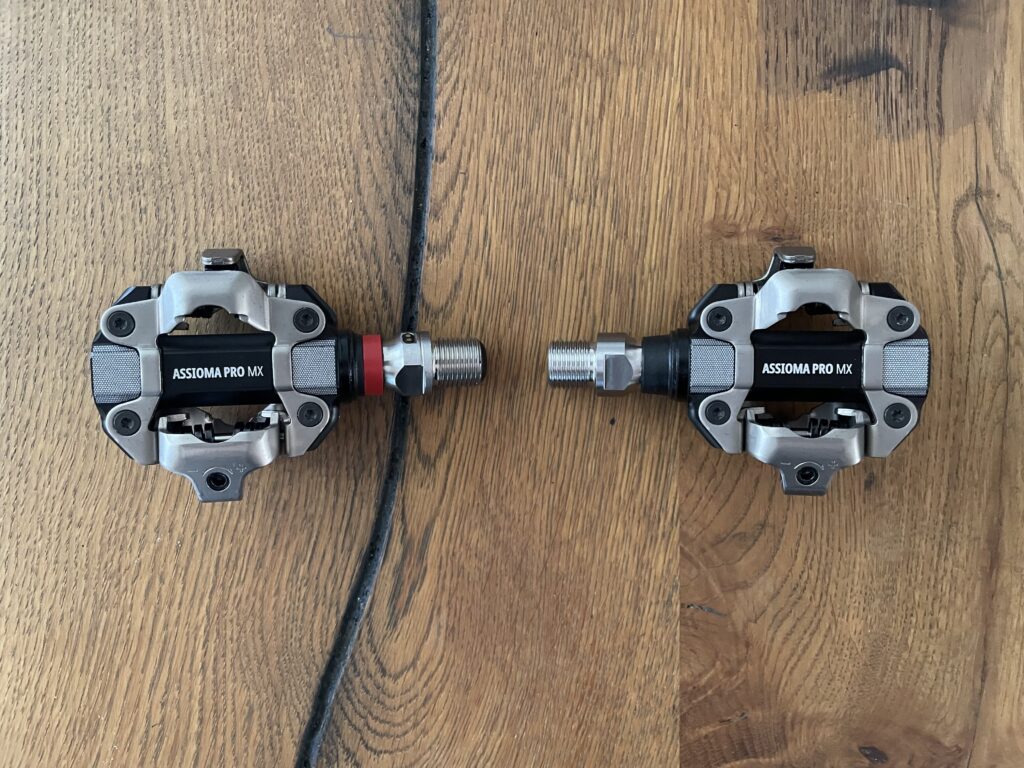
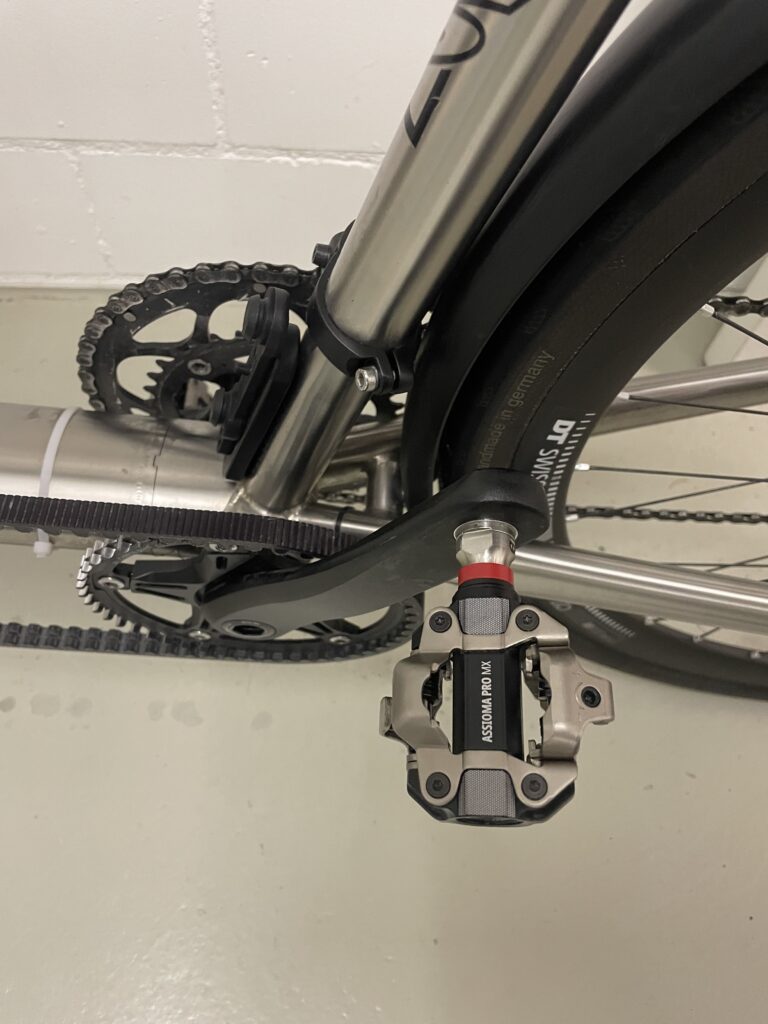
They immediately required a firmware update.
I now own a pedal that needs software updates. Let that sink in. This feels like a boundary that should have existed somewhere. There was a time when this sentence wouldn’t have made sense. My younger self would have laughed.
Marcos setup
Saddle
Last week’s surprise gravel sections left Marco with a sore backside. On a tandem, position changes are limited, so issues tend to persist rather than resolve themselves.
We had his sit bones measured and ended up buying the same saddle I use, just in the male version. It has worked very well for me so far, which may or may not mean anything, but seemed like a reasonable place to start.
New bidon
Marco wants to increase his intake of Isostar, so we added a dedicated bottle for it.
The plan is to keep it in a feed bag for easy carbohydrate access. It’s a simple way to make fueling a bit more consistent.
Route planning update
These two weeks were dominated by route planning. I now have about three quarters of the Race Around the Netherlands mapped out, broken into roughly 200 km (124 mi) sections with identified stops along the way. Translation: I have pre-selected locations where we will desperately try to buy food.
Next week, we’re doing a small test ride. Primary goal: test the pedals and Marco’s new saddle. A new saddle is not something you “hope for the best” with. That’s how you end up negotiating with your own anatomy, and eventually looking for a pharmacy to apply Compeed plasters in places that were never meant to see them.
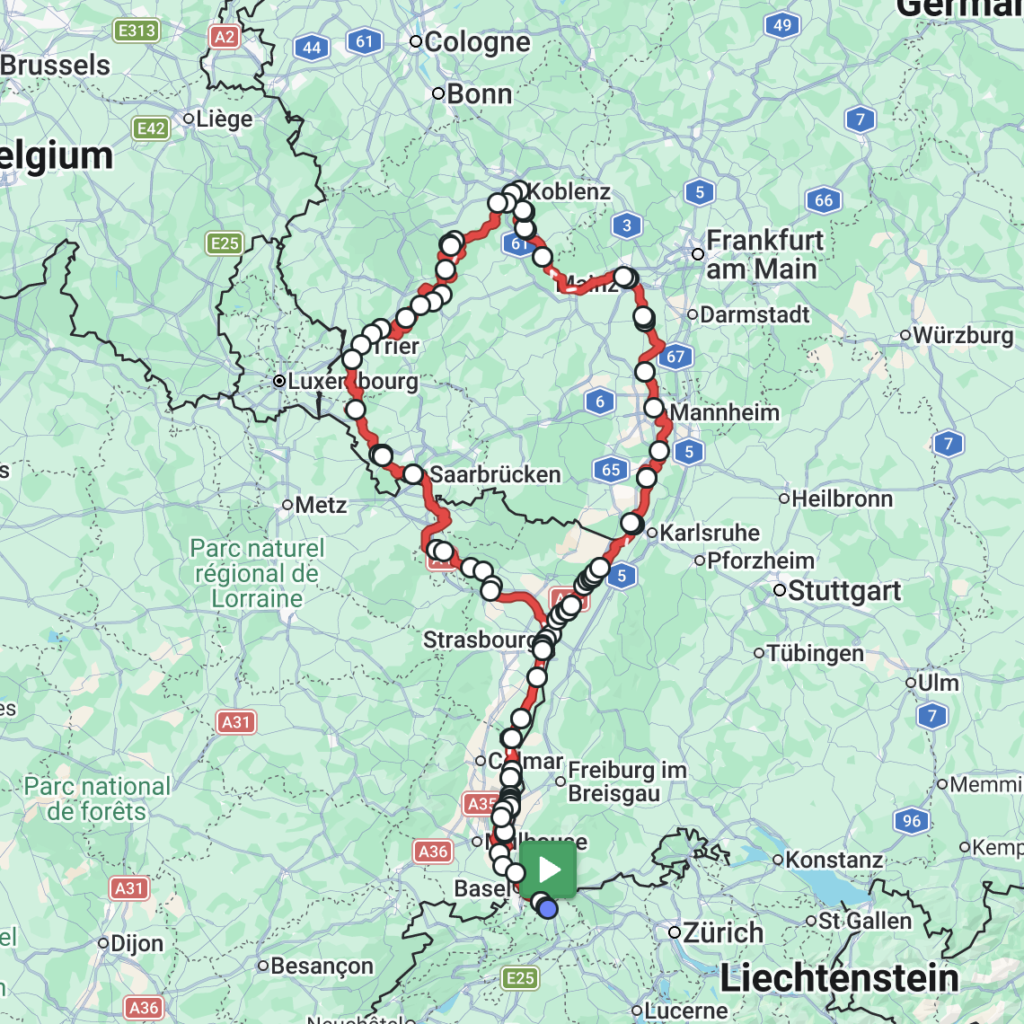
I also started working on our 1000 km (621 mi) training route for mid-April (week 15). This will be the final full-system test. All gear. All bags. All hope.
Planned route: Basel → Frankfurt → Koblenz → Mosel → Konz → Saar → Saarbrücken → over the mountains → Strasbourg → back along the Rhine to Basel.
The rough draft took about 5 to 6 hours. What remains:
- Hotels with 24/7 reception or self check-in
- Restaurants located precisely where hunger becomes a problem
One more pass over the route, and it’s done.
Training update
After the 500 km (310 mi) attempt in week 11, we took week 12 off to recover. Week 13 introduced -4°C (25°F) and snow. Outdoor riding was therefore re-classified from “challenging” to “not going to happen.”
So it was mostly indoor sessions on the Wahoo Kickr. Interestingly, Garmin is extremely generous with indoor rides, crediting every effort with enthusiasm. Meanwhile, the 260 km (162 mi) ride barely registered, like a clinically significant event that somehow never made it into the discharge summary.
Let’s see if the new pedals can restore some objective truth to this relationship.
Conclusion
My dearest reader, this was a small one this time! I’ll catch you at the next one and remember to keep the rubber side down!