This week we decided to attempt another 500 km (311 mi) ride to prepare as well as possible for the Race Around the Netherlands, and to test and tweak some of our new gear.
The day before
Normally, a long ride begins with careful route planning. This time, life had other ideas.
Planning a proper long distance route is less “draw a few lines on a map” and more quiet obsession. I start in Ride with GPS using the Open Cycling Map layer to sketch a first draft, then comb through large sections in the Google Street View layer to confirm the roads not only exist, but will not suddenly dissolve into gravel, mud, or regret.
Then comes the terrain layer, where I negotiate with hills and try to convince them not to exist. After that, the Google Maps layer joins for food stops, water sources, and anything else that might prevent us from bonking in the middle of nowhere after confidently ignoring 100 perfectly good opportunities to eat.
By the end, I have usually reviewed the route three or four times. As a rule of thumb, I spend about 1 to 1.5 hours planning per 100 km (62 mi). A 500 km (311 mi) ride typically means five to eight hours of preparation. This week, I had exactly none of those hours.
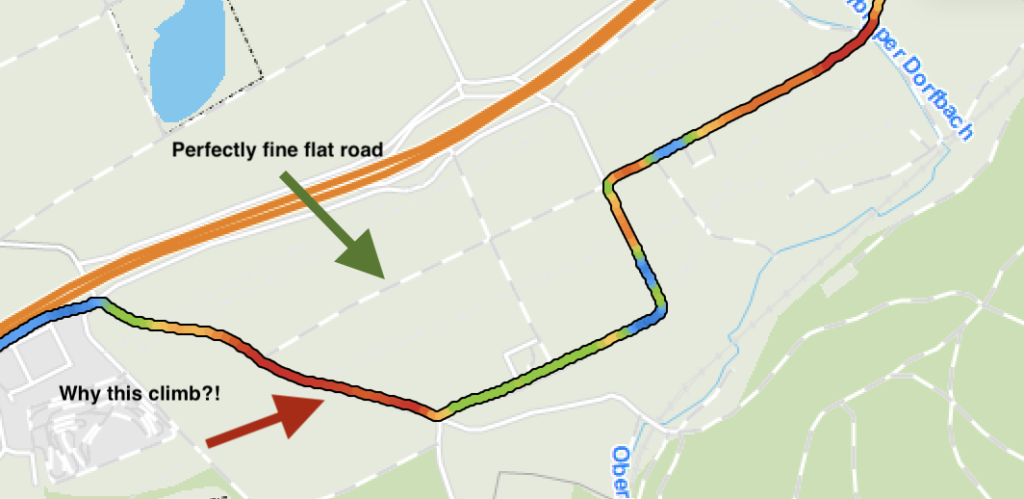
So at 21:00 the evening before the ride, I opened the map and assembled what can best be described as a “functional approximation” of a route. The first draft came with an alarming amount of climbing, so I shaved off what I could. Two hours later, I had something that looked survivable. Not perfect, but good enough to point the tandem in a vaguely correct direction and hope the details would negotiate themselves along the way.
The plan was ridiculously simple. Climb over the Brunnersberg via Balsthal, turn west, ride past the Bielersee, loop around Lac de Neuchâtel, then return via Solothurn. Our hotel would be at 260 km (162 mi) in Deitingen at the “good bed” hotel in Deitingen. The next day we planned to ride past Aarau, loop around the Zugersee, continue to Waldshut, and return home via the Rhine towards Basel, bringing the total to about 510 km (317 mi).
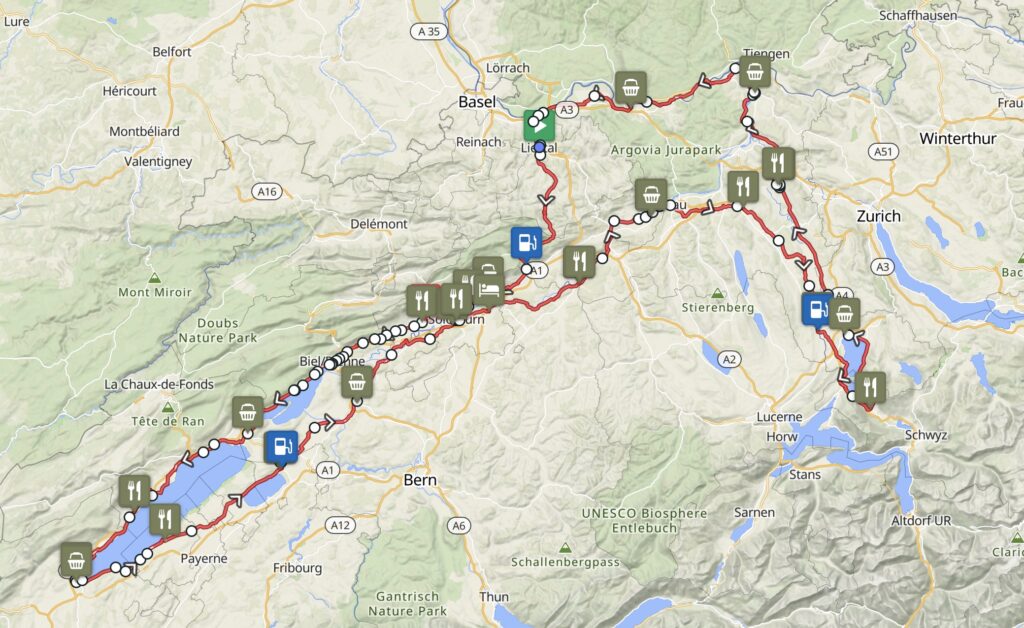
Day 1
Type 1 fun (fun while you are doing it and still fun when you look back on it)
As usual, the alarm went off at 06:00. We got up, dressed, had breakfast, packed the bike, and rolled out at 07:00 sharp.
The climb over the Brunnersberg went better than expected. It had been a while since I last rode there, but you never truly forget a place where you have suffered on a bicycle. We often recognise random locations across Switzerland, only to later realise we passed through them during the CH municipality challenge. I could not point them out on a map, but once I see them again, I know exactly that I have been there, in which direction, and whether I was hungry or in pain. The brain is excellent at indexing suffering.
Tandems have a reputation for being slow uphill and fast downhill. For us, that is not entirely true. On two solo bikes, Marco has to wait for me frequently. Our speed is determined by me, because I am slower. Marco has about 1 W/kg more, plus higher hemoglobin, more blood volume, greater cardiac output, more muscle mass, a testosterone advantage, and a lifetime of athletic background. In other words, the physiology textbook is on his side.
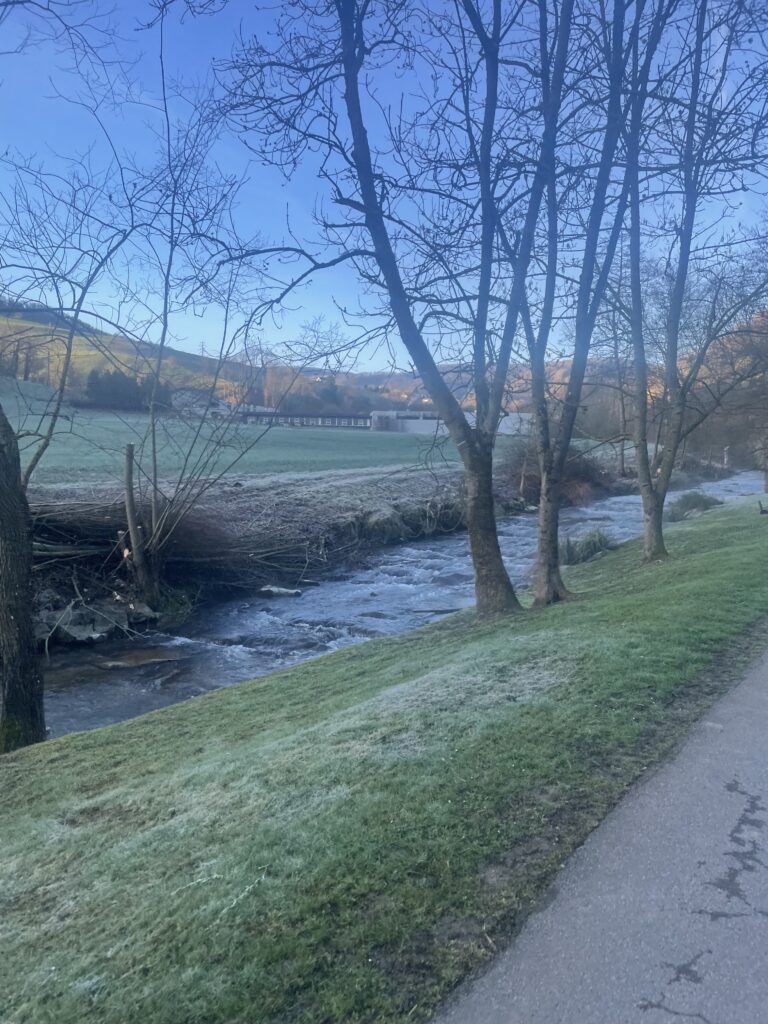
On the tandem, however, we are one machine. We both contribute power to the same drivetrain, which means I effectively borrow some of his output. As a result, we climb faster together than we do separately. So yes, we are faster uphill on a tandem compared to us as a team on solo bikes. The idea that tandems are slow likely comes from comparing them to strong solo riders, which is not exactly a fair fight I feel.
From our home it is about 21 km (13 mi) to the top, with the first 16 km (10 mi) being a gradual incline before the real climbing starts. Personally, I prefer climbing. After a few minutes you settle into a rhythm, even on a tandem where cadence is shared, and it becomes a steady, almost meditative effort. You stay warm due to the higher power output. Downhill, on the other hand, you get blasted by cold air and sometimes feel like you are outrunning your own life expectancy, your life flashing by in a rapid highlight reel set to the tempo of your current velocity. On the tandem, I sit in Marco’s draft and cannot see much ahead, which makes it slightly less cold and significantly less terrifying.
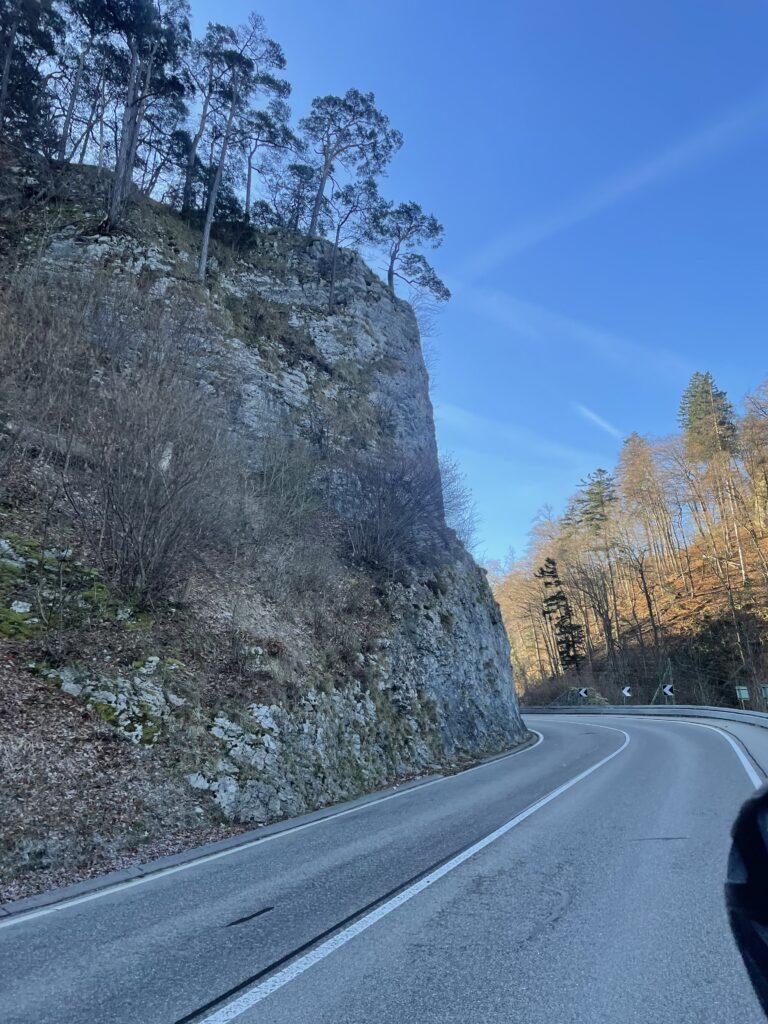
At the top in Langenbruck we stopped to put on an extra layer for the descent, then rolled down. About 8 km (5 mi) later we reached Balsthal, greeted by sunshine and genuinely pleasant temperatures.
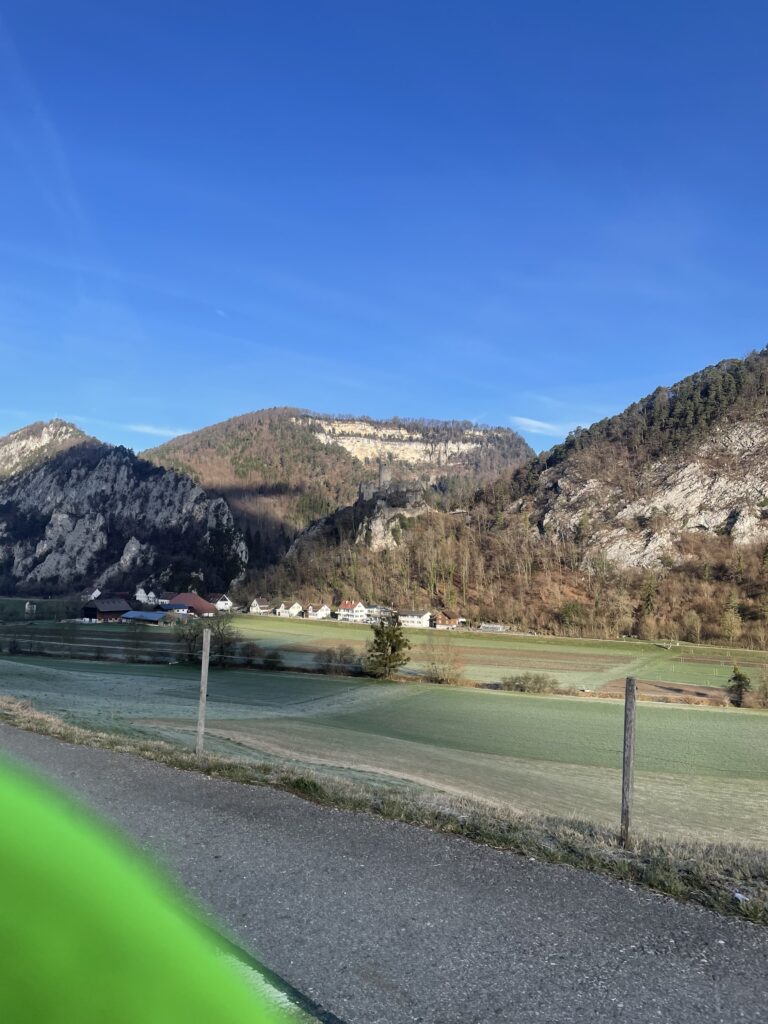
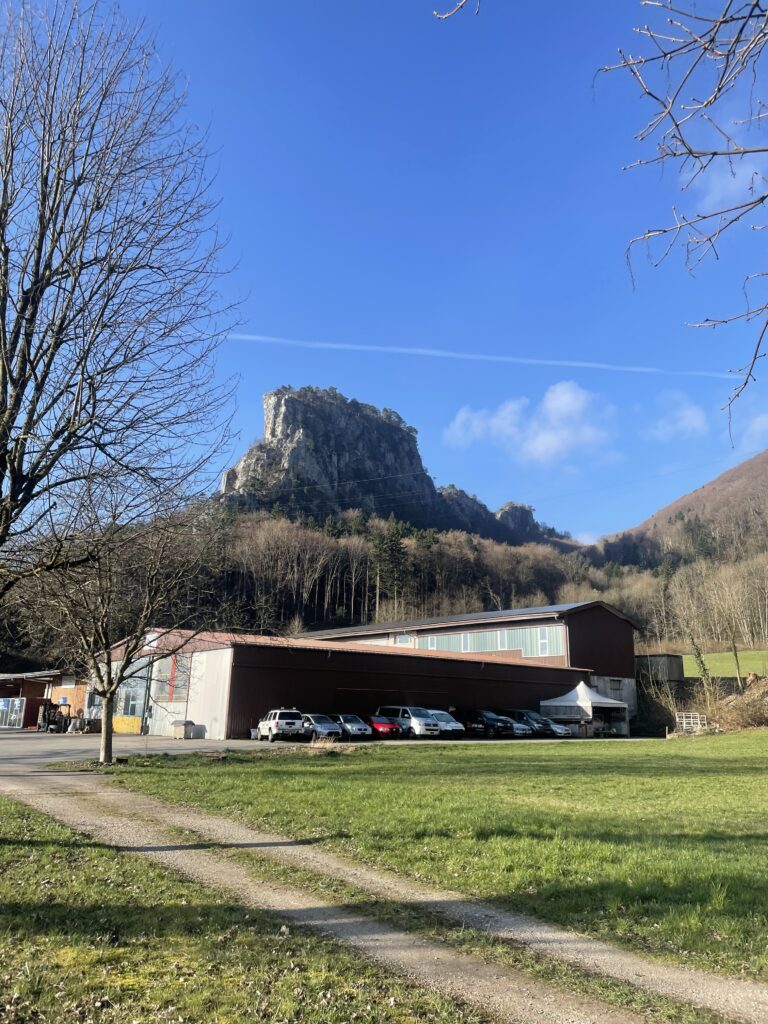
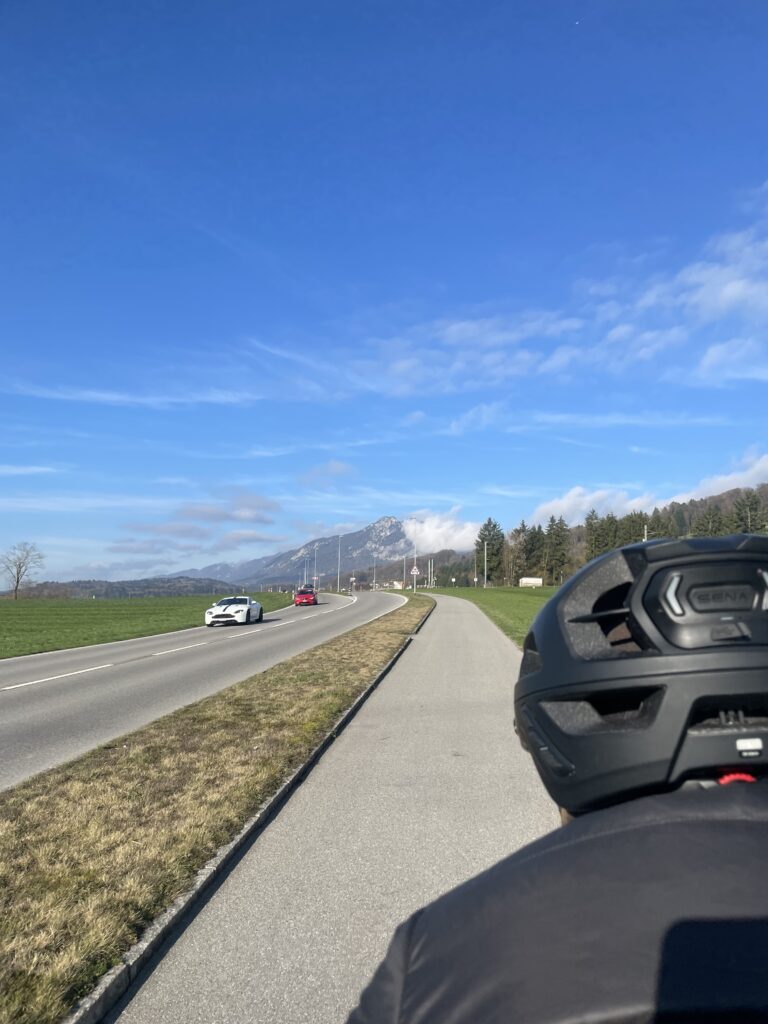
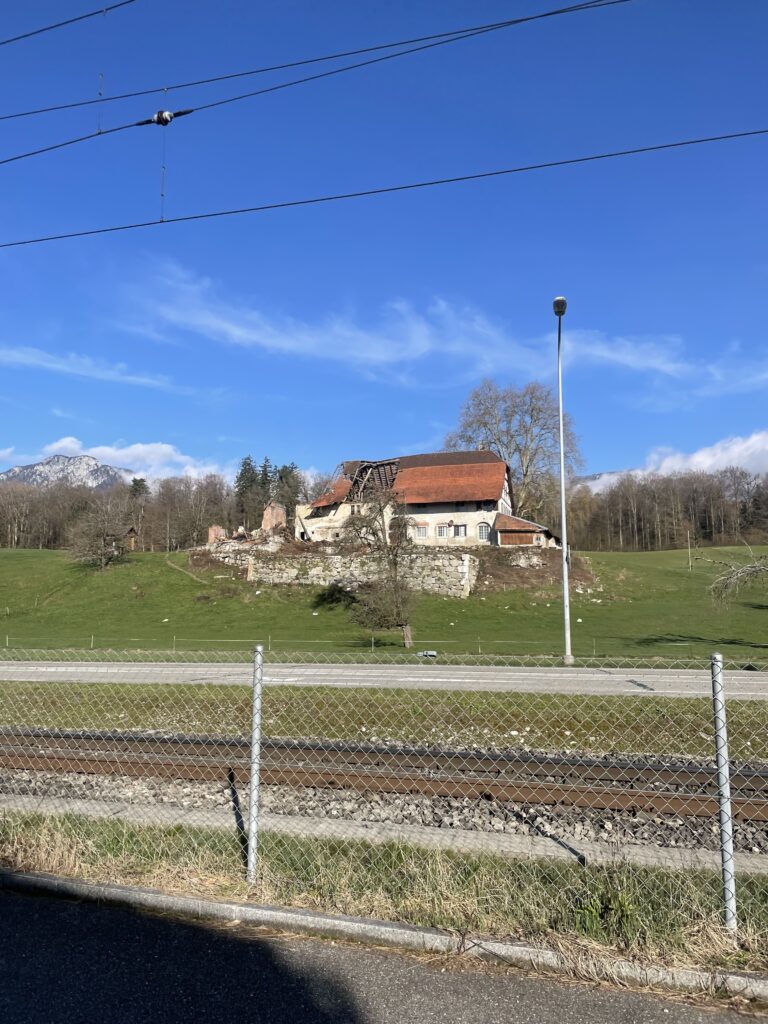
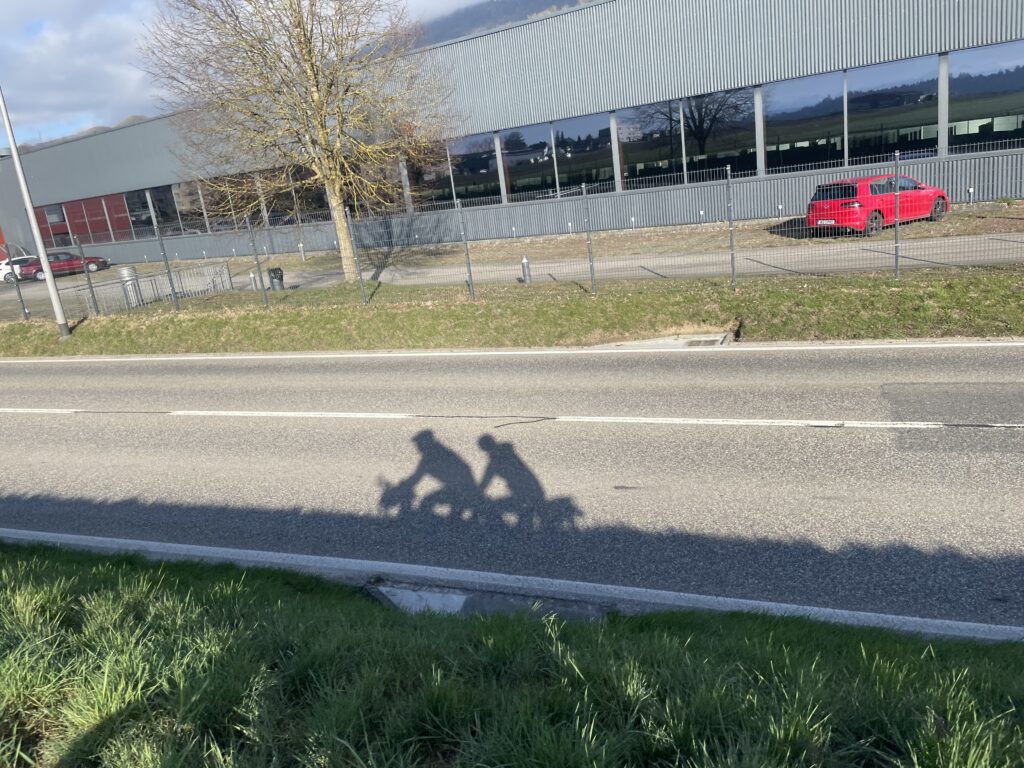
Heading west, we were surprised by a strong headwind. The forecast had promised a gentle 1 to 2 Beaufort. What we got felt more like a personal vendetta.
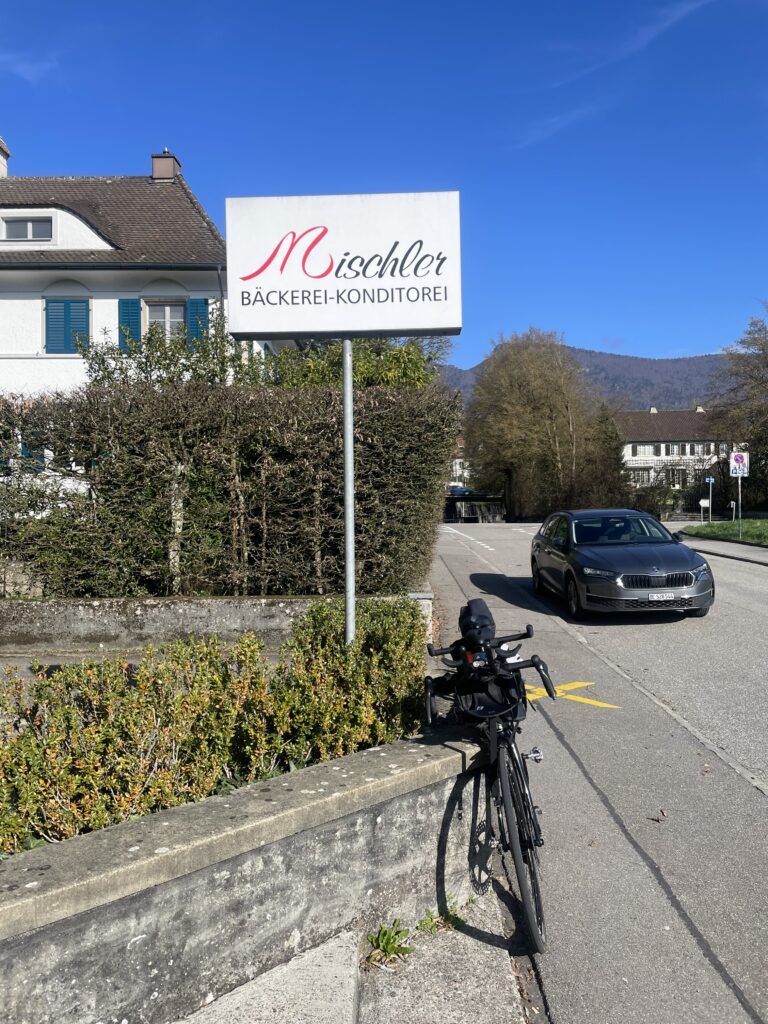
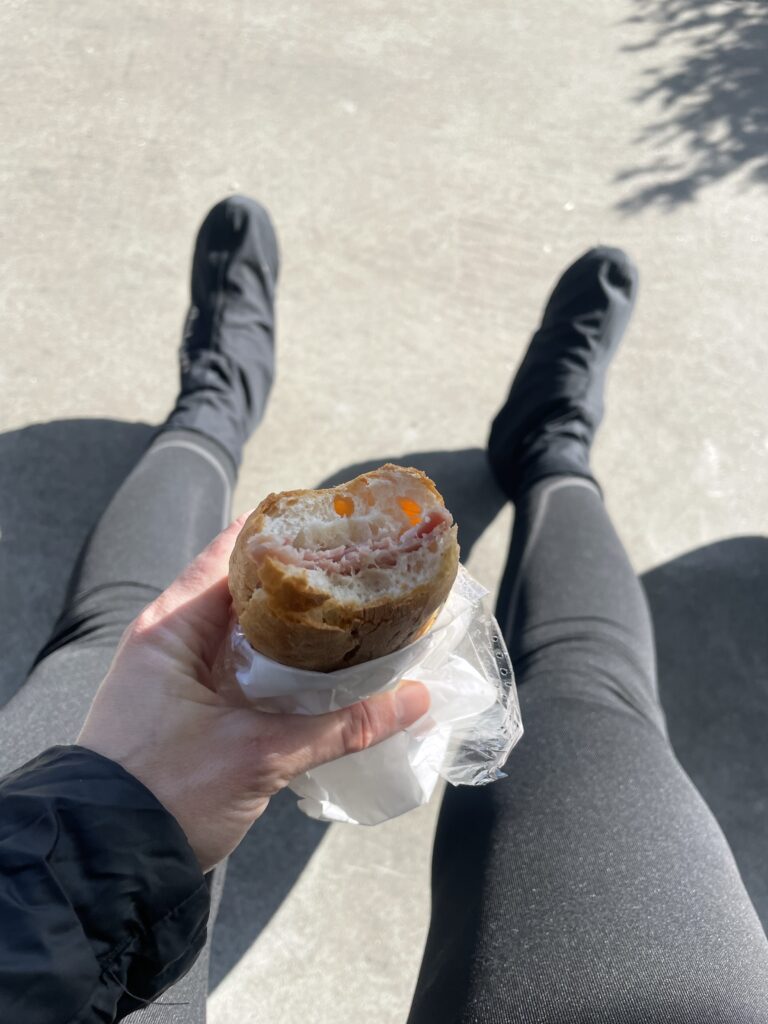
We stopped at a bakery in Selzach around 64 km (40 mi) into the ride. Buying food is always entertaining. We walk in visibly hungry and order enough for a small group. The looks we get are priceless. The sandwiches were excellent, as fresh bakery bread almost always is.
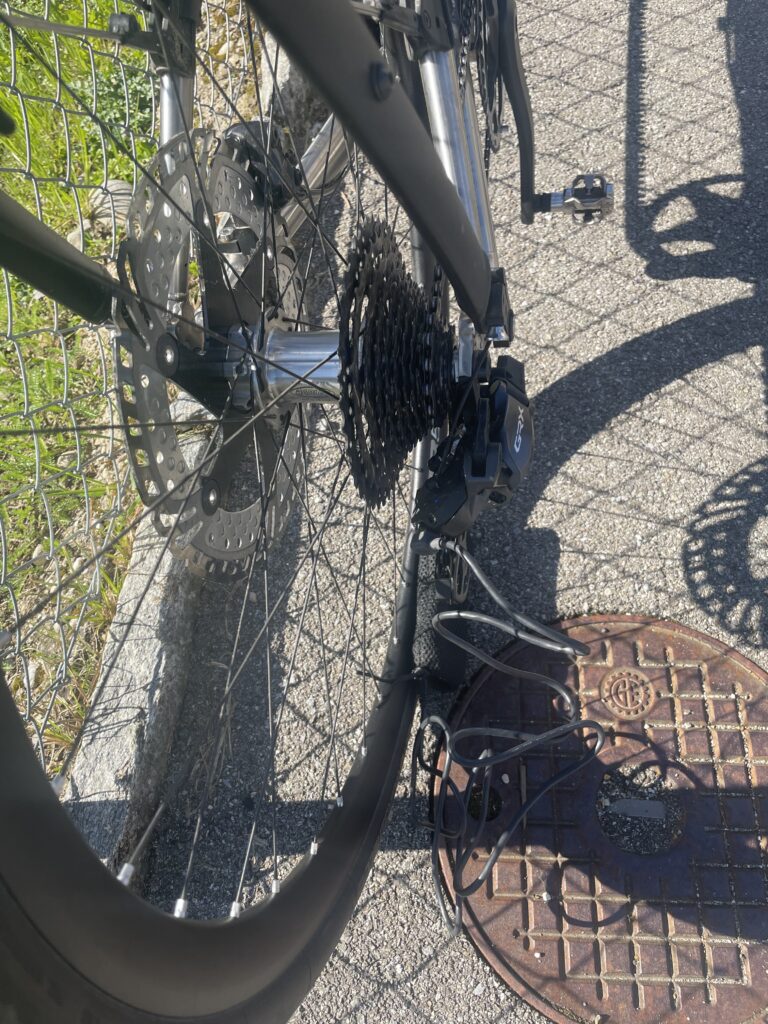
Shortly after, The Limousine stopped shifting. We were stuck in the small chainring. A very efficient way to discover you do not remember when you last charged your Di2. The tandem bonked before we did! Textbook rookie mistake. We connected the Di2 to a power bank and waited a few minutes. Back on the bike, I decided this was now a scientific experiment: how far can you get on a five minute charge?
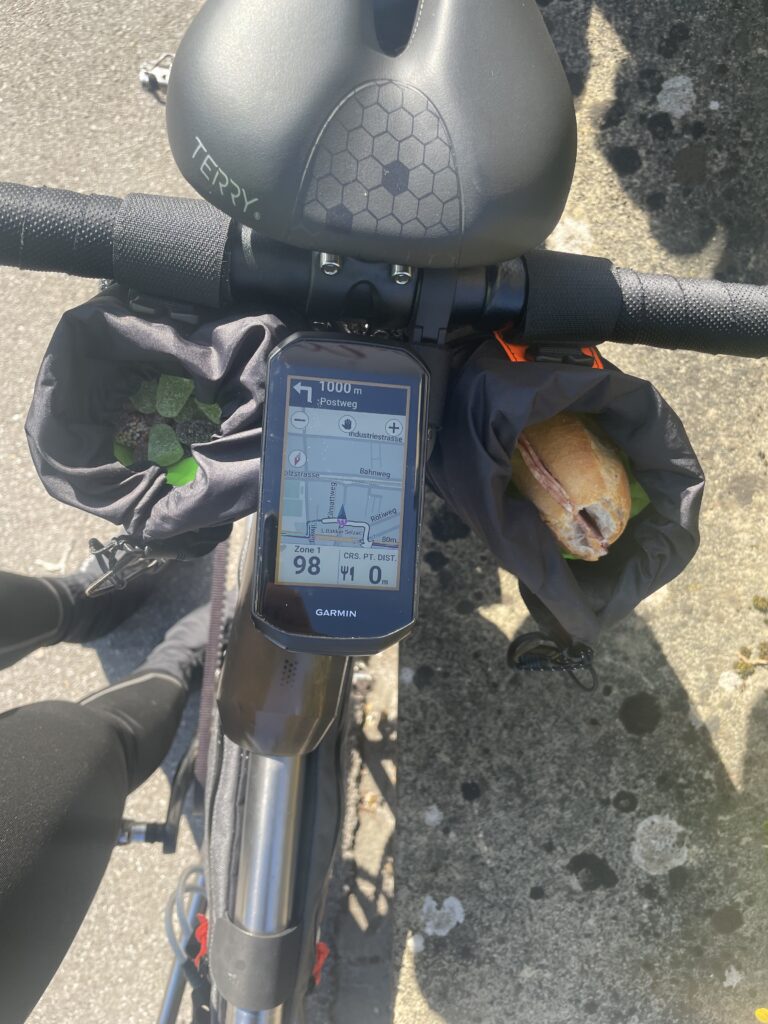
Along the lake towards Neuchâtel we encountered extensive construction. Rerouting, waiting at temporary lights, and improvising navigation with the Garmin cost us time and patience. Unfortunately, because the lake is adjacent to a mountain, it’s already a tight squeeze for all the roads and there weren’t a lot of alternatives available.
Because of the delays, we skipped a planned stop and pushed on to Saint-Aubin-Sauges. In retrospect, not our finest decision. The last 20 to 30 km (12 to 19 mi) were rough. Uneven roads had both our shoulders and backs protesting loudly.
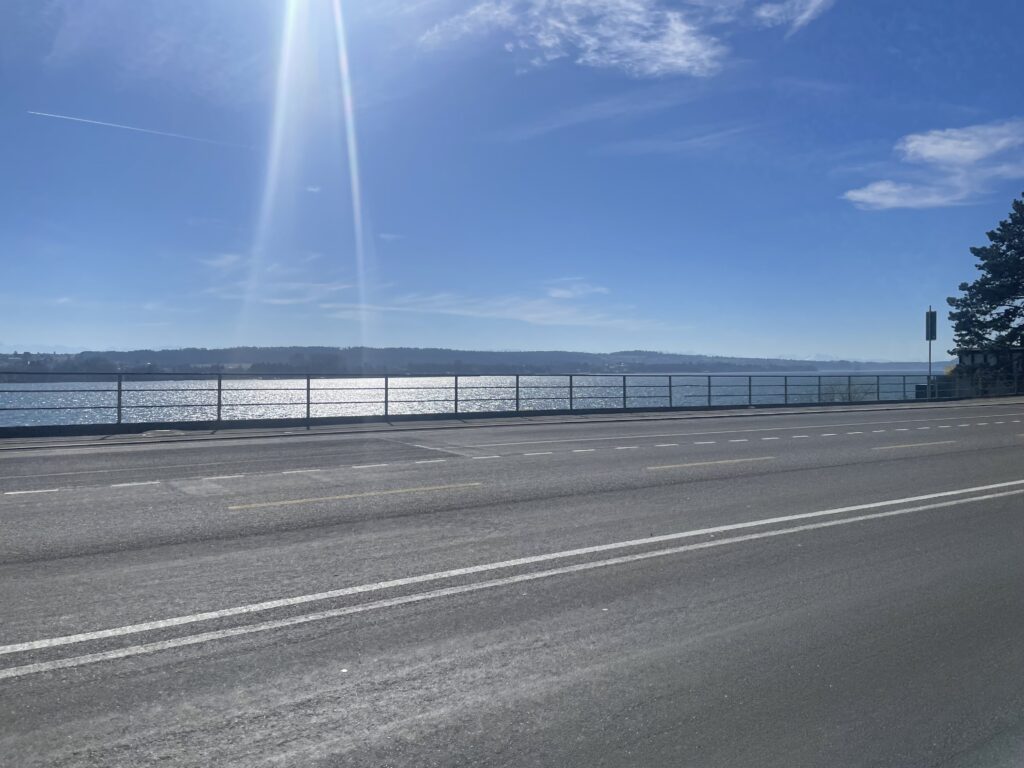
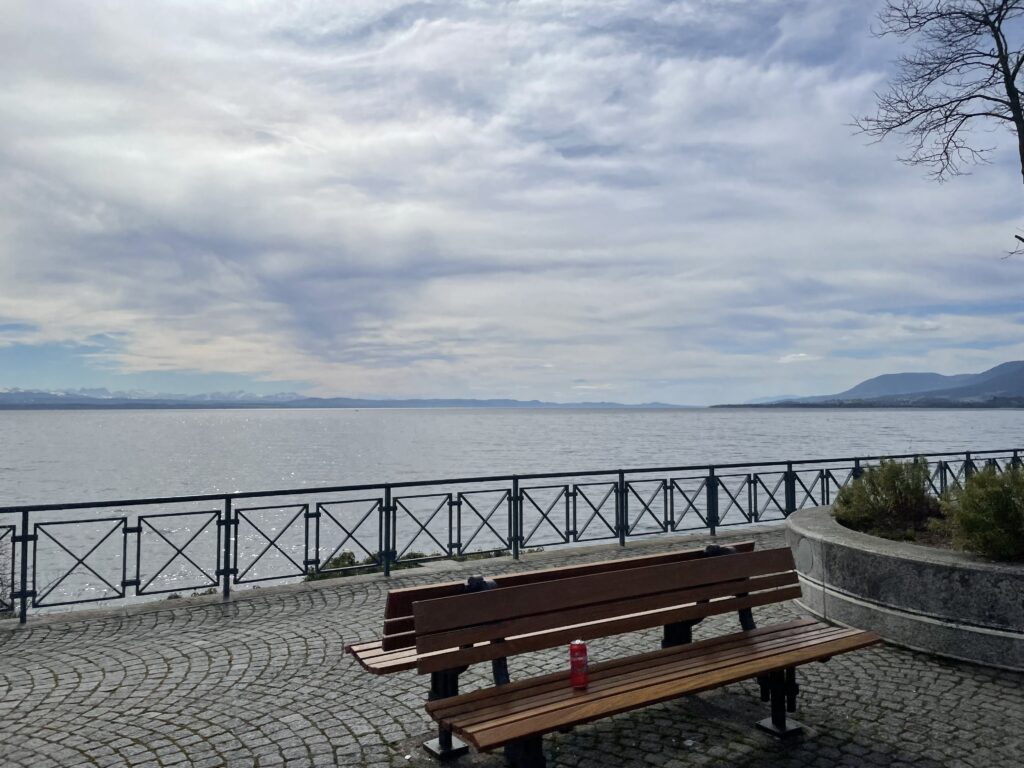
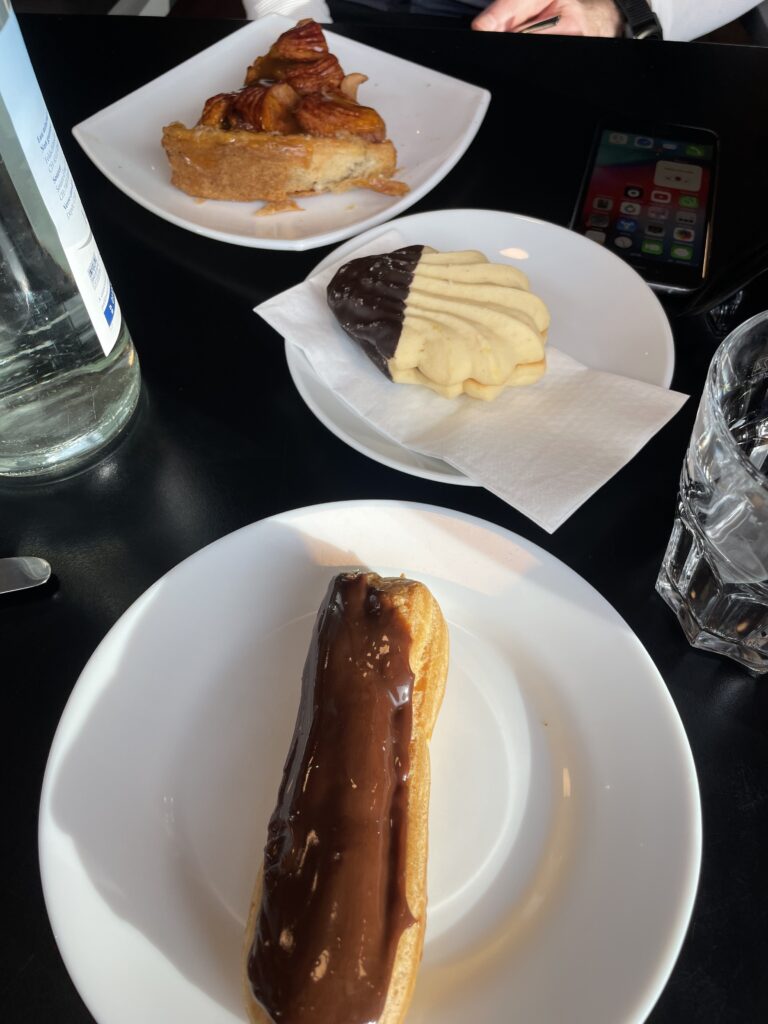
We found a COOP, bought water, and sat on a small wall near a boulangerie. No indoor seating. The wall was cold enough to qualify as experimental cryotherapy with questionable consent. We ate an éclair and a cheese pie that was not heated, which paired beautifully with the rapidly progressing numbness of my entire posterior. By the end, I had achieved a level of numbness usually reserved for minor surgical procedures. At that point, I was no longer sure if I was resting or being medically preserved for later use.
After about 120 km (75 mi) of headwind and constant small climbs, we finally reached Yverdon and turned west. Tailwind cycling remains one of life’s few unambiguous upgrades.
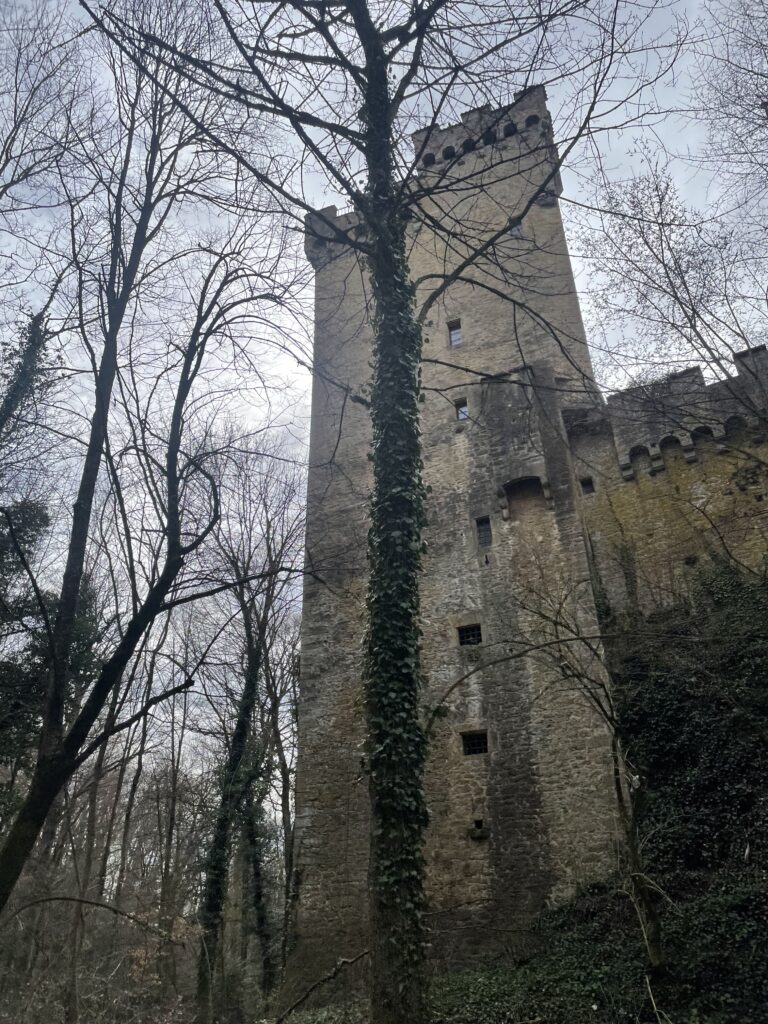
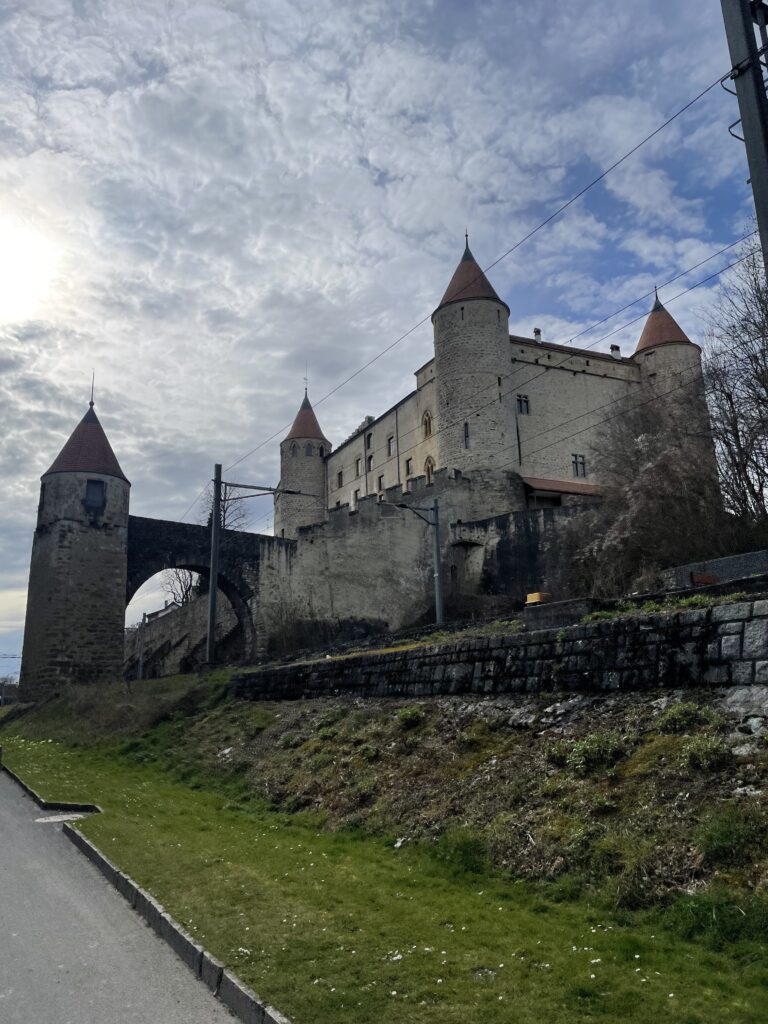
Type 2 fun begins (not fun while you are doing it, but somehow becomes fun once it is over and your brain edits out the suffering)
Due to my rushed planning, we encountered several sections of loose gravel mixed with mud, puddles, and even a small river crossing. The rear of the tandem slid unpredictably, but Marco kept us upright. My wrists and shoulders took a beating, and I was thoroughly cooked by the end of it.
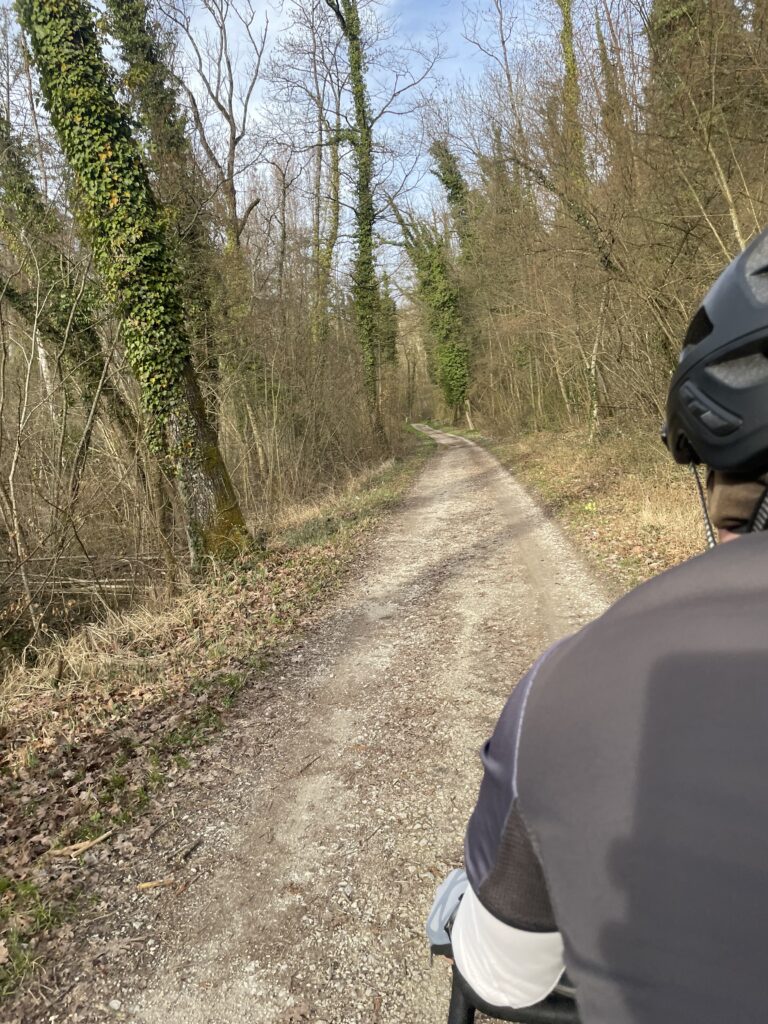
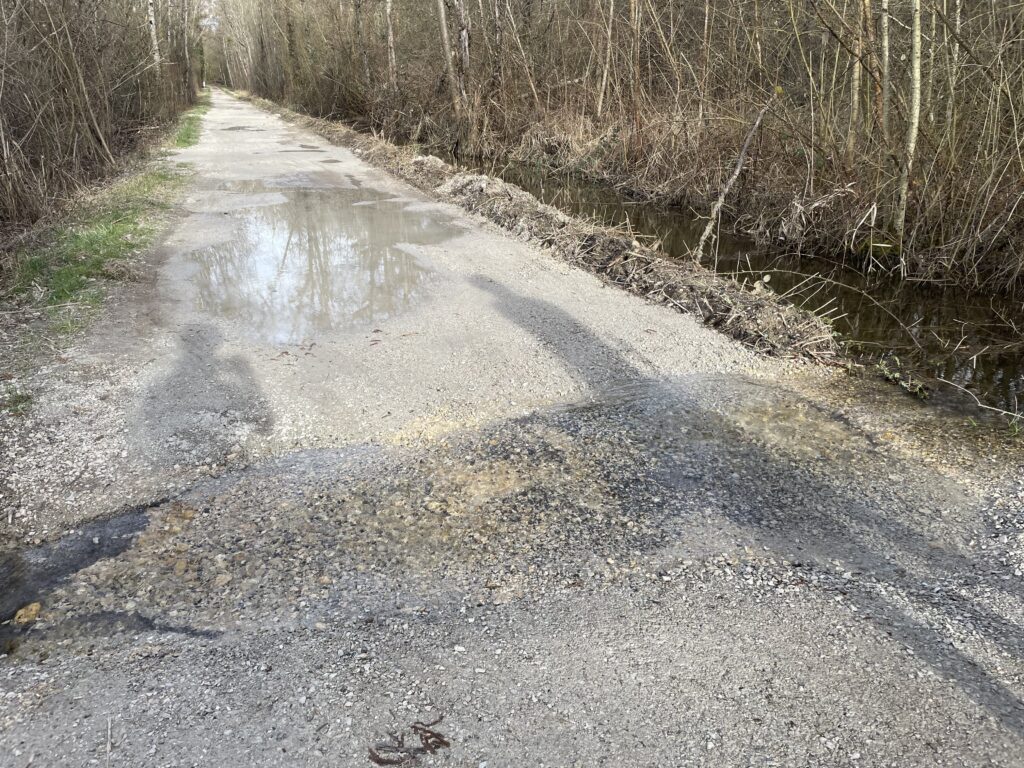
Around Yvonand we stopped in a small park. Between the gravel, the skipped stop, and the inadequate break earlier, we were both exhausted. Marco was flirting with a bonk. We consumed enough calories to stabilise the situation and continued towards Estavayer, where we arrived around 17:00, hoping for a proper meal. The restaurant kitchen was closed, and the nearby pizza place was also closed. I found some carbohydrates and administered them aggressively.
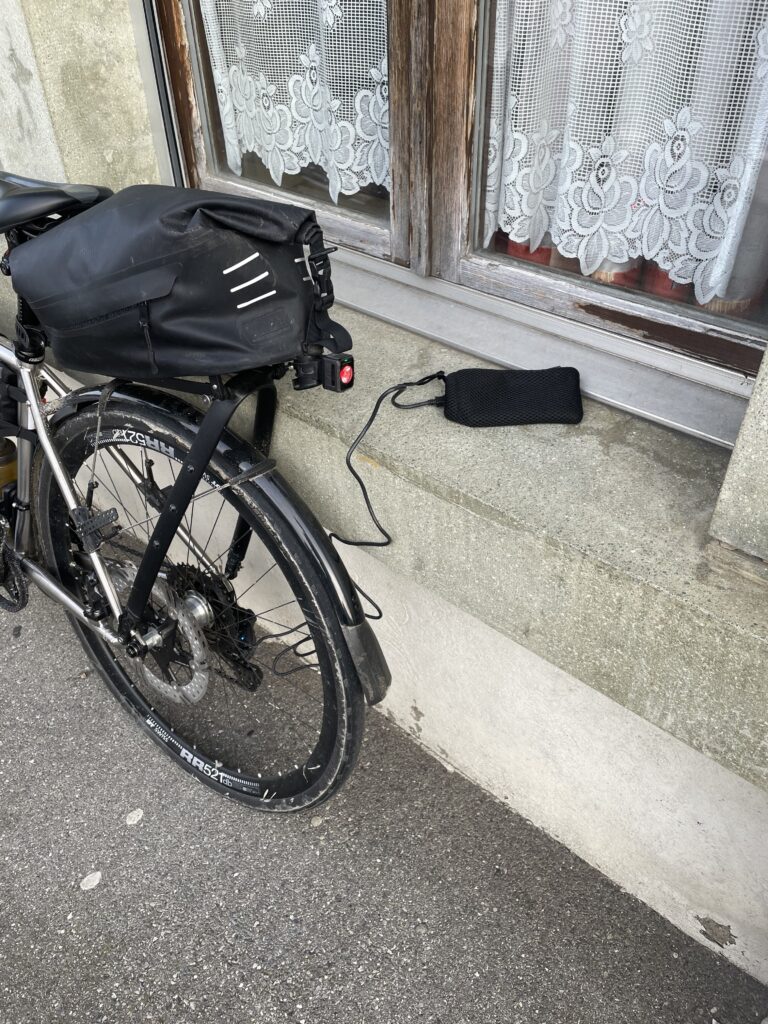
At around 184 km (114 mi), the Di2 died again. This marked the successful conclusion of our completely unplanned field experiment on emergency charging strategies. For reference, a 5 to 10 minute charge provides roughly 120 km (75 mi) of shifting on a tandem. This is now evidence based knowledge, earned the hard way.
Another roadside stop followed, giving us time to reflect on both the data and our questionable research design, and the fact that this entire study could have been avoided by plugging in a cable the night before.
Expecting a late arrival and early departure, Marco bought breakfast for the next day: a large bread and a jar of Nutella. Nutritional strategy at its purest.
At around 220 km (137 mi), we attempted again to find dinner. A pasta restaurant appeared like a hallucination. We parked, went inside, and were turned away. Fully booked. No food. In the end we found a McDonalds. Fast food saved us. I bought fries, fully intending to combine them with wine gums in my feedbag. Fueled by ultra processed optimism, we pushed the final 40 km (25 mi) to the hotel.
My route had one last surprise: nighttime gravel. I hate gravel with a passion. I hate riding gravel on a tandem even more. So naturally, we got to ride it in the dark. Twice. Uphill. At that point, it stopped feeling like a route and more like a carefully designed character assessment.
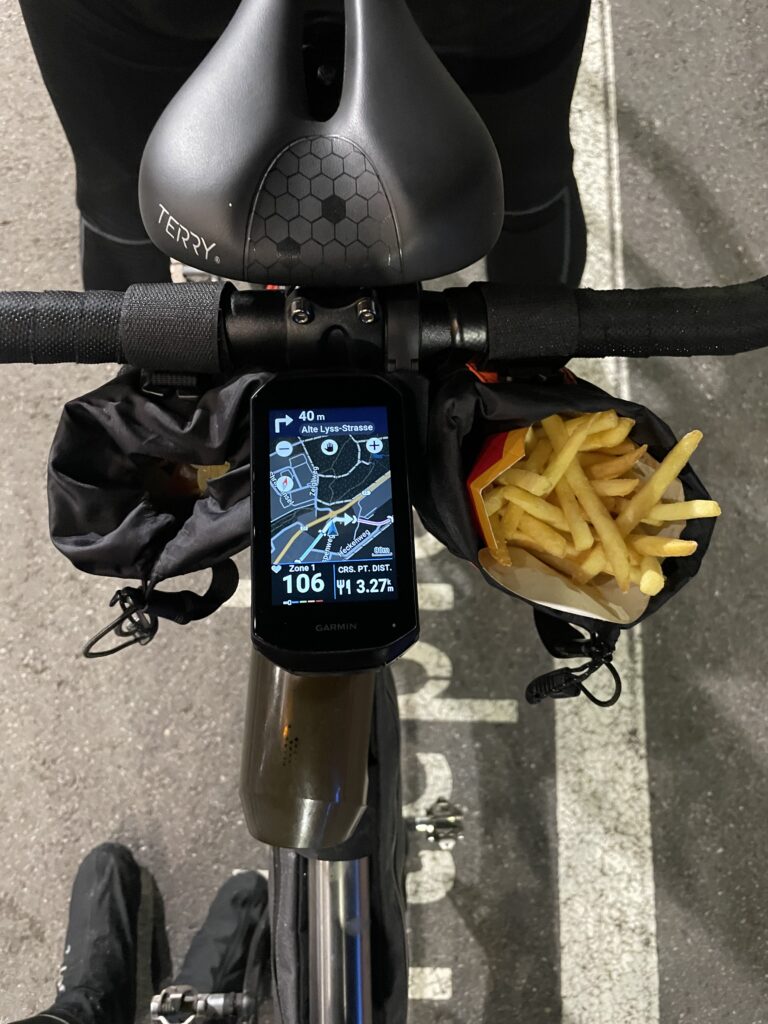
With 4 km (2.5 mi) remaining, I started counting meters. 4029, 4010, 3980. The last stretch took an unreasonable amount of time and felt longer than my entire medical residency, and at least there I occasionally got to sit down.
Type 2 fun, I told myself. The kind you only recognise as fun later, ideally after full psychological recovery and a warm shower.
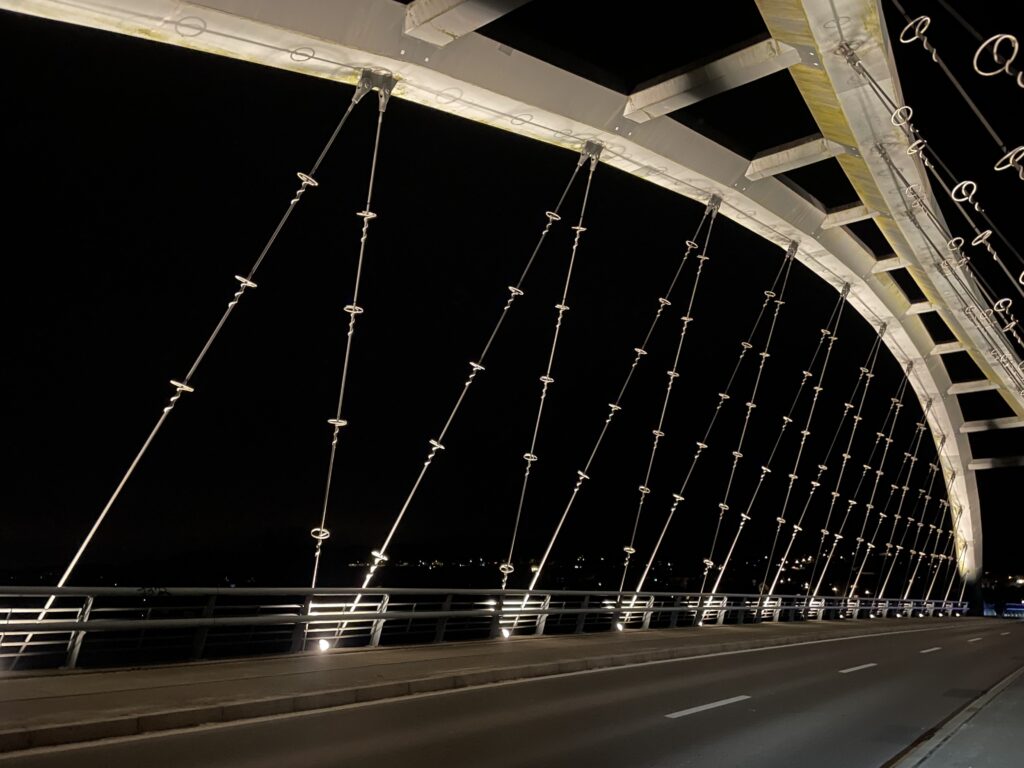
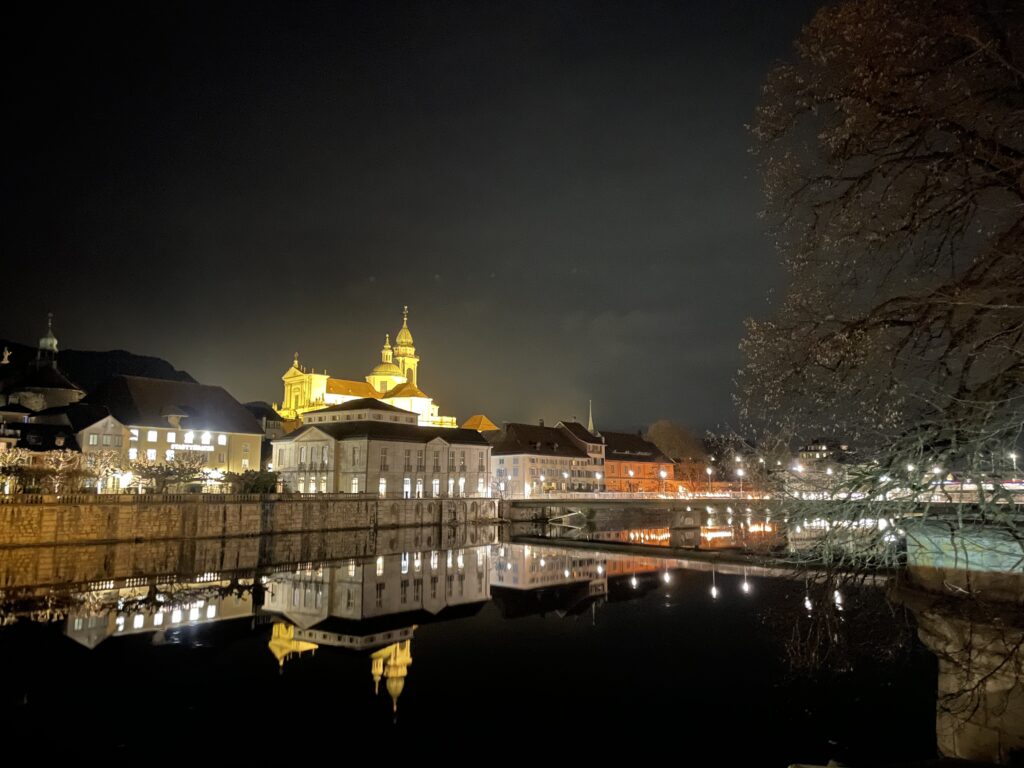
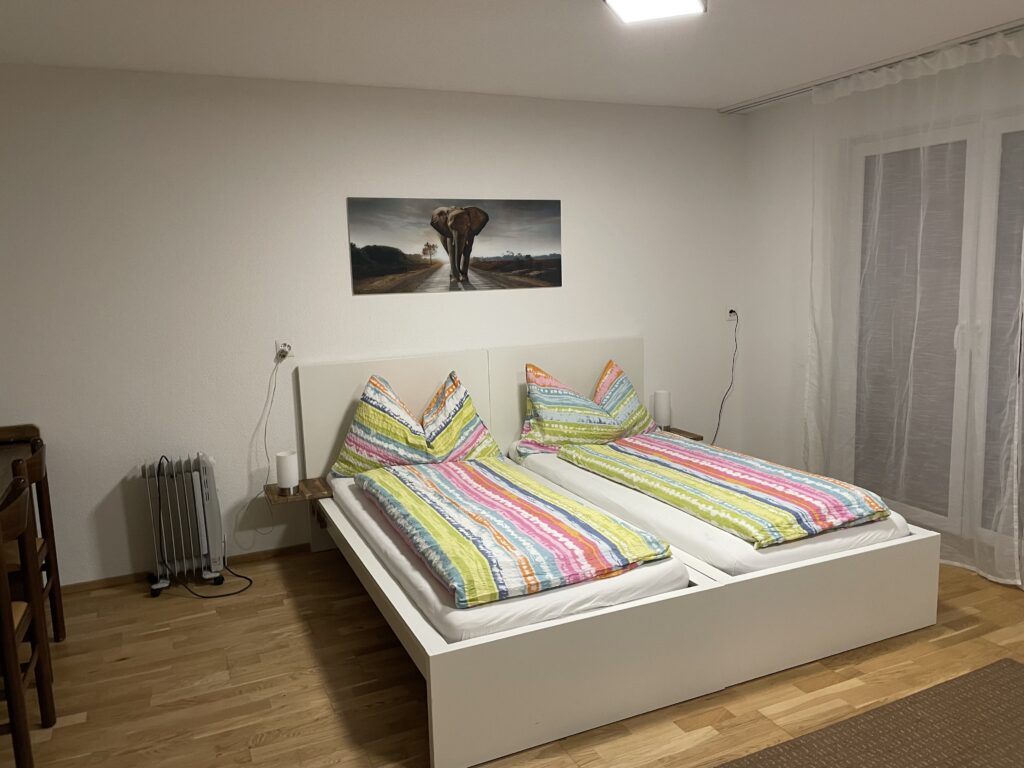
The hotel was right on the route. Despite advertised bike parking, construction had removed any racks. We locked the tandem to a bench and activated the Knog alarm, outsourcing security to hope. The Di2 was charged using the Ravemen PR2000 front light, which doubles as a 10,000 mAh power bank.
This was my first ride beyond 250 km (155 mi). I was too tired to fully process it. The room was excellent, the shower divine, and I fell asleep almost instantly.
Day 2: When the weather started behaving like an antagonist, and our suffering scale got recalibrated.
I woke up not dead, which already exceeded my expectations. Even more surprising, I was not sore. Slight stiffness, but no pain. My shoulder was fine, no intercostal neuralgia, no knee or wrist issues. Just overwhelming hunger.
We ate bread with Nutella and checked the forecast.
Not good.
Rain all day, 0.1 to 0.4 mm predicted. Temperatures starting at 6°C (43°F) and dropping to 3°C (37°F). With another 260 km (162 mi) planned, we decided we had no interest in treating hypothermia as a hobby. We chose to return home, and I quickly assembled something loosely resembling a route in RWGPS.
The Di2 was fully charged. We packed up and rolled out straight into rain that was very clearly not 0.4 mm. More like 2 mm. At this point, I am starting to suspect that weather forecasts are less predictions and more creative writing exercises.
The route was brutal, hitting climb after climb. In the rain. In the cold. Within minutes, our legs and feet were completely soaked.
Type 3 fun starts (not fun while you are doing it and not fun afterwards either, but it does make for an excellent story once you have fully recovered and regained circulation)
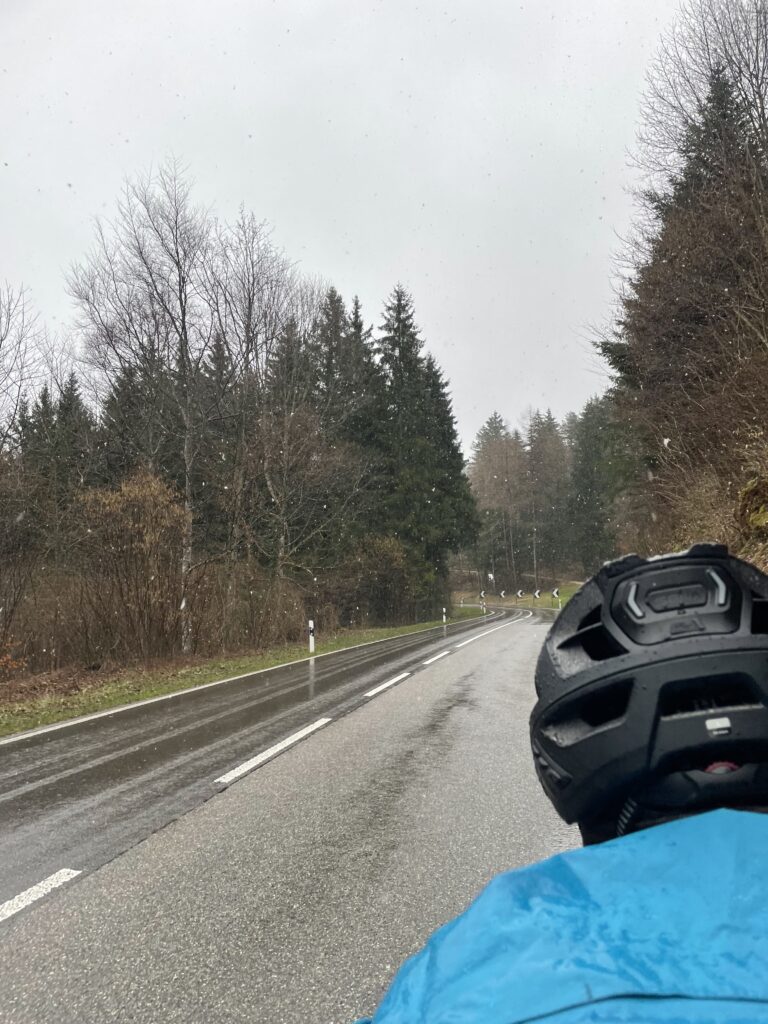
After hitting every climb possible within a 100 km (62 mi) radius, we finally reached Balsthal and started the 7.6 km (4.7 mi) climb back over the mountain. About 1.5 km (0.9 mi) in, I thought I saw snow. We were unsure. Ten minutes later, we were no longer unsure.
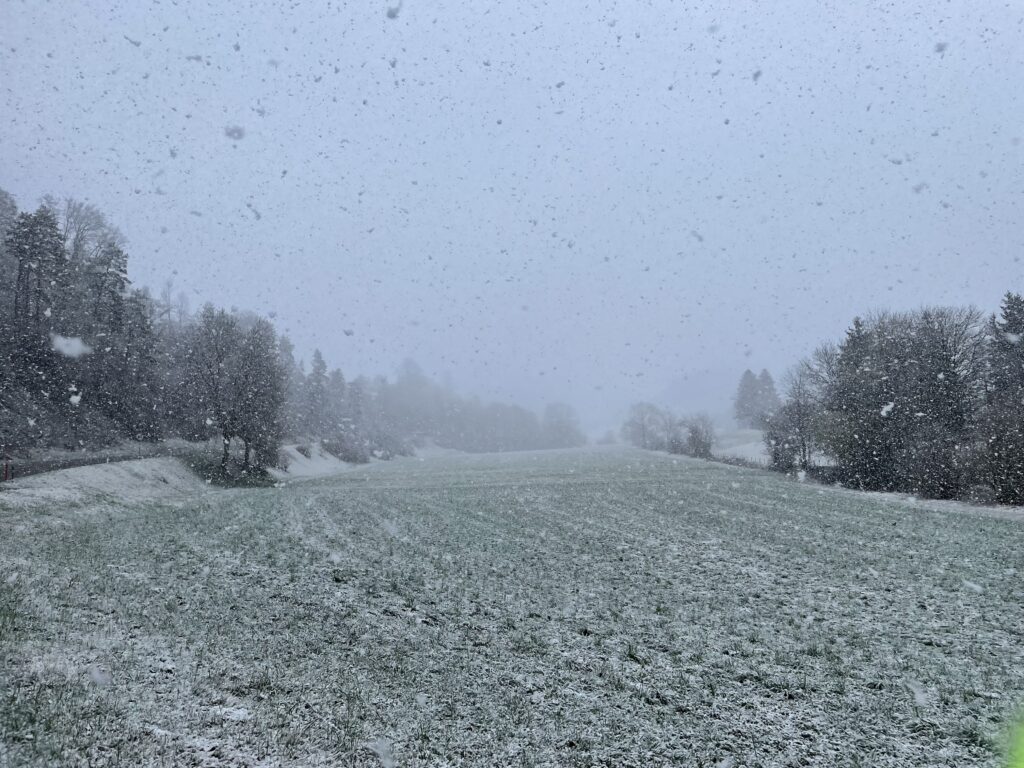
The rain turned into snow, which melted on contact with the road. By the summit, it had escalated into a full blizzard. Snow accumulated into a slushy mix on the road. Beautiful to look at. Less enjoyable to cycle through.
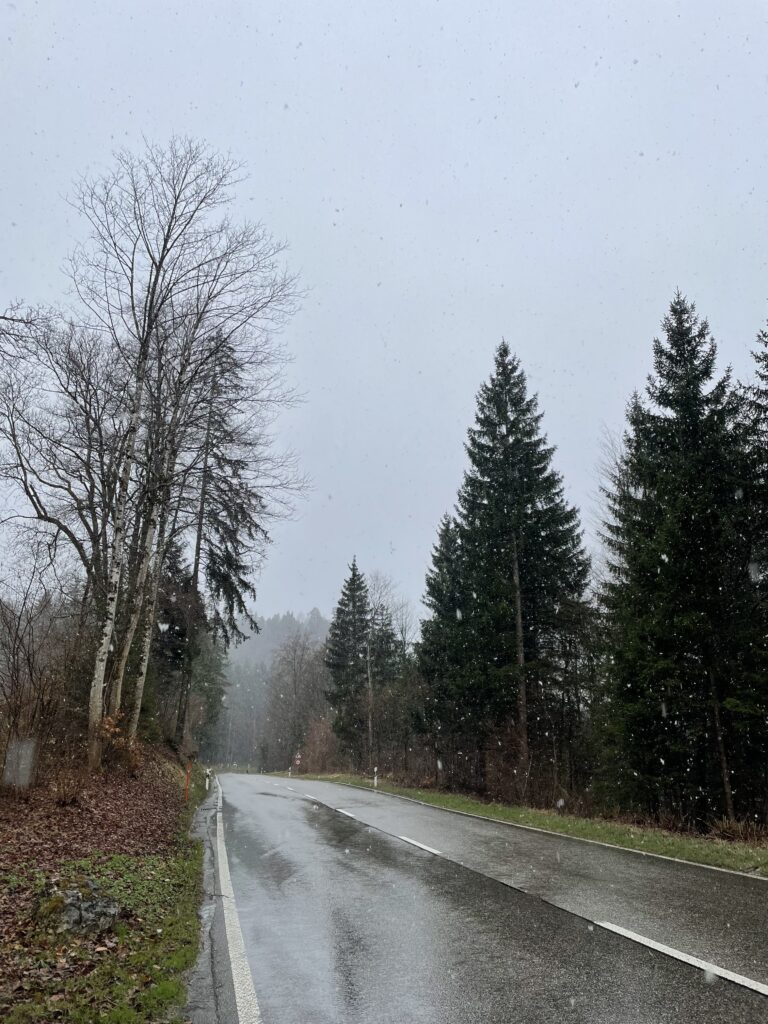
The descent was horrendous. Wet clothing, snow, 3°C (37°F). A perfect recipe for hypothermia. We had to stop multiple times to restore circulation. Rewarming your extremities is a uniquely unpleasant and mostly painful experience, one I would strongly prefer to keep as a one time experiment.
At one point the tandem started to shake, and that is when I realised Marco was shaking from the cold, sending vibrations through the entire bike. His winter gloves were completely soaked, making his hands so cold it was becoming dangerous. He switched to his fingerless summer gloves, which was somehow warmer, and allowed him to use the brakes properly again. He later told me he could not feel the Di2 buttons and was essentially guessing his shifts, but still had just enough circulation left to brake. When your hands get too cold to brake properly, the situation becomes medically interesting in ways I prefer to avoid.
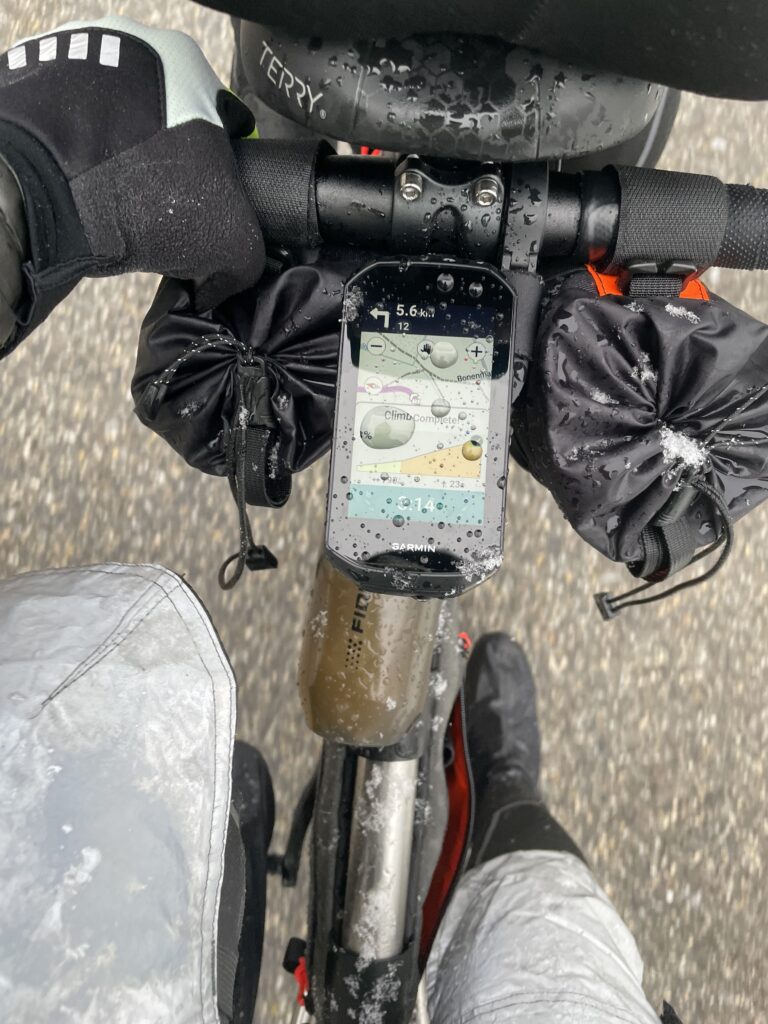
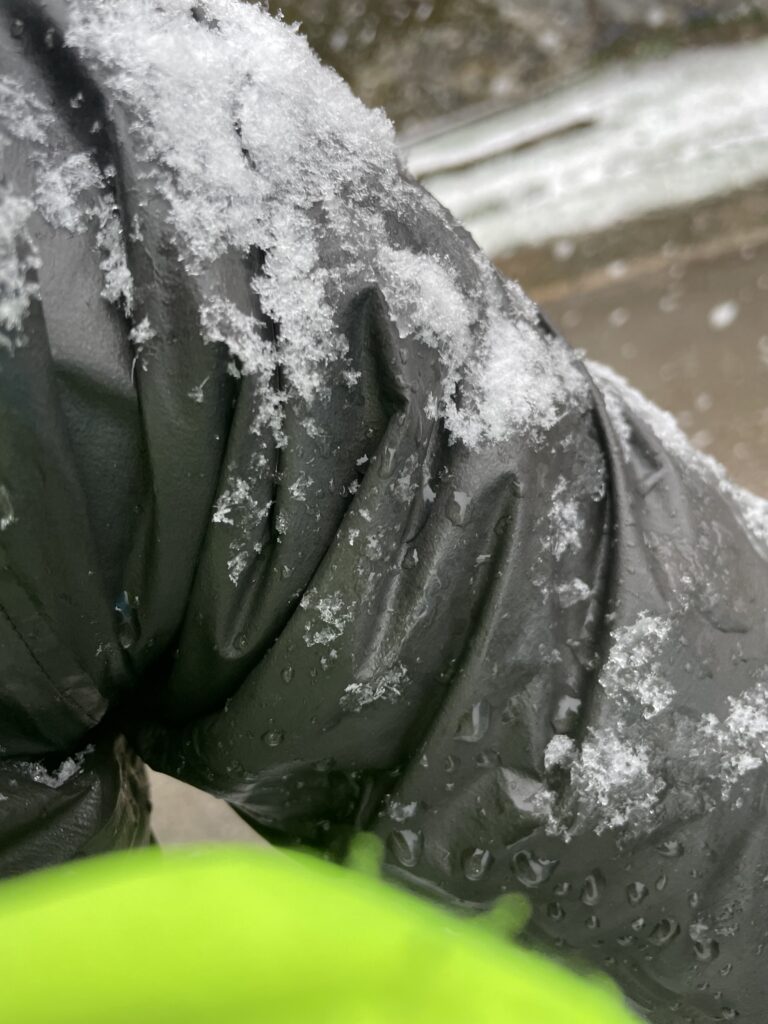
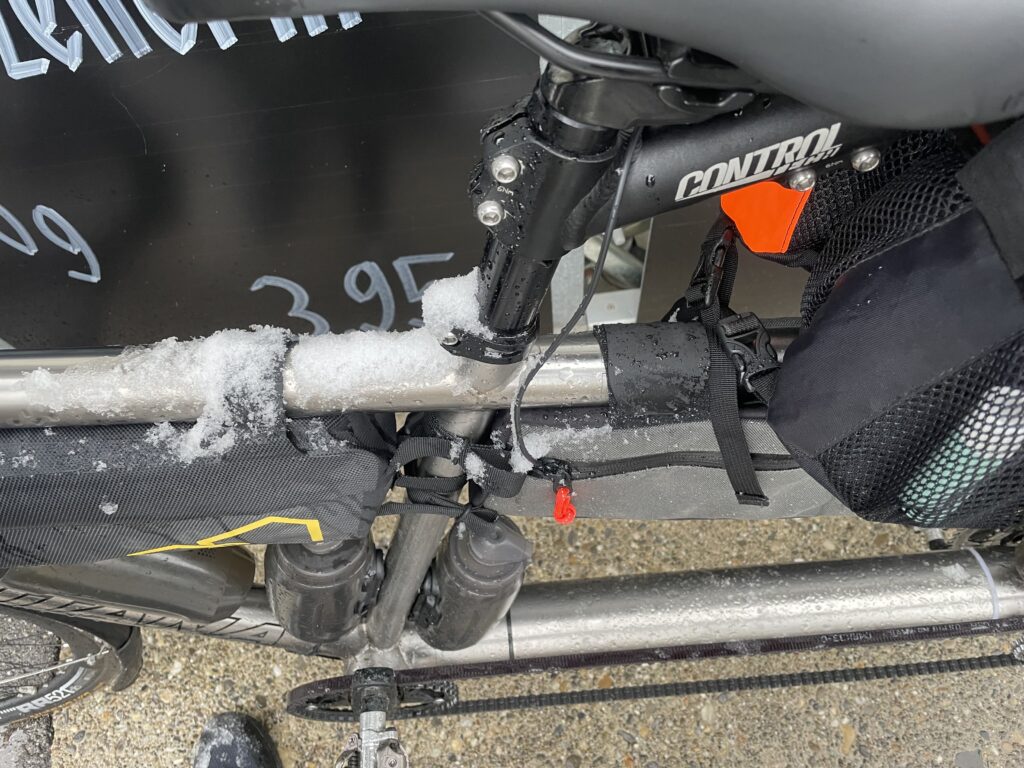
Back home, the cold cellar floor felt hot under my feet. I took the longest shower of my life. It took over three hours for full sensation to return to my right small toe.
I am extremely grateful we turned back. Continuing would not have ended well.
Some statistics
- Day 1: 258 km (160 mi), total time 14 hours 15 minutes, including 2 hours 45 minutes stopped. Moving time 11 hours 30 minutes. This is the longest distance either of us has ever ridden. Minimum temperature 5°C (41°F), maximum 17°C (63°F). Average cadence 66 rpm, total pedal revolutions 38,520.
- Day 2: 48 km (30 mi), total time 3 hours 50 minutes, moving time 2 hours 40 minutes. About 1 hour 10 minutes stopped to warm up. Temperature dropped from 8°C (46°F) to 3°C (37°F). Garmin temperature readings were taken in Marco’s draft, so actual temperatures were likely lower.
Lessons
- The first one is obvious: our routes need better preparation. I knew this already, but this week work completely overran me and planning suffered accordingly. Consider this lesson firmly relearned.
- At the end of day 2, cold, wet, and deeply miserable, we still functioned as a team. Last week I wondered what would happen if we were both having a bad time. Possibly I jinxed it. Now I have my answer: we quietly team up and push through. No arguments, no drama, just forward motion. Marco verbalises discomfort. I go silent. Apparently. Useful information for future crisis management.
- Marco’s fueling strategy needs an upgrade. Large meals lead to reflux, which leads to not eating, which leads to bonking later. A beautifully inefficient cascade. We are working on shifting towards continuous carbohydrate intake. The goal is to turn him into a stable, mobile digestion unit.
- We need to revisit parts of our setup to reduce muscular fatigue from road vibrations. Gravel and poor tarmac took a noticeable toll. It is not just the big hits, although only hitting two potholes over almost 260 km (160 mi) is a remarkable achievement by Marco, but the constant micro vibrations that accumulate over time. Over these distances, your body becomes the suspension system, and it eventually files a complaint. We will look into a more comfortable saddle for Marco and possibly a shock absorbing stem for me, or both of us.
- There needs to be at least one proper sit down meal per day. Ideally shortly before reaching the hotel. Eating like semi feral creatures by the roadside is … a less than ideal long term strategy.
- Short stops should also include a place to sit and stretch. Standing next to the bike while pretending that counts as recovery is not working.
- We decided to buy a single sided power meter pedal for me. Dual sided is too expensive, and more importantly, I do not need detailed left right balance data. I am a doctor. I will absolutely turn a minor asymmetry into a full diagnostic workup and a mild existential crisis. I simply do not have the bandwidth to deal with this part of my brain. With the pedal, I hope to get more meaningful data from our long rides, especially since Garmin insists I am under training after 258 km (160 mi), which feels like a bold statement.
- And finally: I cycled almost 260 km (160 mi) in one day and lived to tell the story. And not even slowly. I am still trying to process that.
Summary
Conclusion
In the end, nothing broke. Not the bike, not the team, not even our questionable decision making. Which, given the circumstances, feels like a win. We came back cold, wet, mildly traumatised, and already planning the next one. So I guess everything is going exactly according to plan 🫣💪🏻. If this was a rehearsal, then the race is going to be interesting. But at least now we know two things for certain: we can suffer, and we can do it together.
My dearest reader, this concludes week 11. May your Di2 never bonk before you do, may your weather forecast be less fictional than ours, may your fries be warm and your blood sugar cooperative, and may hypothermia remain a theoretical concept.
I’ll catch you at the next one, and remember to keep the rubber side down!