I have to admit: writing this week’s blog post wasn’t easy.
Things weren’t flowing. Not on the bike, not mechanically, and not emotionally. We were both tired, a little frustrated, and more disheartened than we wanted to admit. This was one of those weeks where problems didn’t arrive politely one at a time, they showed up as a group and demanded attention now, preferably all at once.
This post has updates on the tandem, training, my saddle, and a few realizations that took longer than they should have, but ended up being important.
Saddle update (aka the shrimp posture problem)
After last week’s tandem ride left me with a very sore bum, it was clear something had to change.
The tandem originally came with a Terry Butterfly saddle. On paper, a solid choice. In reality, it caused a lot of pressure in the front. To compensate, I tilted the saddle nose downward quite aggressively. That helped one problem and immediately created several others: increased strain on my hands, neck, and shoulders, plus a slow descent into what can only be described as shrimp posture: pelvis rotated backward, spine curved, dignity questionable.
I swapped the saddle from Rainbow Dash onto the tandem: a Bontrager saddle with a large cut-out in the front. That helped immediately. The frontal pressure was gone, the saddle could be leveled again, and my pelvis stopped trying to slam into full thrust reversers like a plane that very much wants to stop.
But, because this is cycling, a new problem appeared. A pressure point on my right sit bone.
To address this properly, I went to a bike shop in Basel that offers saddle pressure analysis. I called ahead to ask whether I could bring a tandem. Unfortunately, their setup mounts the bike by the front fork onto rollers, and the tandem is simply too long to fit. Fair enough. I briefly considered bringing Rainbow Dash, but I don’t actually have saddle issues on that bike. So instead, I went in to test saddles on their trainer.
I was greeted by an ergonomics specialist and tried several models. We eventually found one that felt promising, and based on his experience with a similar model they didn’t have in stock, we decided he would order it and I would come back next week to test both.
He was friendly and knowledgeable, but one comment really caught me off guard. He said that for women, pressure in the front isn’t really a problem because, unlike men, women don’t develop long-term issues from it. That was… disappointing. Years ago, after a ride with too much frontal pressure that I didn’t notice in time, I lost all sensation in my genital area for a couple of days. I was already preparing to see a gynecologist when the feeling slowly returned, taking more than a week to fully normalize. Cycling, it seems, still has a long way to go when it comes to female anatomy and lived experience.
Still, not wanting to miss the opportunity to fix the problem, I agreed to have the saddle ordered and planned to come back next week.
Clipless pedals. Yes. Really.
After nearly 30,000 km (18,600 miles) on my trusty 10 dollar flat pedals, I did something I never thought I’d do again: I installed clipless pedals on the tandem.
Yes. Me. The flat-pedal heretic. The relapsing clipless apostate.
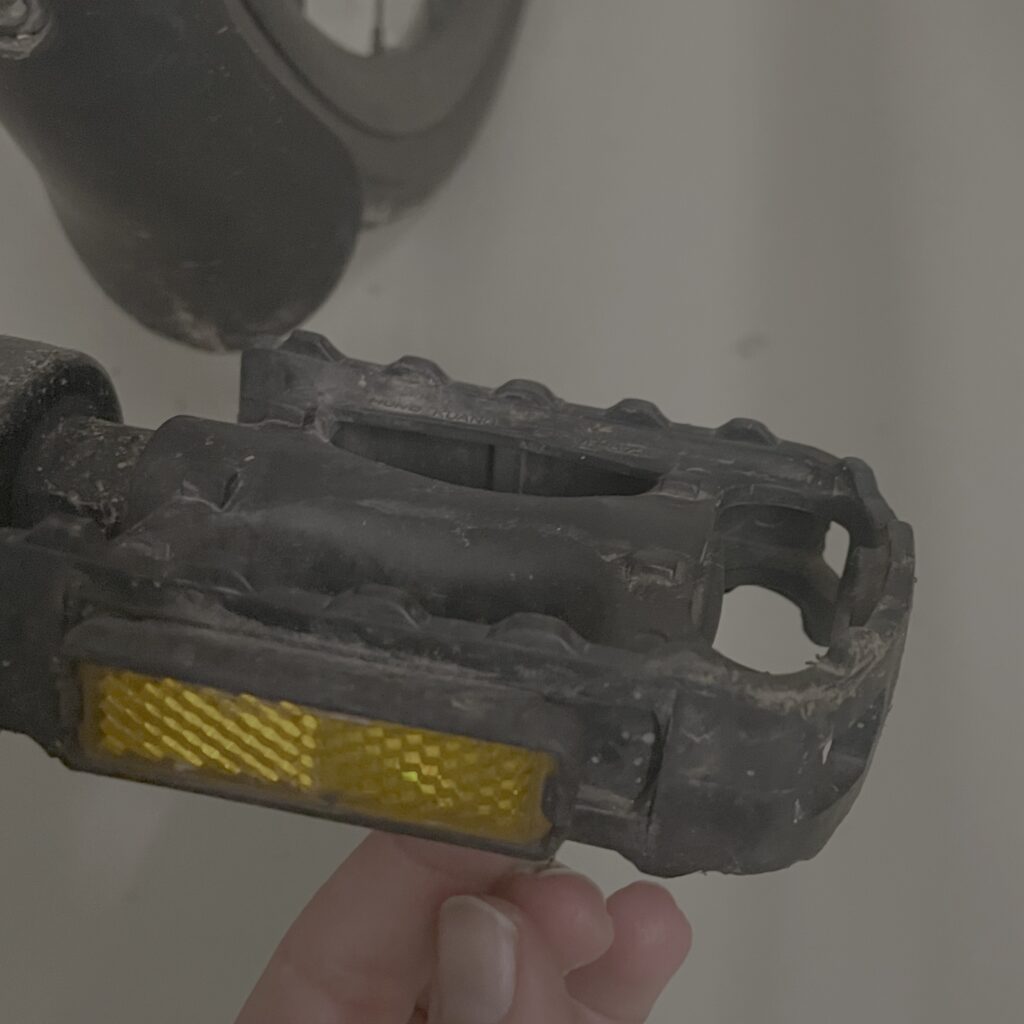
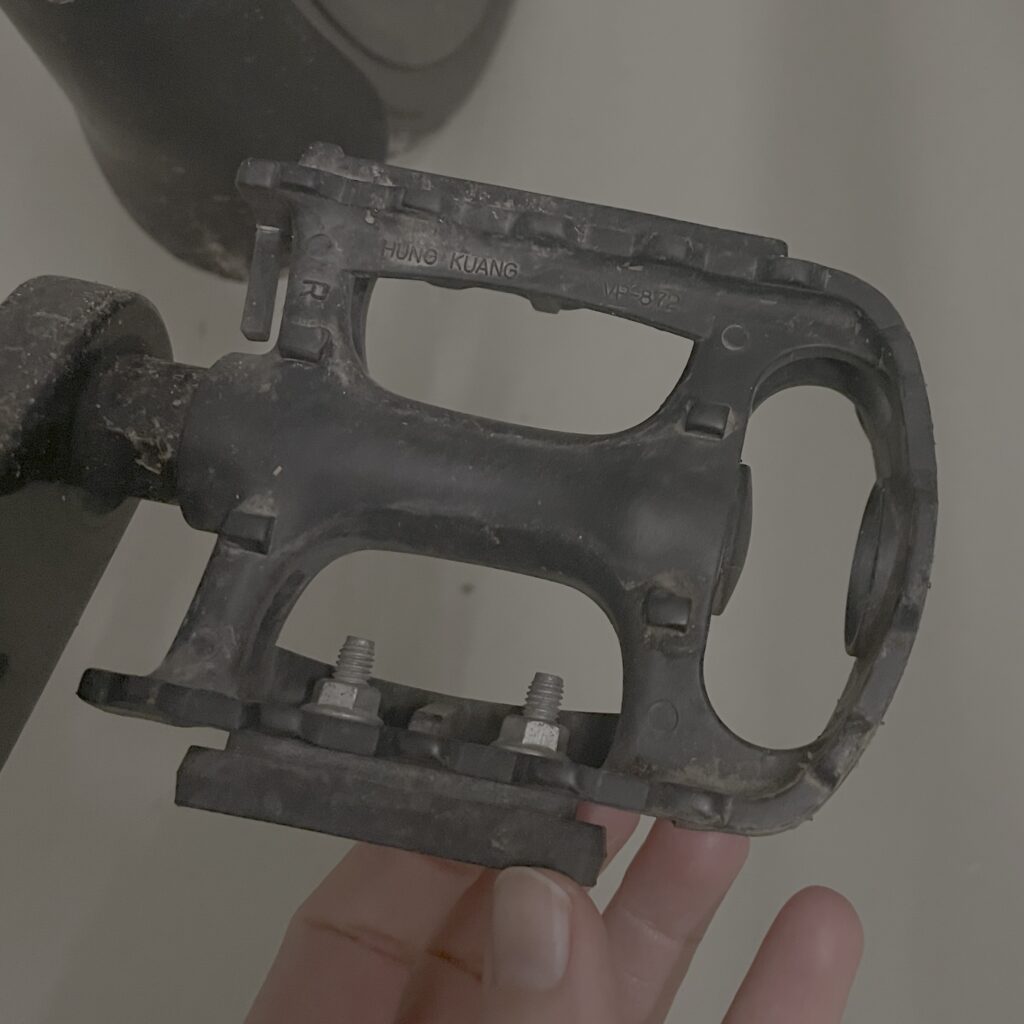
The reason, however, was purely practical. Because Marco and I share the same drivetrain, I sometimes lost contact with the pedal when he suddenly put more power in. Marco experienced the same thing, especially when starting from traffic lights. My brain goes into full 🏁 🏎️ GO GO GO mode, I push hard, and suddenly his pedal disappears from under his foot. Rhythm lost. Reset required.
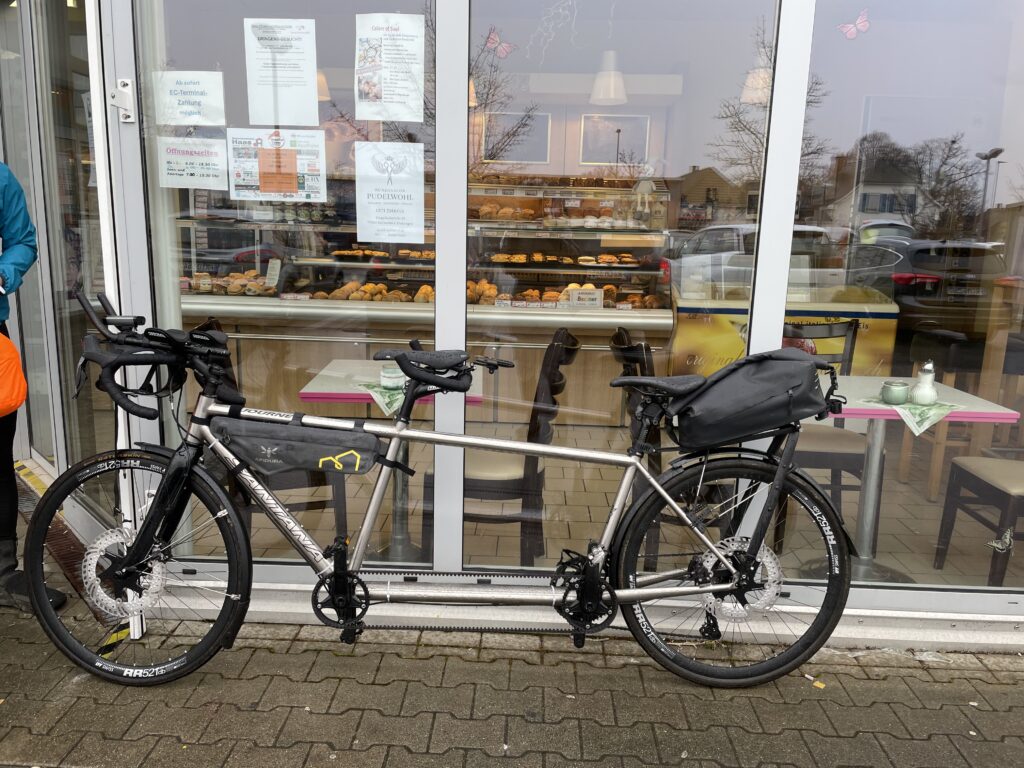
Marco had deliberately avoided clipless pedals during the first rides to get a better feel for the tandem, but at this point it was clear: flats were becoming a liability, not a preference. So we decided to switch my pedals first. If Friday’s long training ride went well, we would swap his too.
Training ride, Friday, 140 km (87 miles)
After some careful coordination with our employers, we managed to get a long weekend off: Friday, Saturday, and Sunday.
The plan:
- Friday: 140 km (87 miles)
- Saturday: 160 km (99 miles)
On Thursday evening, I charged all devices and packed the bags. Friday morning, alarms went off at 06:30. We loaded the tandem into the car and drove to Niffer, France, where I’d found a large free parking lot. We unloaded the tandem in the dark. It was cold, -2°C (28°F), windy, and it started raining. I’ll be honest: I immediately questioned the entire plan and began mentally preparing for a long day of cold, wet misery.
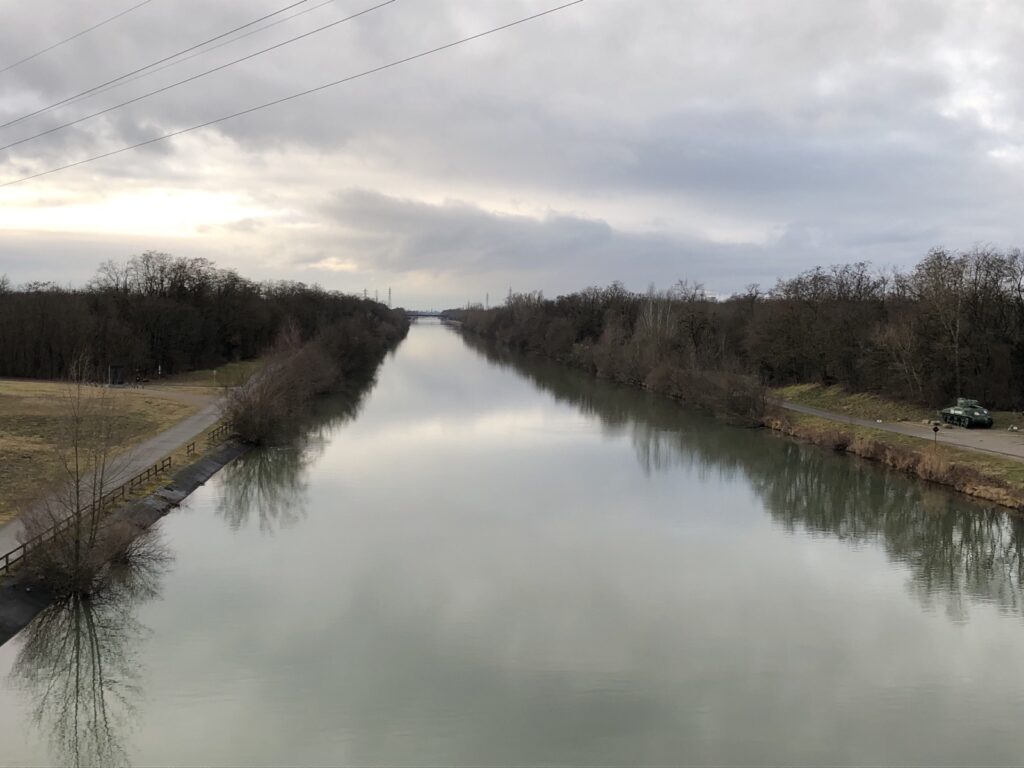
We talked it through. During the RATN, it won’t always be sunshine and tailwinds either. Our first stop was only 53 km (33 miles) away. If things went badly, we could warm up there and ride back, cutting about 40 km (25 miles) off the route.
So, somewhat reluctantly, I climbed onto the back of the tandem, and after a countdown, we rolled off. And… it really wasn’t that bad. I’d layered well, stayed warm, and with my Gore Shakedry jacket, I was completely dry. I wore Arctic rain legs, which don’t just keep you dry, they also add a bit of insulation. I’ve used them for about three years now and they’re a staple in my winter kit.
About an hour in, the rain intensified, but we barely noticed. We took a quick lunch stop around 30 km (19 miles). The day before, we’d decided not to bring feed bags, worried everything would get soaked. I slightly regretted that when hunger kicked in. With food easily accessible, we probably could have skipped the stop.
We ate a small sandwich and continued toward Till & Brot in Freiburg, our absolute favorite bakery on this planet. Cycling through the countryside was lovely. Without pushing hard, we usually cruise around 35 km/h (22 mph). Freiburg slowed us down with traffic lights and pedestrians, and just 200 meters (220 yards) before reaching the bakery, we got a flat tire on the front wheel. We walked the tandem the remaining distance and went inside to warm up.
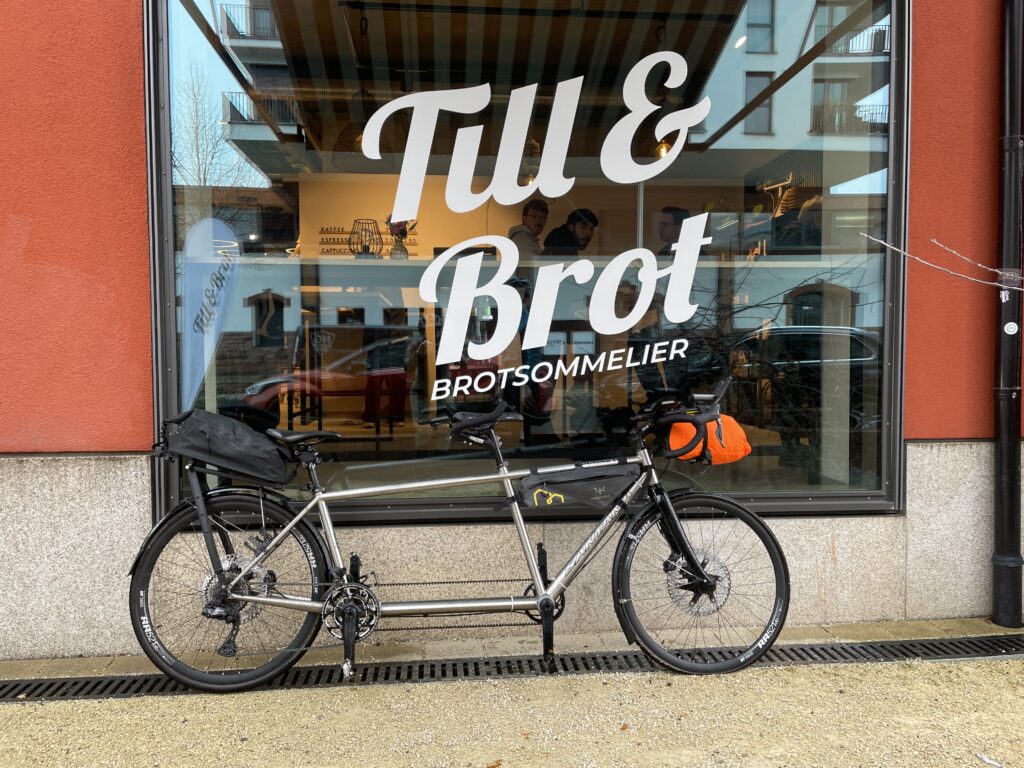
Plenty of locals stopped to stare at the tandem. One guy, Leon, struck up a conversation, and we ended up chatting for a while. Tandems are excellent icebreakers.
Marco eats faster than I do, so once he was done, he went back out into the rain and replaced the inner tube. The culprit was a large metal spike, lodged so firmly in the tire that he had to push it out with a hex key.
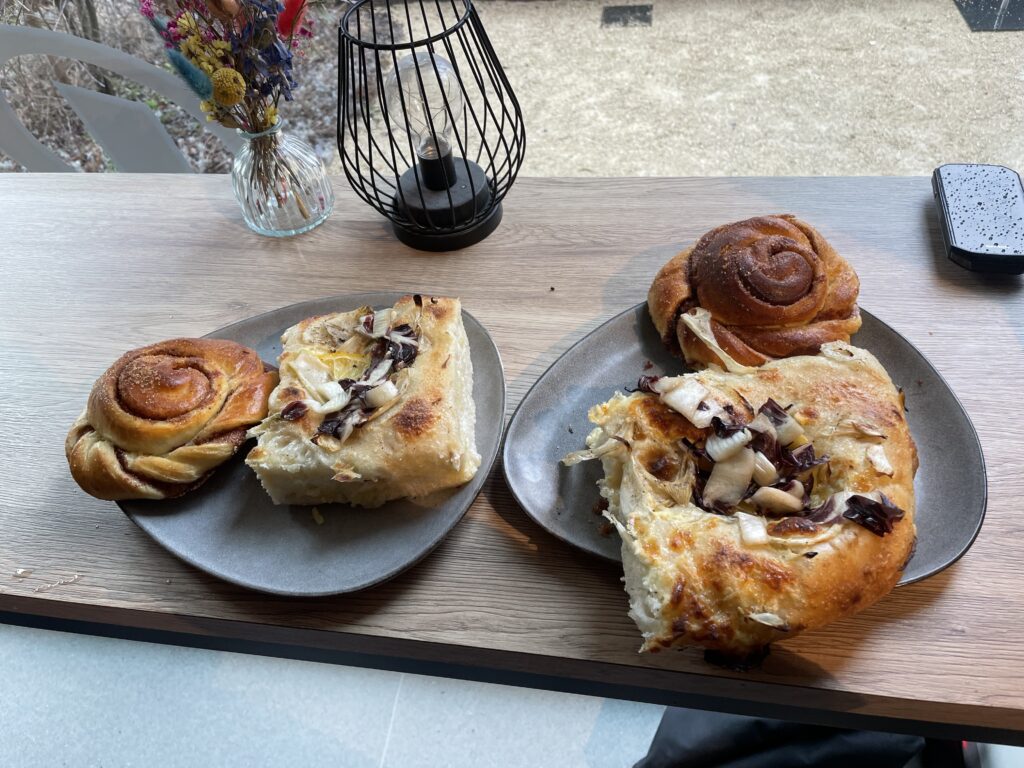
After warming up, fixing the flat, and eating far too much, we decided to continue. The kilometers flew by. At the last boulangerie, I grabbed a chocolate éclair, obviously.
Unfortunately, the final stretch wasn’t smooth. Around 90 km (56 miles), the pain on my right sit bone returned. By 120 km (75 miles), I was sitting with my left sit bone fully on the saddle and my right one hanging off entirely just to keep going. Unsurprisingly, my left side wasn’t thrilled about that either. During the final 20 km (12 miles), we had to stop repeatedly. The pain was intense enough that I was genuinely worried about injuring myself if I pushed through.
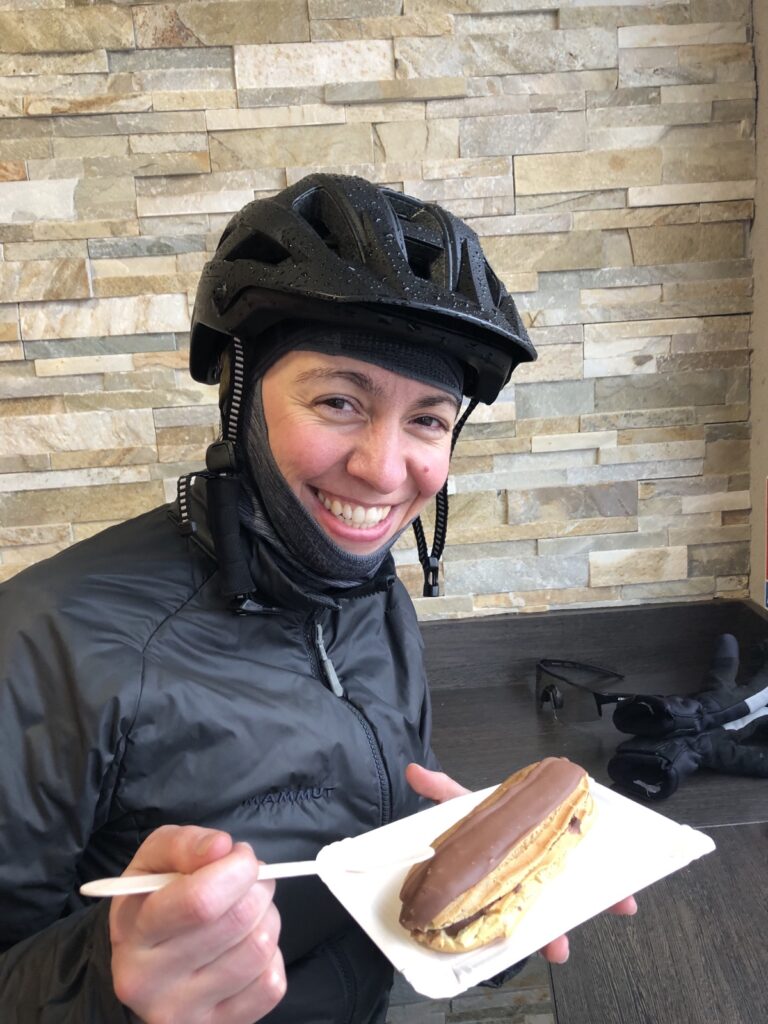
Still, we finished. 143 km (89 miles) in 5 hours and 50 minutes of riding time. Total time was 8 hours and 12 minutes, thanks to longer warming stops, the flat tire, and multiple pain-related breaks at the end. Winter cycling simply takes more time. In summer, you can stop briefly and roll on. In winter, stopping too long means freezing. All things considered, I am very proud of what we did. We set a new tandem distance record in winter rain!
The aftermath: when things finally clicked
That night, once the excitement faded, I couldn’t sleep. I kept thinking about the pain in my right sit bone. I can’t ride the Kickr for more than an hour without the same issue. During our 2024 RATN training ride, my worst saddle sore was also on the right.
And then it clicked: I suddenly remembered a professional bike fit I’d done in 2020. I dug through my old files and found the report.
Left leg longer.

Left.
Leg.
Longer.
All of a sudden, everything made sense. My right leg is shorter, which means my right sit bone has more contact time, more pressure, leading to more pain.
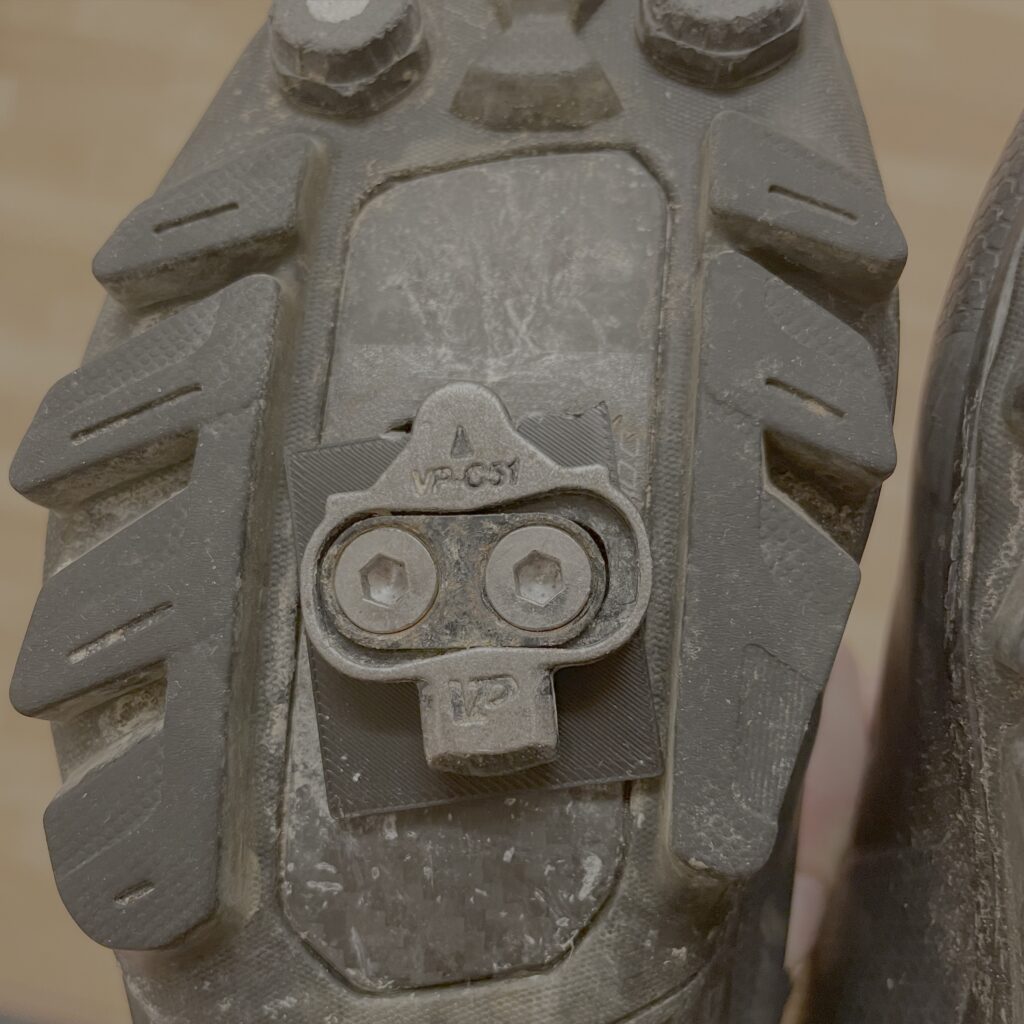
As soon as bike shops opened, I went looking for a cleat shim. None of the three shops I visited stocked them anymore, and ordering online would take days. So we 3D-printed one. I proudly installed it under the cleat and couldn’t wait to test it the next day on the planned 160 km (99 miles) ride.
One last task remained: installing clipless pedals for Marco. We bought a brand-new pair. For reasons still unclear, they absolutely refused to cooperate. Forty-five minutes. Two pedals. Much swearing. Confidence steadily declining. Eventually, we got them on, loaded the tandem onto the car, and hoped for the best (regular readers know this usually doesn’t end well).
Saturday, the 160 km (99 miles) that never happened
We got up at 06:00, had breakfast, and headed out. The weather was glorious. Sunrise, no wind, perfect forecast. We unloaded the tandem, mounted the bags, powered on the GPS units, and then decided Marco should test the pedals before I hopped on.
You can probably guess the rest.
He could barely clip in or out. One cleat had come loose. The replacement was at home. The pedals were mounted at a suspicious angle. Something was very wrong. After 200 meters (220 yards), we loaded the tandem back onto the car and drove home. Defeated. In hindsight, this was an impressively inefficient way to discover that the pedals did not work 🤣
Conclusion
I’ll be honest: the tandem is mechanically finicky. Every adjustment feels like climbing Mount Everest in cycling shoes. I’ve never owned a bike with so many quirks, where every fix seems to introduce a brand-new problem.
Between the saddle issues, the drivetrain noises, and the right brake lever doing what can only be described as yoga, I lost some patience this week. At one point, my thoughts drifted to whether we should cancel the RATN altogether. Not because I wanted to, but because sustained frustration has a way of testing resolve. This is exactly what I meant when I wrote, “when you’re fighting a bear, you don’t stop when you’re tired, you stop when the bear is tired.” We’re not stopping. We will fix these problems 💪🏻
All of these are fixable problems. And crucially, we still have time. The RATN is in May. Roughly 12 weeks remain. That’s enough to adjust, adapt, and stabilize. Next Tuesday, we have an appointment to finally get everything sorted. I’m dreading it and looking forward to it in equal measure.
Looking back, I can see that this week wasn’t about failing to prepare, but about discovering what still needed attention. It was the week where all the underlying issues surfaced at once.
And honestly, I’d rather have that happen now than in the middle of a 202-hour race.
Thanks for reading. I’ll keep you posted. Until then, keep the rubber side down.