Finally, after weeks of waiting, it was time for the final pre-Race Around The Netherlands (RATN) test. One last dress rehearsal before the main act, except the costumes are lycra, the theatre is our tandem, and the crowd is the innocent bystanders we cycle past.
This week’s objective was simple on paper: one final test loop before the RATN. Test the gear, test the tandem, and test whether our decision-making skills remain… clinically reasonable under fatigue. Along the way, this would also test my carefully curated POIs for food and hotels, which in ultra cycling is less “nice to have” and more “basic life support.”
I mapped out a route of about 1000 km (621 mi), following the Rhine from Basel to Koblenz, then the Mosel to Saarbrücken, and finally the Rhine back again. The whole route, including POIs for food and hotels, took about 10 hours of planning.
One of the things I love most about ultra cycling is that there are many ways to be good at it… and just as many ways to be catastrophically bad 😉. You can have a glorious FTP, but that won’t help if you’re standing in front of a closed bakery at 19:30, your decision-making replaced by staring into the void and hoping it feeds you. Watts don’t book hotels. They also won’t stop you from cycling in the wrong direction because your planning skills resemble a sugar-fuelled drawing by a two-year-old.
Ultra riding is the full package: fitness, planning, time management, problem solving, and a functional relationship with your body’s demands for food, water, electrolytes, and sleep. And then there’s teamwork. On a tandem, poor communication skills, especially when you’re both tired, will end your event faster than a pre-booked DNF.
This is, of course, excellent news for me. My FTP is a modest 3 W/kg, which places me firmly in the “compensate aggressively elsewhere” category 😅
Gear list
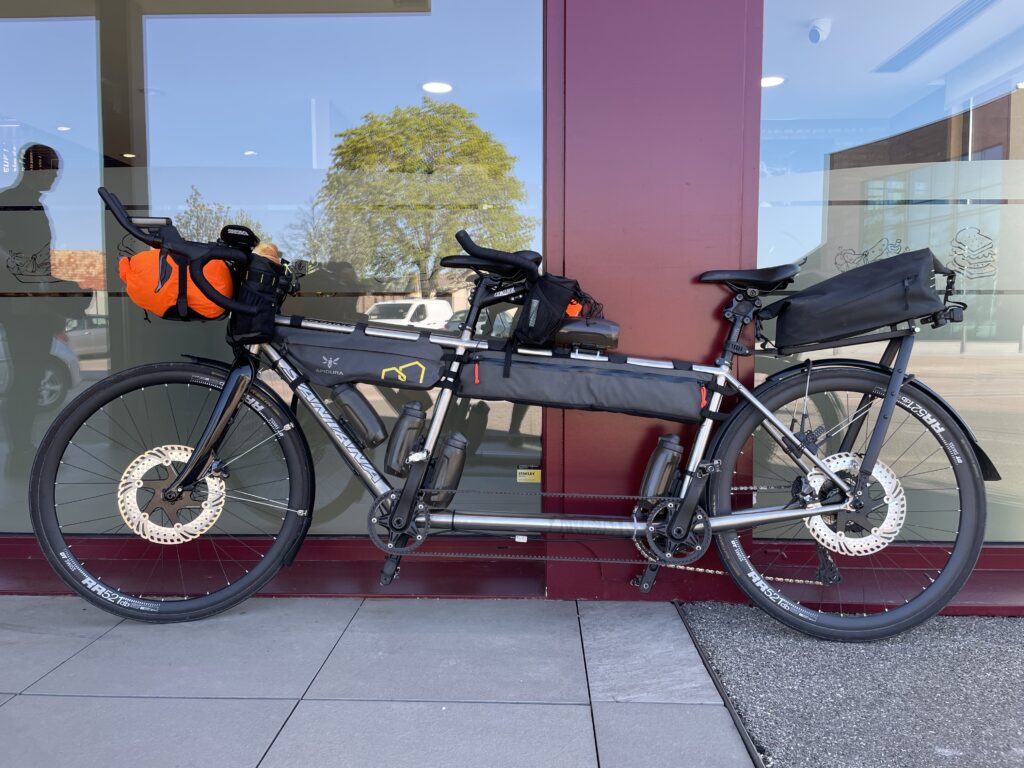
We decided to pack everything we’d be bringing to the RATN. We loaded it all onto the Limousine, after which Marco heroically weighed her: 25 kg (55 lb), including bottles but excluding water. It sounds like a lot, but split between two people that’s 12.5 kg (27.5 lb) each for an eight-day setup. Medically speaking, that falls well within the range of “acceptable elective suffering.” The full gear list lives under The Setup.
Day 1
Dearest reader, I had my first RATN nightmare. We were in Amerongen (where the RATN starts) and couldn’t find the tandem because I’d forgotten where we parked it. When I checked the GPS, there were six separate location dots scattered across town. By the time we found it, the race had already started and we needed a new drivetrain. Classic. The cyclist’s version of showing up to an exam naked and too late.
The 06:00 alarm mercifully terminated this neurological event. Quick breakfast. Dressed. Out the door.
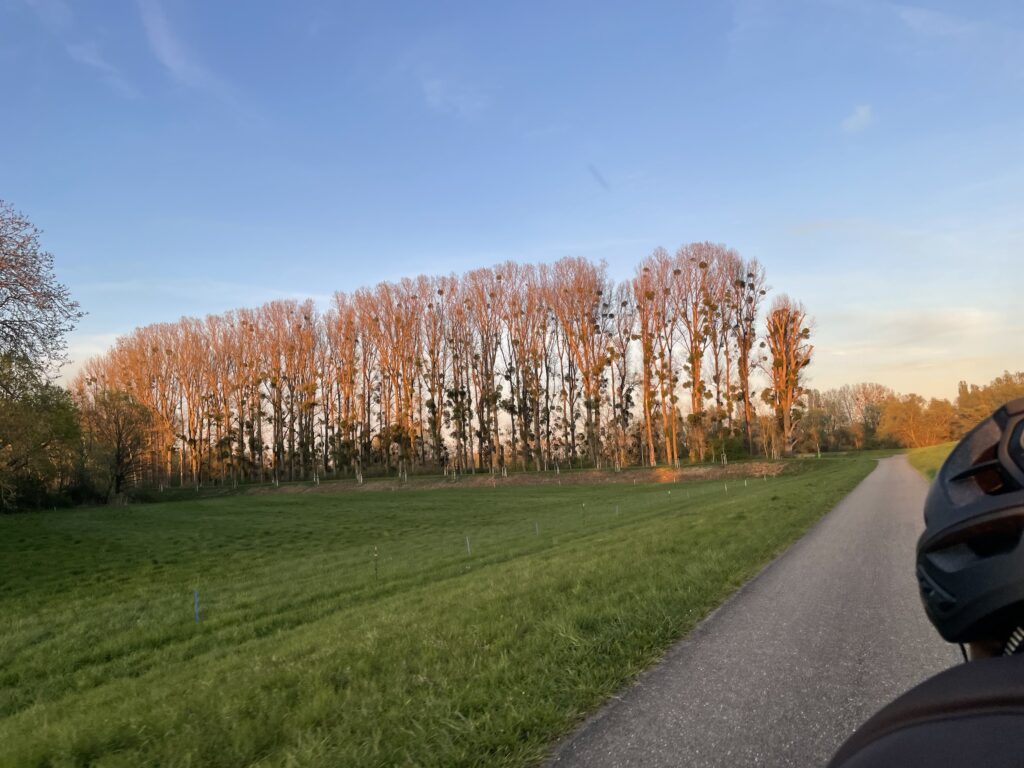
Cold start, but the weather was divine. After a winter of being waterboarded by rain and occasional surprise snow, riding without numb fingers felt so good it should probably be regulated. Near Pratteln we were treated to a stunning sunrise, still one of my favourite things to witness on the bike.
I tried a new route through Basel, avoiding EV15 and Basel Badischer Bahnhof. A 2.4 m (7 ft 10 in) tandem is less a bicycle and more a mobile infrastructure project. The alternative route turned out excellent: smooth, uninterrupted, efficient. We immediately named it The Basel Highway.
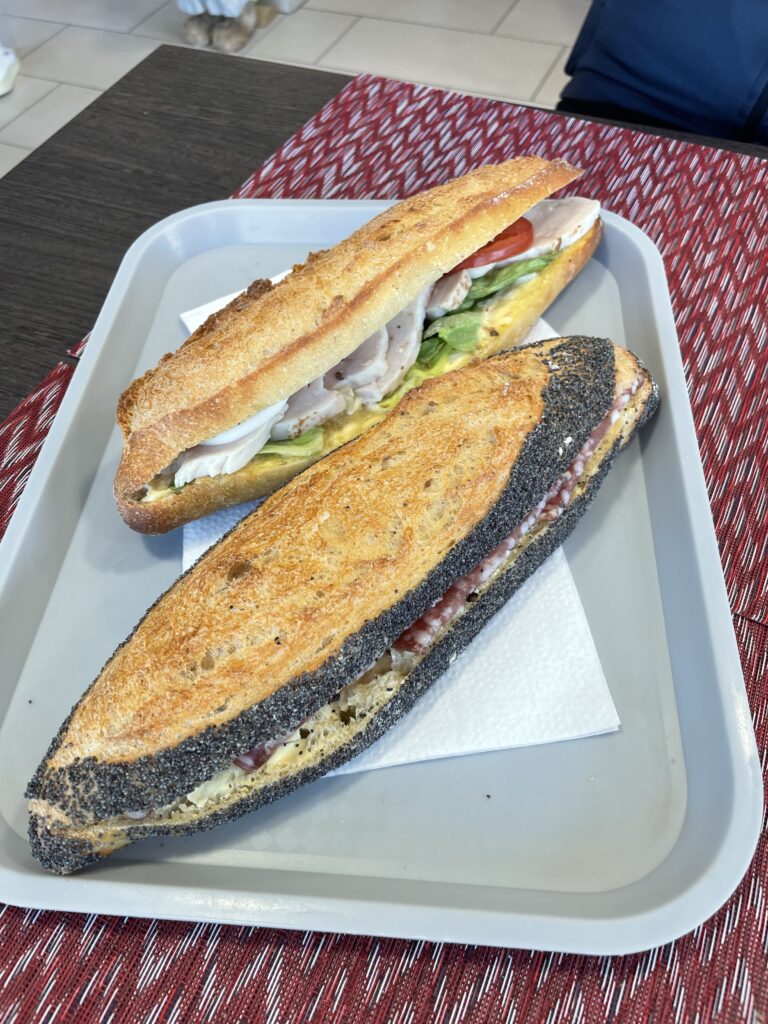
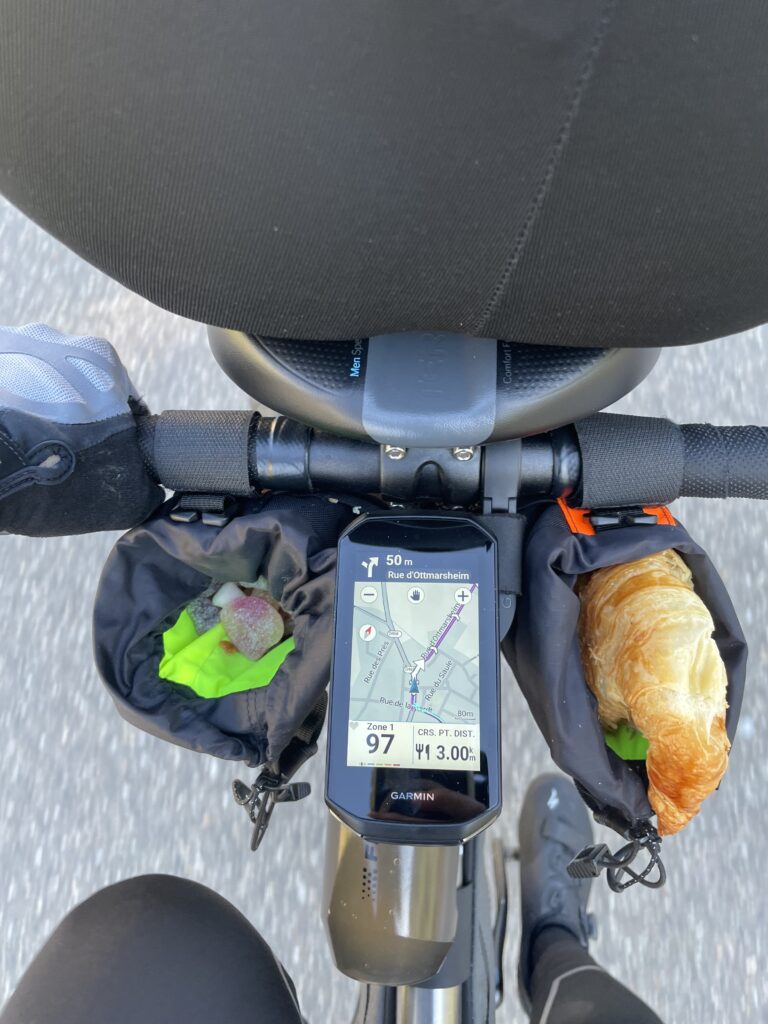
First stop at 50 km (31 mi) in Hombourg. Same boulangerie as before, for what was technically our second breakfast of the day. We weren’t tired at all, but stuck to the plan of stopping every ~50 km (~31 mi), roughly every two hours, to prevent late-stage metabolic and general bodily collapse. A couple of sandwiches disappeared on site, and we took some croissants with us for ongoing maintenance.
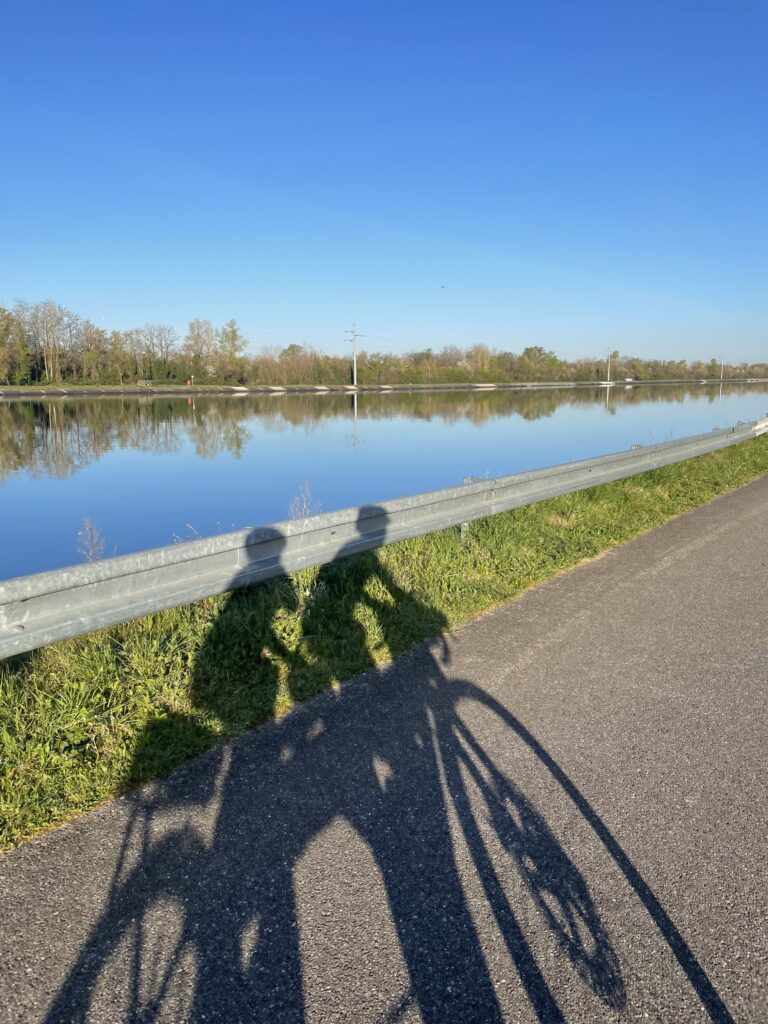
The road from there cuts through open pastures and fields, the kind that invite the wind to stretch its legs. The forecast had promised a tailwind. Reality delivered a headwind. We’d ridden this section before over 160 km (100 mi) into a strong headwind. Today was no exception. Headwind, to be fair, is the official climate of the RATN. Consider it race-specific conditioning 💪🏻
The second stop was at a Lidl in Marckolsheim, about 107 km (66 mi) in. When we arrived, another cyclist’s bike was parked outside, a mountain bike heavily laden with panniers. Inside, there was a bench where we settled in for one of my favourite cycling foods: Nutella with bread and raspberries.
After a little while, a young cyclist came out of the Lidl and asked if he could borrow some money, promising to wire it back later because his debit card wasn’t working. We gave him 10 euros as a gift and were happy to see him soon re-emerge with a decent meal to fuel the rest of his adventure.
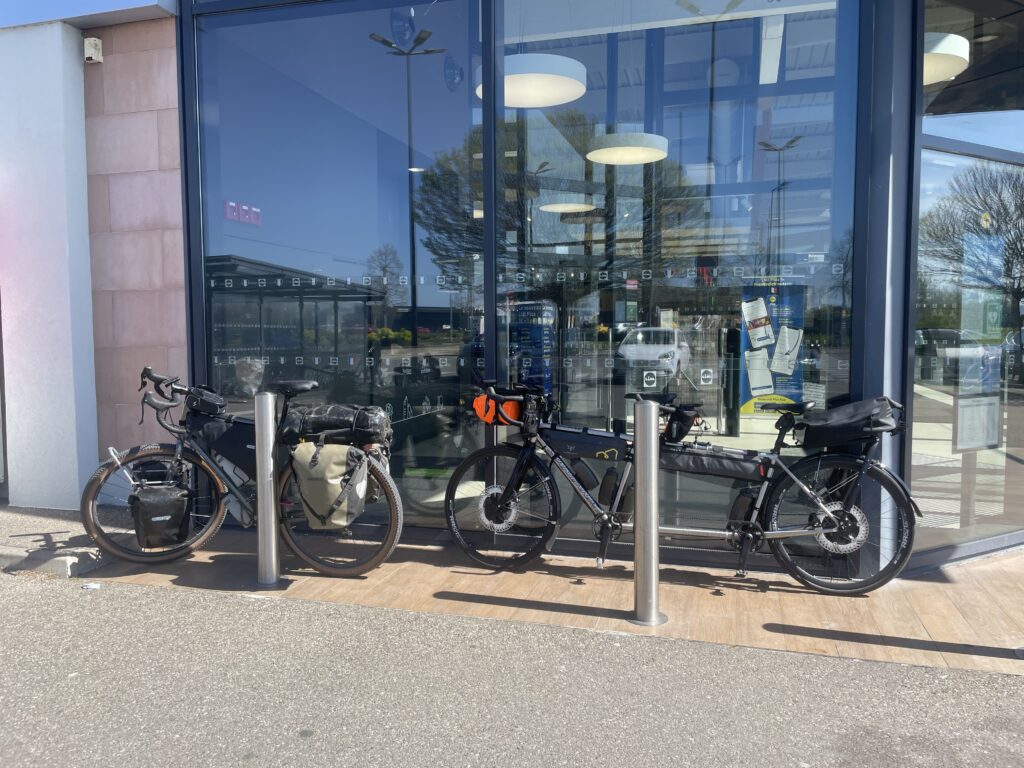
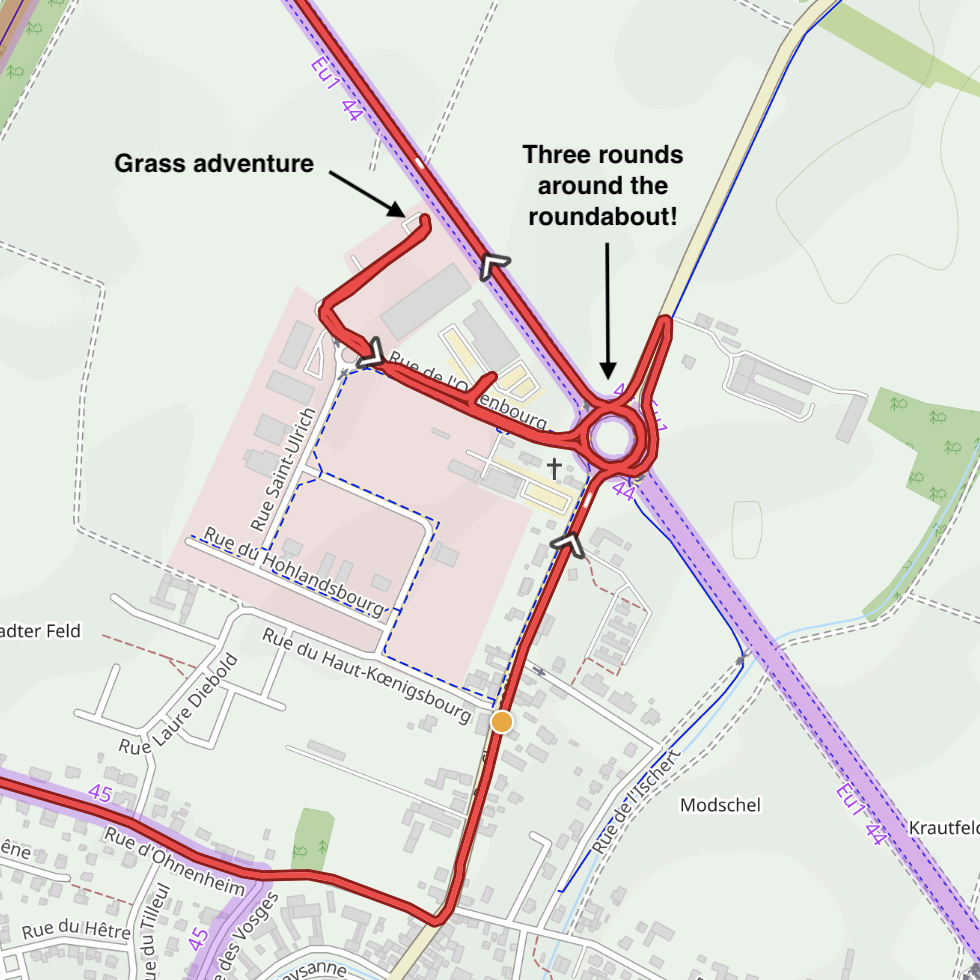
Navigation around the Lidl was… ambitious. We began by confidently ignoring the GPS and attempting a shortcut across a grass field, because clearly we knew better 😅. It did not work. We retreated, followed the official route anyway, and then cycled three full laps around a roundabout trying to figure out where to go. Final score: GPS 1, tandem team 0.
It was around this time I felt a bit of right-sided saddle pain forming.
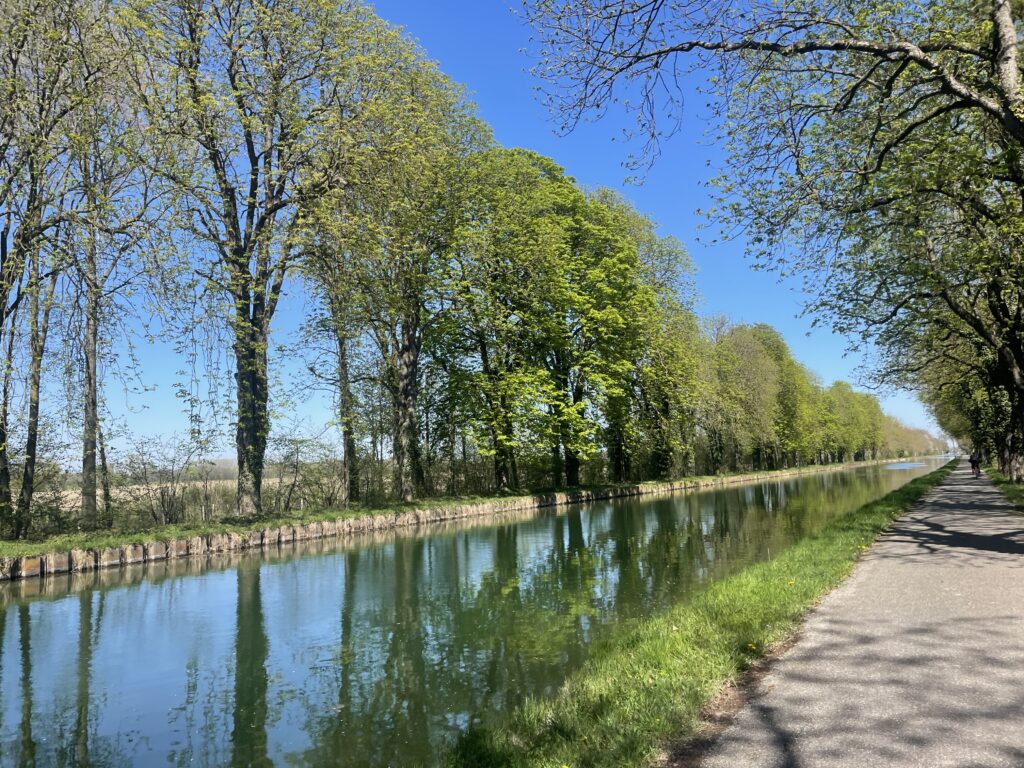
The road from Marckolsheim to Strasbourg feels like it was drafted by someone who had just aced their exam in “drawing perfectly straight lines” and decided to celebrate by never introducing a curve again. Kilometer after kilometer, the landscape stretches ahead in a stubborn, ruler-drawn defiance of variety.
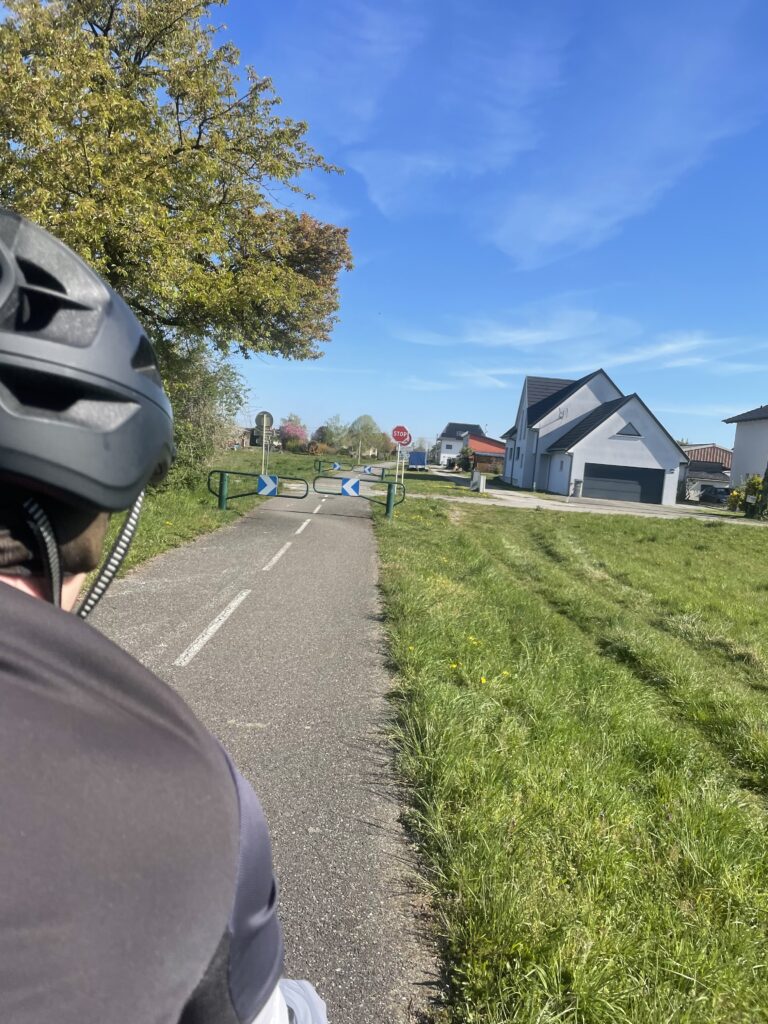
Then come the barriers. Not one, not two, but a whole parade of them scattered along the cycling path like little tactical puzzles. Narrow gaps, sharp angles, just enough to make you question if tandems are technically allowed on these roads at all.
At some point, I suggested we might get a speed boost if we just hit one cleanly. You know, like in Mario Kart! 🏎️ It felt scientifically plausible in the moment.
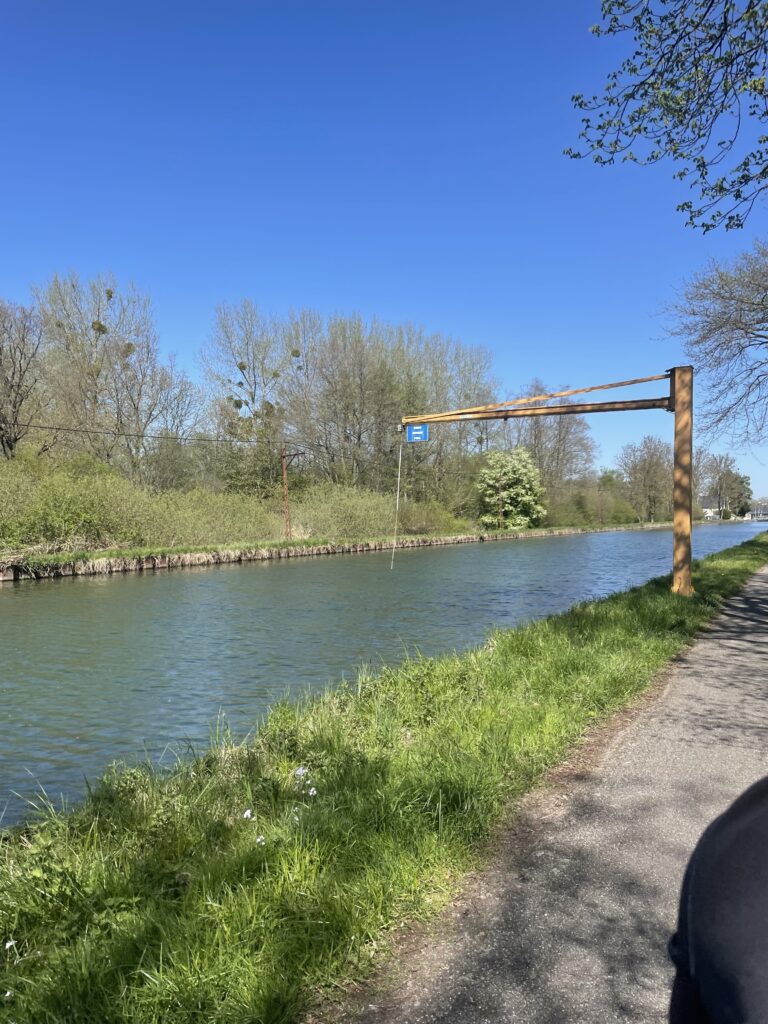
And then there was… this thing. A metal frame over the canal, a rope dangling down with a “PULL” sign placed above it like an invitation from a very questionable game show. No sign, no explanation, just silently waiting. I still have no idea what it is. A depth gauge? A ritual device? A test of character?
Naturally, I suggested that Marco jump and pull it. In my mind this would trigger a hidden mechanism. Maybe a shower of snacks. Maybe a full mariachi band appearing out of nowhere. Maybe we’d win a refrigerator. Maybe it would gently teleport us to Koblenz. Or unlock a secret bonus level of the canal. Surely, at the very least, we’d get confetti.
Marco declined both suggestions. What can I say? My husband is a wise man.
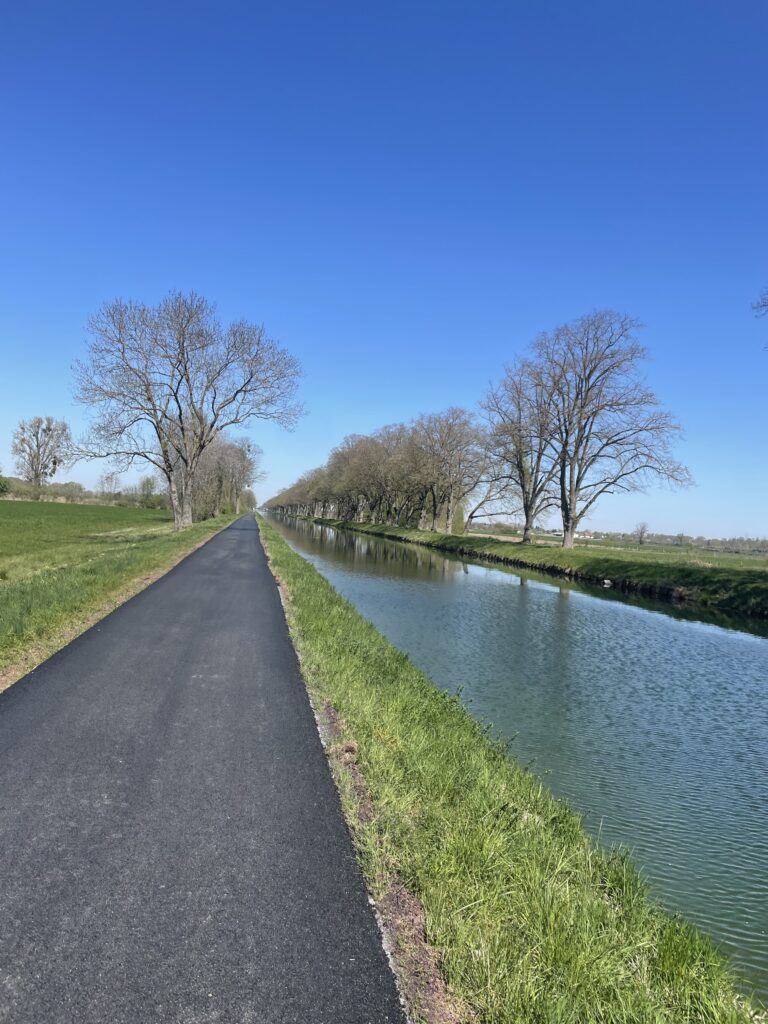
Just before Strasbourg, the tree roots staged a quiet uprising and weaponised the tarmac. Repeated impacts gradually tilted my saddle nose-up, triggering a series of roadside bike-fitting interventions. In total, we stopped about six times to readjust it, each time sacrificing a little more time and patience.
We then entered Strasbourg. Cities. A necessary evil. They’re great for refuelling, getting water, and finding a place to sleep, but they introduce a whole array of chaos as an unwanted side effect. Heat radiates from the concrete like an oven. Traffic lights turn you into a slow-roasting chicken. Pedestrians move with the situational awareness of a Roomba on low battery. From the back seat, I see nothing, which adds a mildly concerning layer of existential suspense.
Because we were about 50 km (31 mi) in again, we reluctantly decided to enter the city for a resupply and a short rest. Unfortunately, the Lidl we found offered neither seating nor shade. Not keen on being slowly air-fried, we initiated an evacuation to a nearby McDonald’s and aggressively administered one McFlurry per person. Symptoms improved.
Strasbourg was a maze of construction, detours, and red lights. Then an elderly man on an e-bike appeared. He looked exactly like Mike from Braking Bad. We let him pass. He guided us through the chaos like a traffic whisperer, completely unfazed. Absolute legend. Thank you, Mike!
Even though we couldn’t find a place to rest at the Lidl, we stumbled upon a perfect bench just after leaving Strasbourg, where we lay down for about 15 minutes.
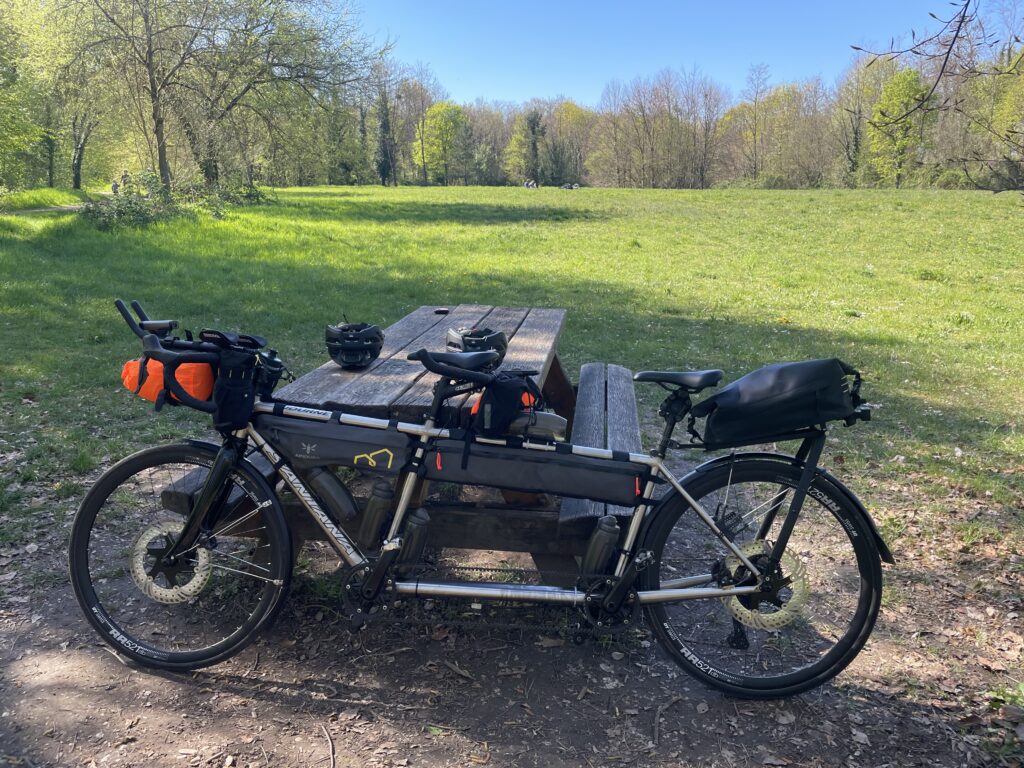
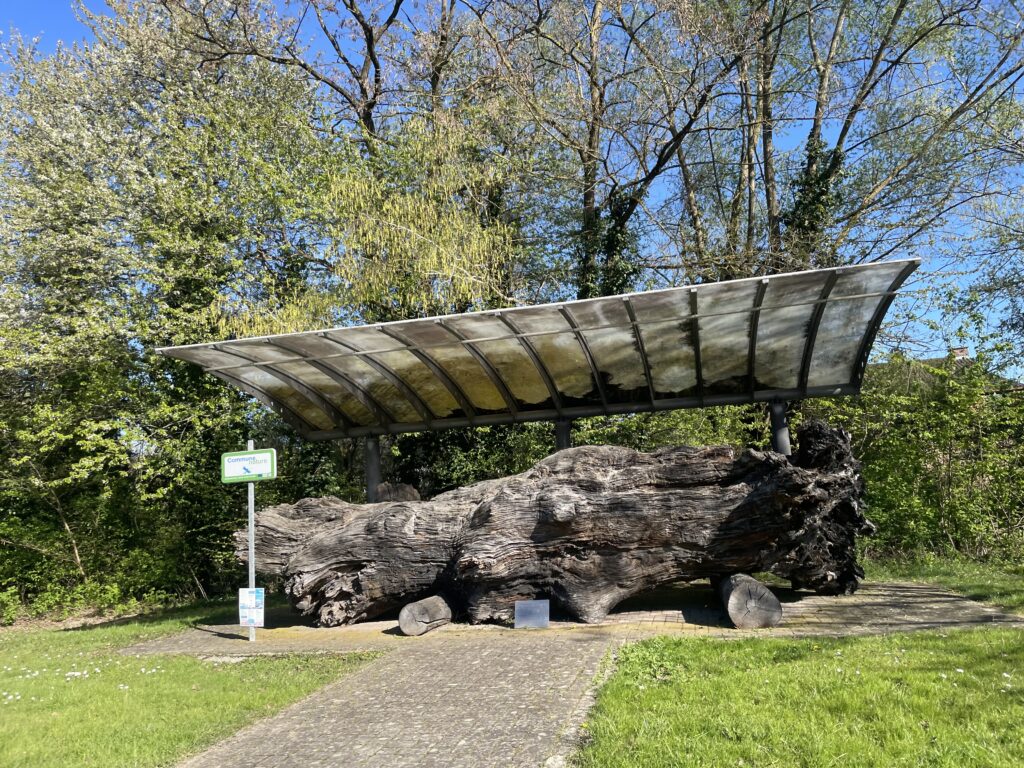
I tried taking some photos, but remember the croissant from earlier? It had detonated inside my feedbag. My poor iPhone was collateral damage, the camera now thoroughly coated in croissant debris, which is not quite the aesthetic I’m aiming for. This now qualifies as a recognised occupational hazard of food-storage-phone cohabitation. From now on, preventive measures will be implemented to avoid progression to a text-only blog.
Our next stop was, as you can guess, another 50 km (31 mi) later, at about 200 km (124 mi) in Sessenheim, where we pulled into an Aldi to stock up on food and water. Neither of us felt particularly hungry, which in hindsight should have been interpreted as a warning sign rather than good news. Unfortunately, once again there was no shade, so we decided to push the final 50 km (31 mi) without stopping.
This was, in retrospect, a poor life choice.
About 30 km (19 mi) later, we collapsed onto a stone bench along the Rhine to rest and address the early stages of a bonk.
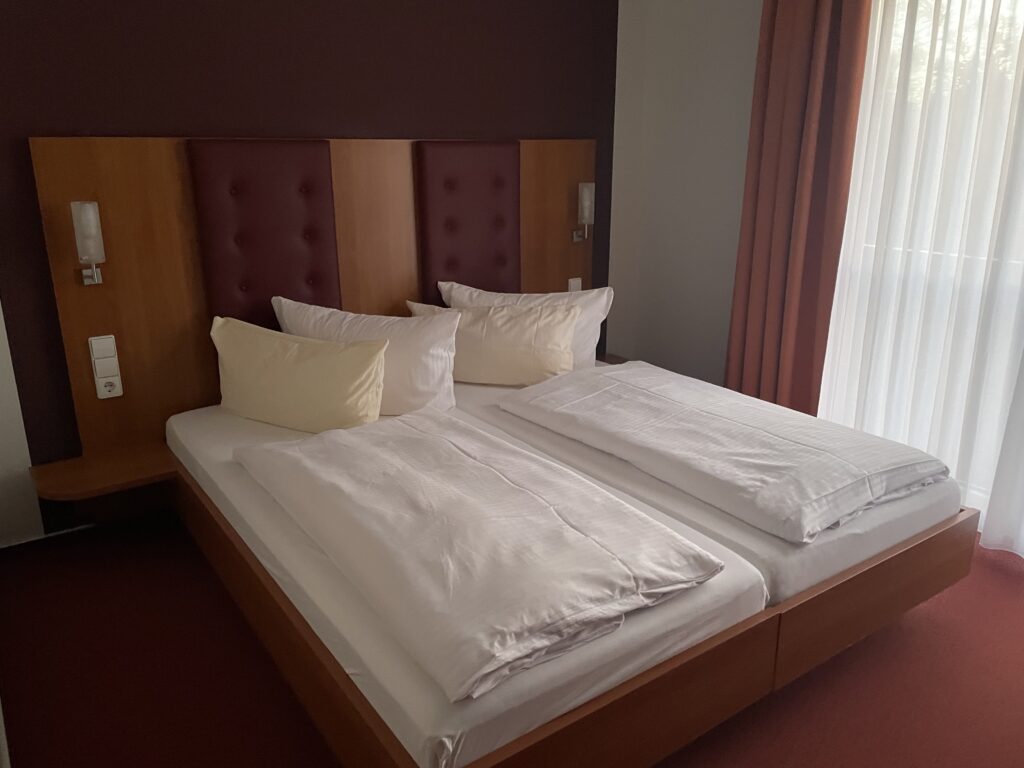
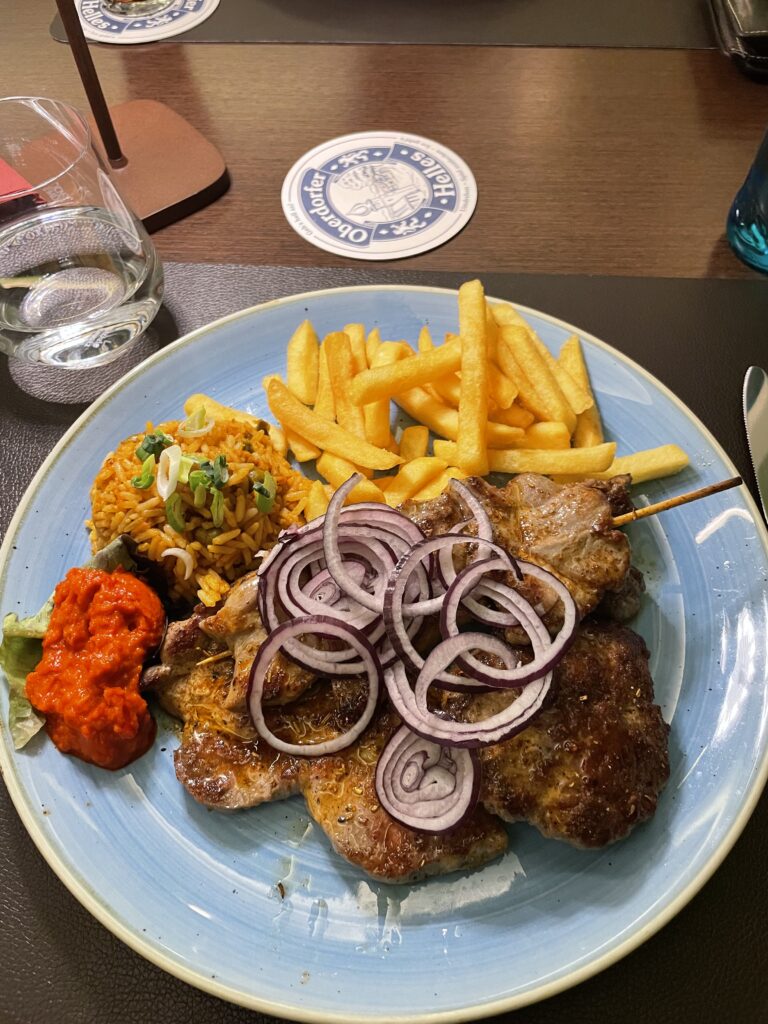
We decided not to push for 270 km (168 mi), and instead called it a day at 245 km (152 mi) at Hotel Vater Rhein in Maximiliansau. Fortunately, they had a large underground parking area where we could store the tandem securely. We devoured some food in the restaurant, declared the day officially over, and retreated to our room.
By that point, I had been riding for about 220 km (137 mi) with persistent pain from my intercostal neuralgia, and a saddle sore was beginning to develop, both on the right side. During a previous bike fit, I’d learned that my right leg is slightly shorter than my left, which I had been compensating for with a 2 mm cleat shim under my right shoe.
The day before, however, I had removed the shim. Not for biomechanical reasons, but because it made clipping in annoyingly slow, which I found unacceptable. In hindsight, this may not have been the best decision of my life.
Both issues had been completely absent with the shim in place, including during our 260 km (162 mi) ride, so its removal was the most likely culprit. Fortunately, I had packed spare shims in our SHTF bag. I added a 1 mm shim under my right shoe, hoping to strike a compromise between functional biomechanics and the ability to clip in like a normal cyclist. In hindsight, this too may not make the podium of my best life choices.
Day 2
Again, our classic 06:00 alarm. We quickly got dressed, packed our things, and entered the breakfast room at 06:20 sharp. Yes, that was a small flex 💪🏻. Breakfast consisted of bread with butter and honey, plus some cheese sandwiches. Marco had a carrot cake, but said it was dry and not worth the calories.
What concerned me slightly was that the intercostal neuralgia was still present. Normally it disappears completely after I stop cycling, reduced to a vague memory by the next day. Then again, I don’t usually provoke it by riding 220 km (137 mi) with it already active. I was hoping the cleat would do its magic.
We retrieved the tandem from secure storage and continued our journey. The first 50 km (31 mi) were peaceful, riding through a nature reserve with a beautiful sunrise and the steady background of chirping birds.
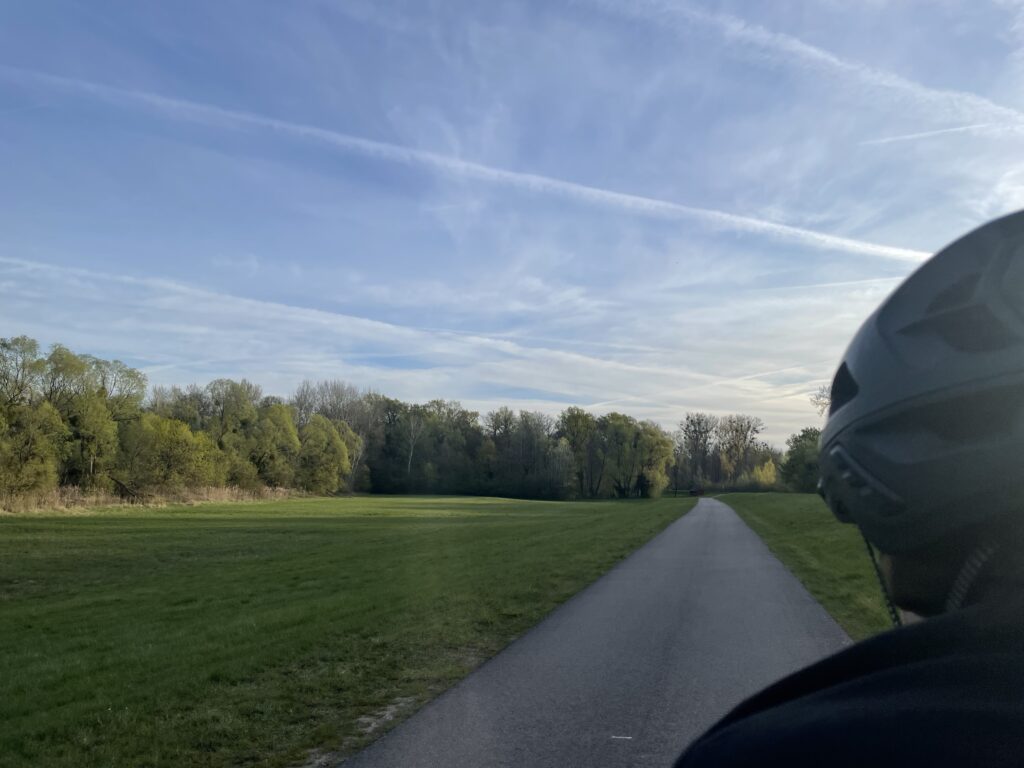
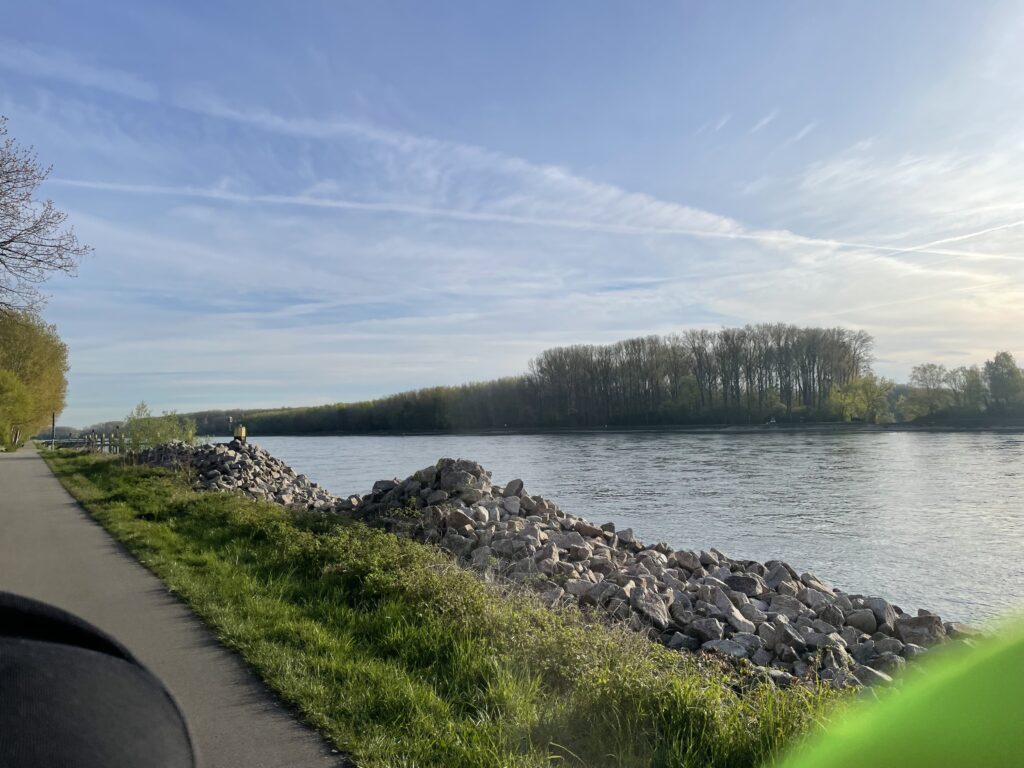
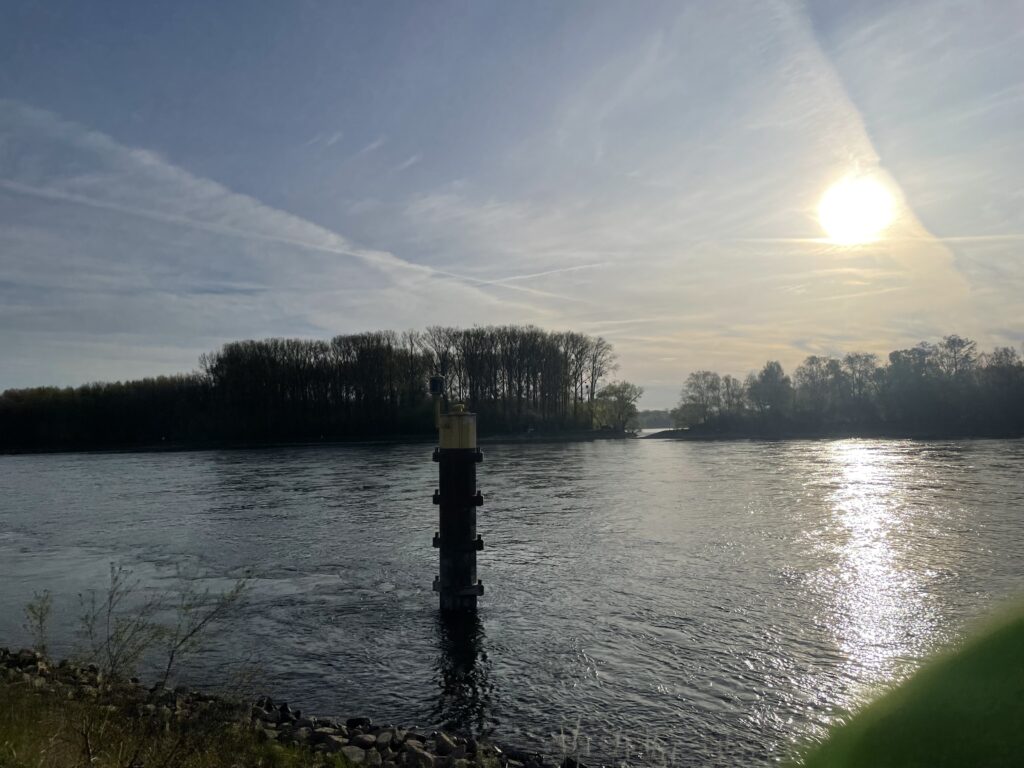
Somewhere in those first 50 km (31 mi), Marco noticed his saddle was a bit too high, so we stopped and lowered it by about 5 mm. Because my handlebars are attached directly to his seatpost, they dropped by 5 mm as well, with no real way to prevent or correct this.
Once we got going again, I immediately felt increased pressure on my hands. There wasn’t much I could do about it, so I settled for regular stretching and hoped to make it through the rest of the route.
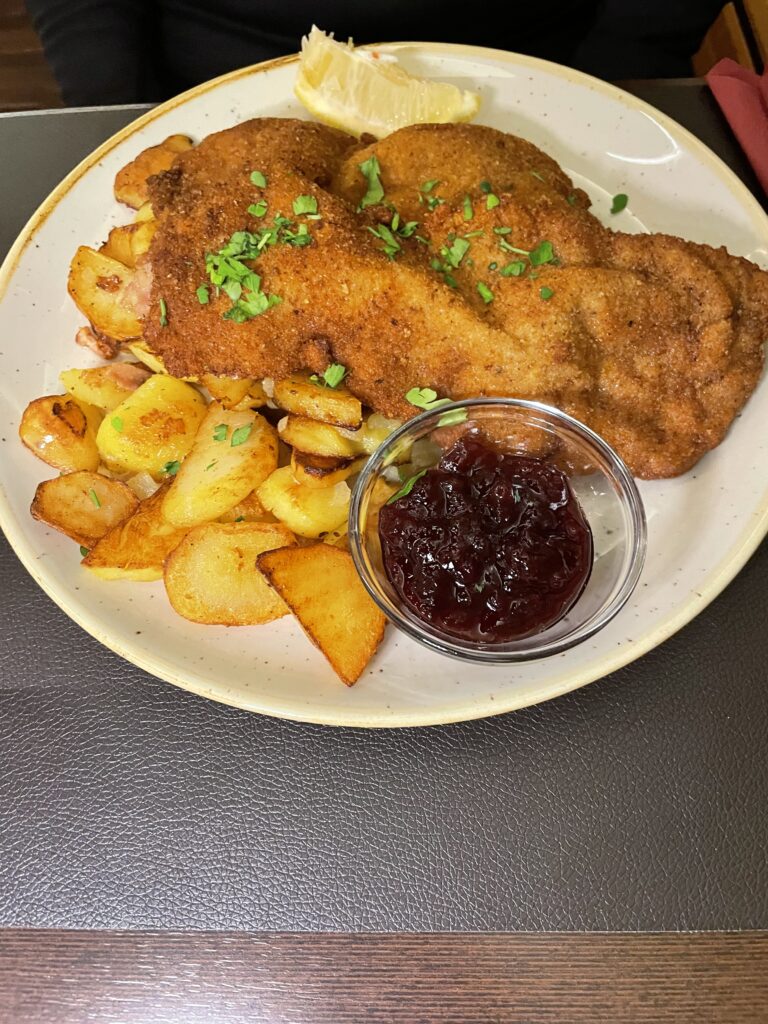
We took our first planned stop at a bakery just before Speyer, a town whose name immediately invited a frankly irresponsible number of puns. Marco claimed Speyerman lives there, while I found myself feeling thoroughly inspeyered 🤣. I upgraded my disappointing BBQ chicken sandwich to Marco’s schnitzel sandwich via strategic negotiation. The café was one we’d visited before while riding the EV15, so it felt familiar.
They usually have some radio music in the background, but this time it had been replaced by an opera singer who sounded like she was under acute distress, possibly while being pursued by a bee.
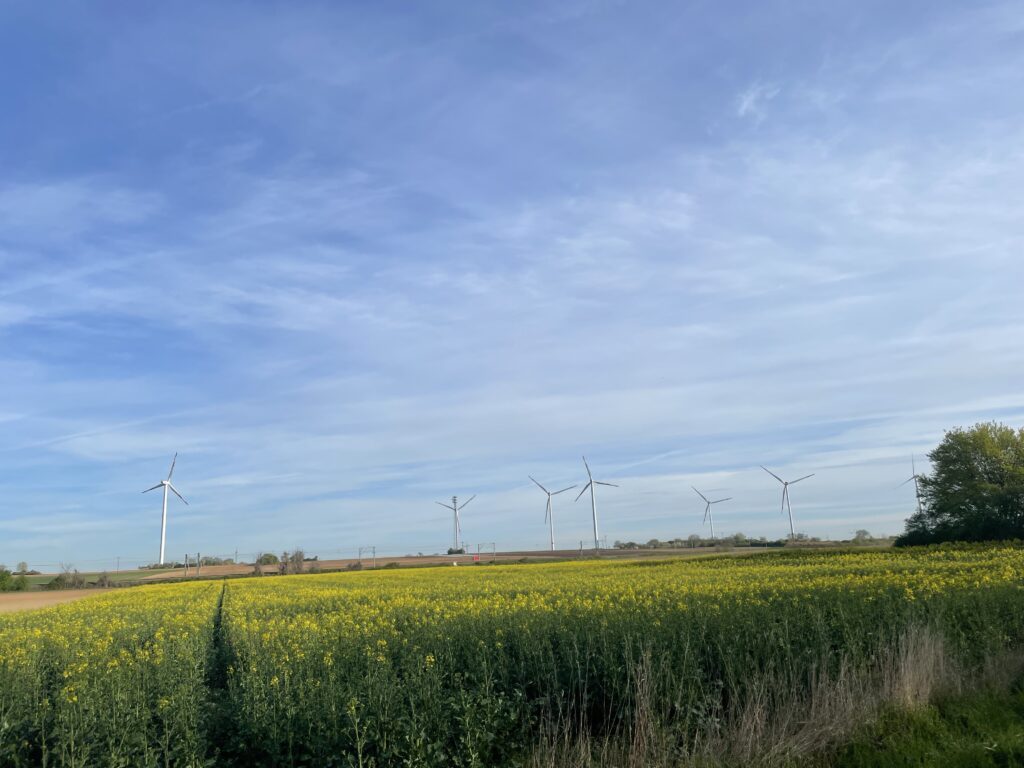
The next 50 km (31 mi) can only be described as a tragicomedy, lasting a full 3.5 hours. Yes, you read that correctly. We cycled a majestic 50 km (31 mi) in 3.5 hours.
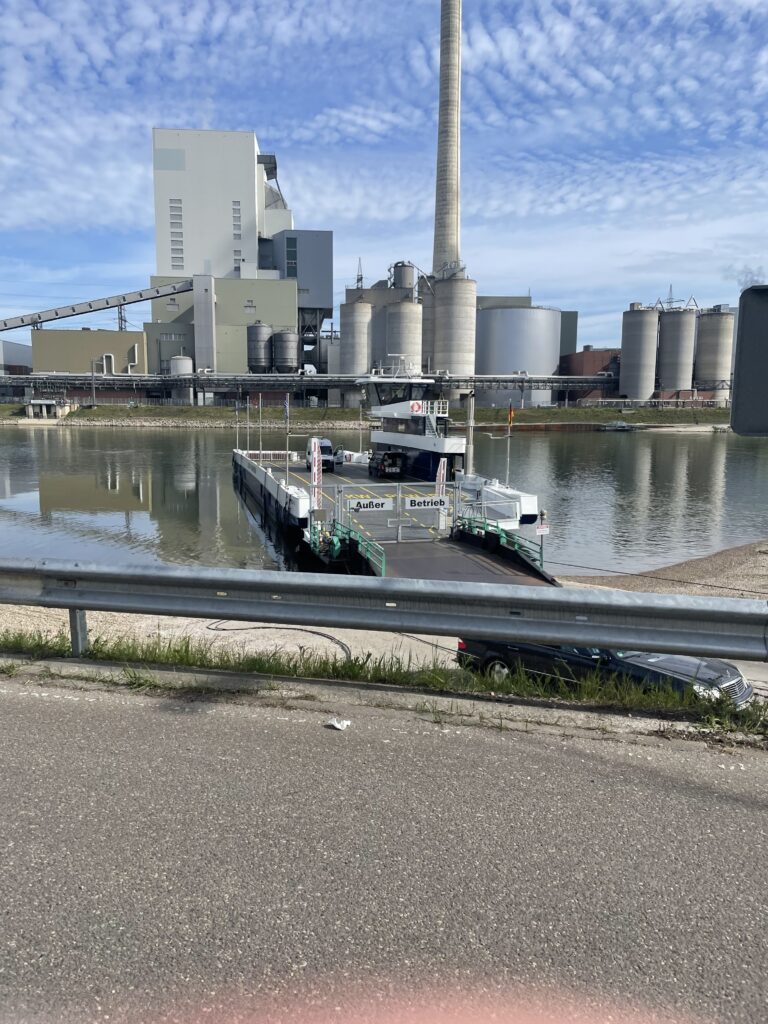
First, we encountered something that should have been avoided: a ferry crossing. I generally try to stay away from those, as timetables tend to be more of a philosophical concept than a reliable plan. This one I had overlooked, and of course, it was closed. A large “außer Betrieb” sign hung from firmly locked gates. No detour was planned, so we turned to the creative route planning capabilities of Marco’s Wahoo.
Then came the cities. Ludwigshafen, Mannheim, Worms, Mainz. Each one offered a curated experience of traffic lights, chaos, and obstacles. At one point, there were literal trees growing in the middle of the cycle path. Repeated curb hits destabilised my saddle again and again, forcing us to stop every few kilometres to readjust it, steadily bleeding time and patience.
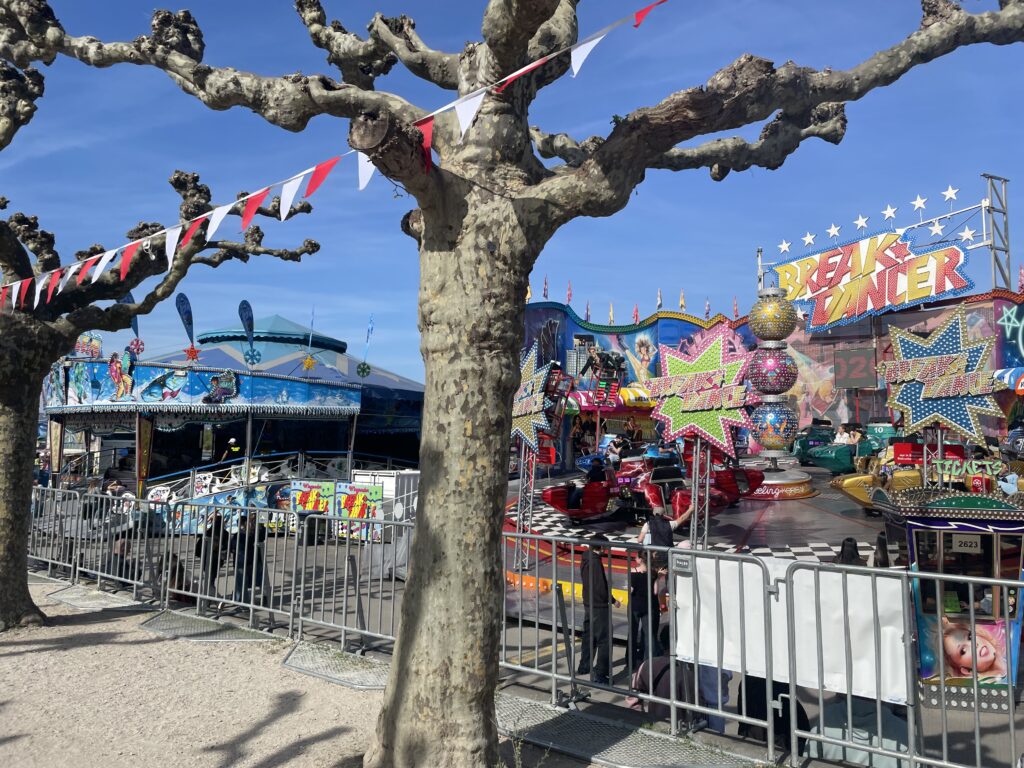
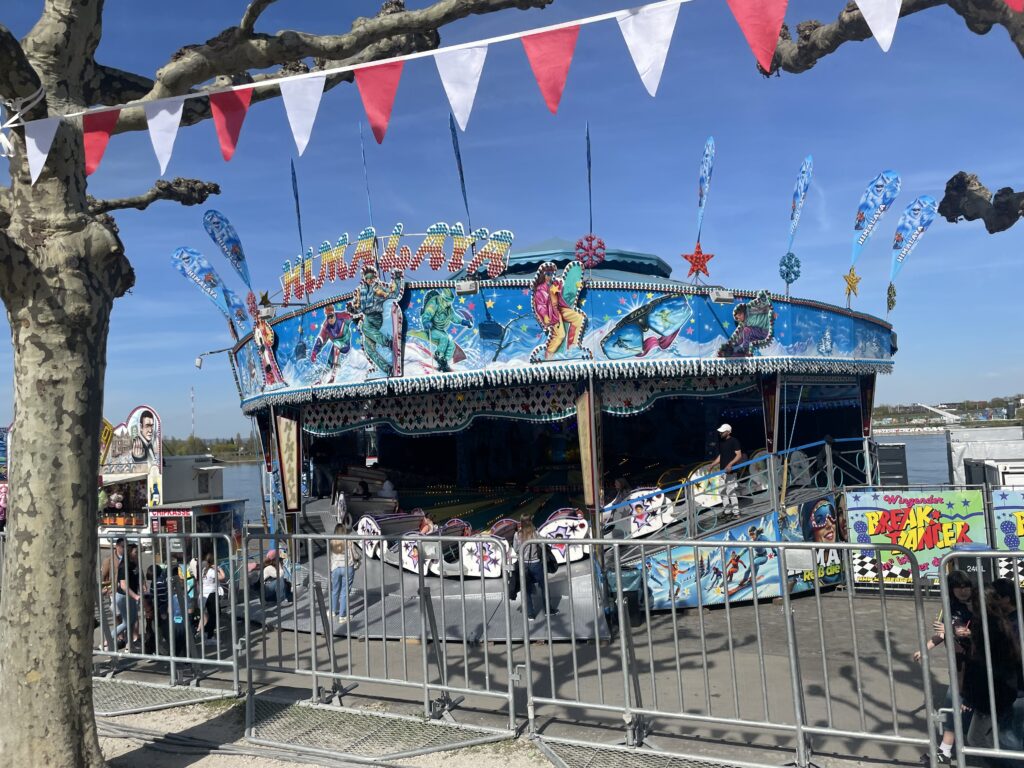
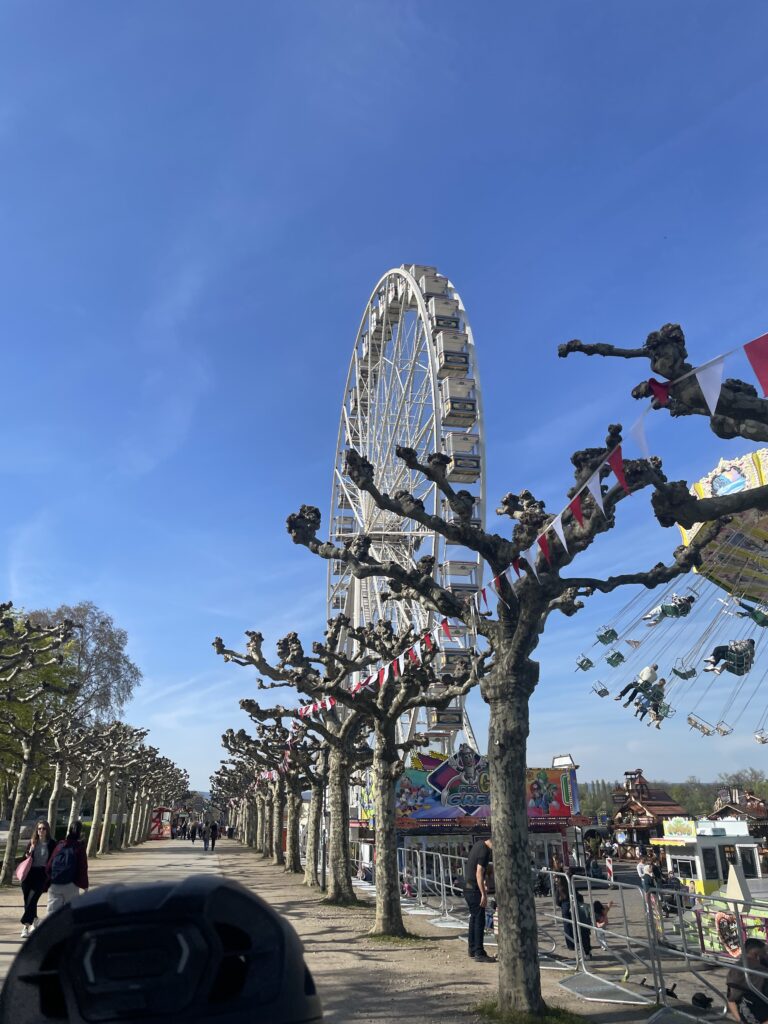
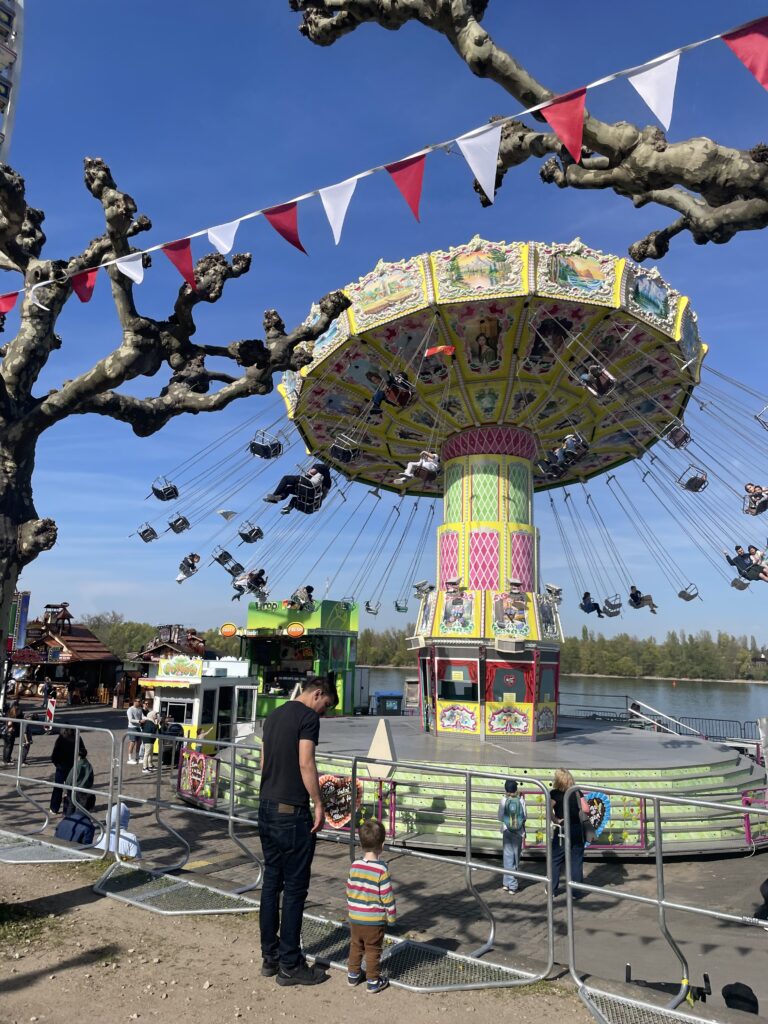
At some point, the bike path casually merged into a full blown amusement park. Children zigzagging, adults drifting unpredictably, occasional existential threats on spinning chains. Marco was suddenly playing a real life Nintendo game, navigating it like a pro already holding a high score on expert mode. I contributed by trusting him completely and trying not to become collateral damage, or a cautionary tale.
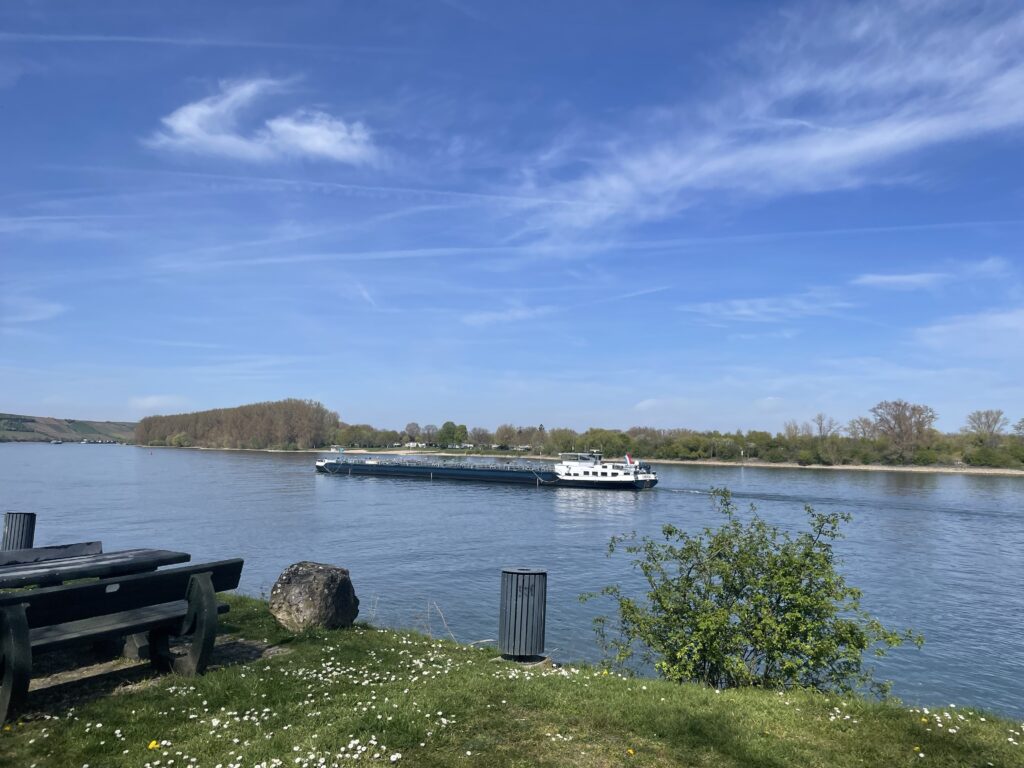
After another 50 km (31 mi), we took our planned stop at a bakery, where we realised we had lost a little over an hour to the accumulated chaos. That effectively translated to roughly 25 km (16 mi) at our average pace of 25 kph (16 mph).
That morning, we had quietly set the goal of riding past Koblenz to a hotel at around 270 km (168 mi). With that hour gone, the 270 km (168 mi) plan quietly expired. We recalculated and shifted the target to 250 km (155 mi), aiming for a hotel in Rhens, just before Koblenz.
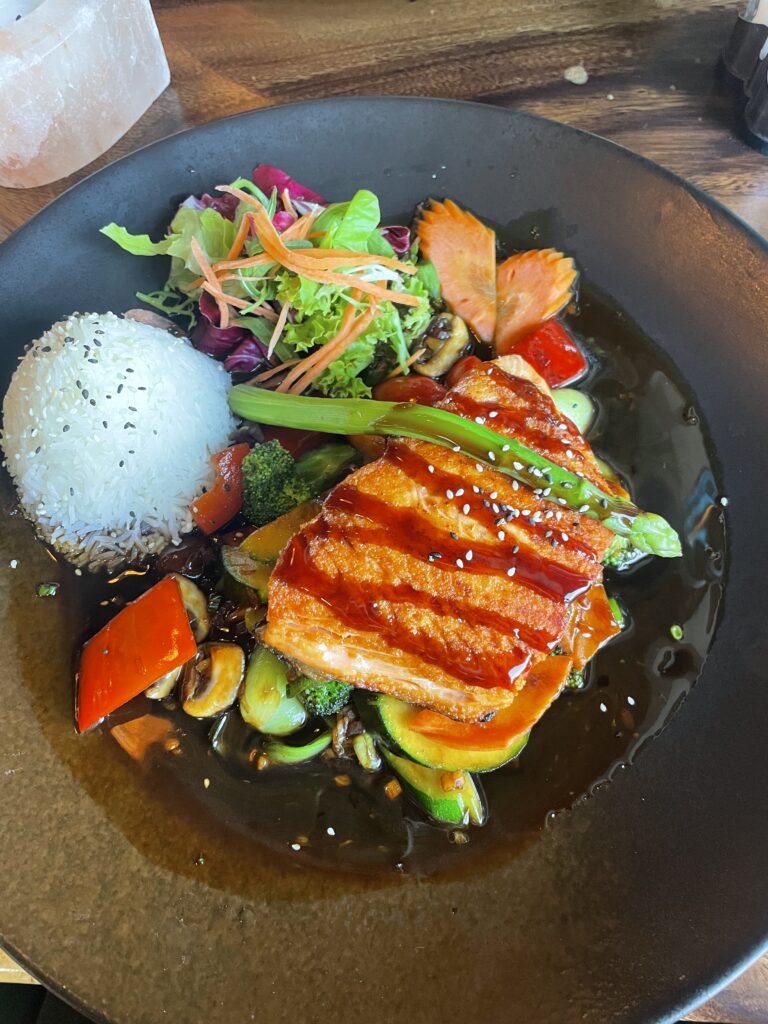
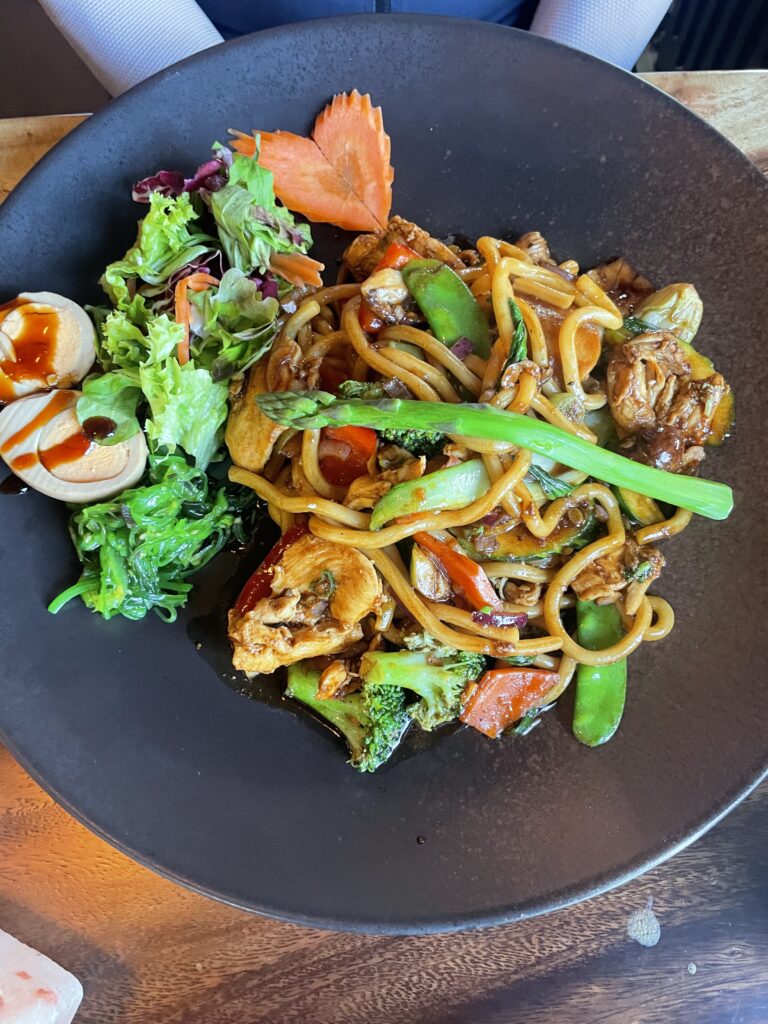
Since we’d struggled to find food at the end of the previous day, we decided to eat at a more reasonable hour. When we passed a Vietnamese restaurant, the offer was simply too good to ignore. I had a large plate of salmon, and Marco devoured some noodles with chicken. It tasted excellent, but about 30 minutes later it triggered intense nausea, leaving me dry-heaving at the side of the road.
While trying to remount the tandem, I managed to hit my shin with the pedal, precisely at the same spot I had already hit less than an hour earlier at the restaurant. The pain can only be described as character-building.
The situation escalated quickly: half dry-heaving, half crying from pain, and somehow also laughing at the absurdity of it, I stood at the roadside looking like a live case report in progress. I looked so dishevelled that several cyclists stopped to check if I was okay.
After deciding that being a human fountain was not the career trajectory I was aiming for, I managed to mount the tandem like a functioning cyclist and we continued on our way.
Although the views were beautiful, the road quality deteriorated towards the end. Loose concrete, raised tiles, and tree roots attempting to escape the soil. My hands took a serious beating, and the intercostal neuralgia flared up again.
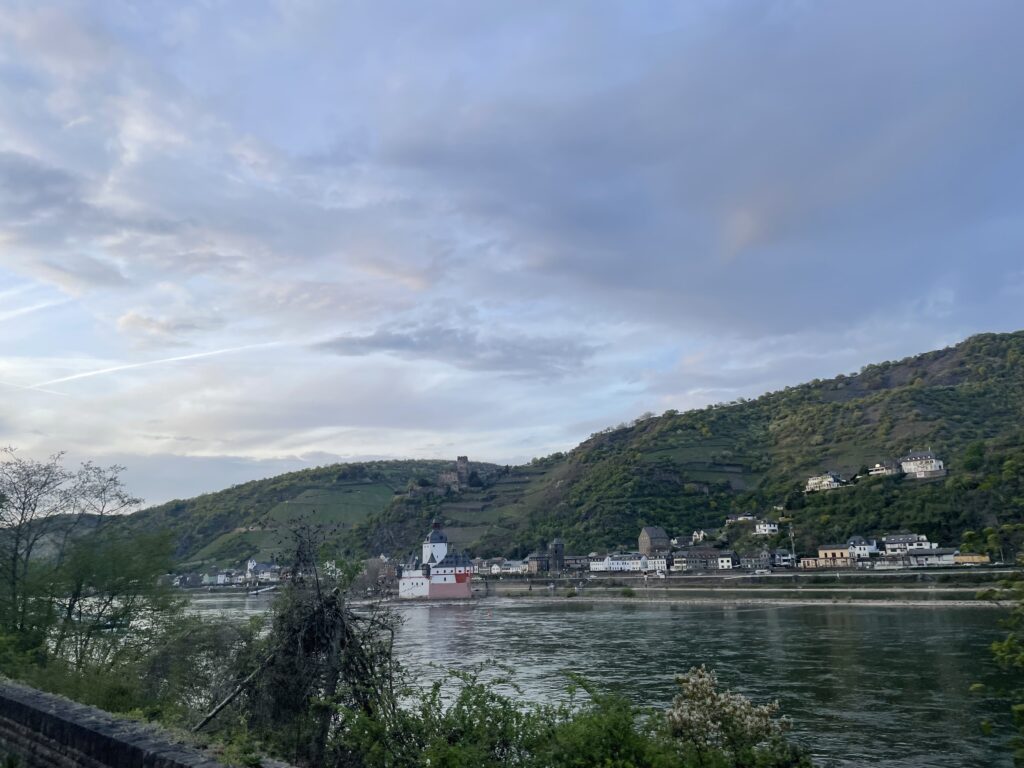
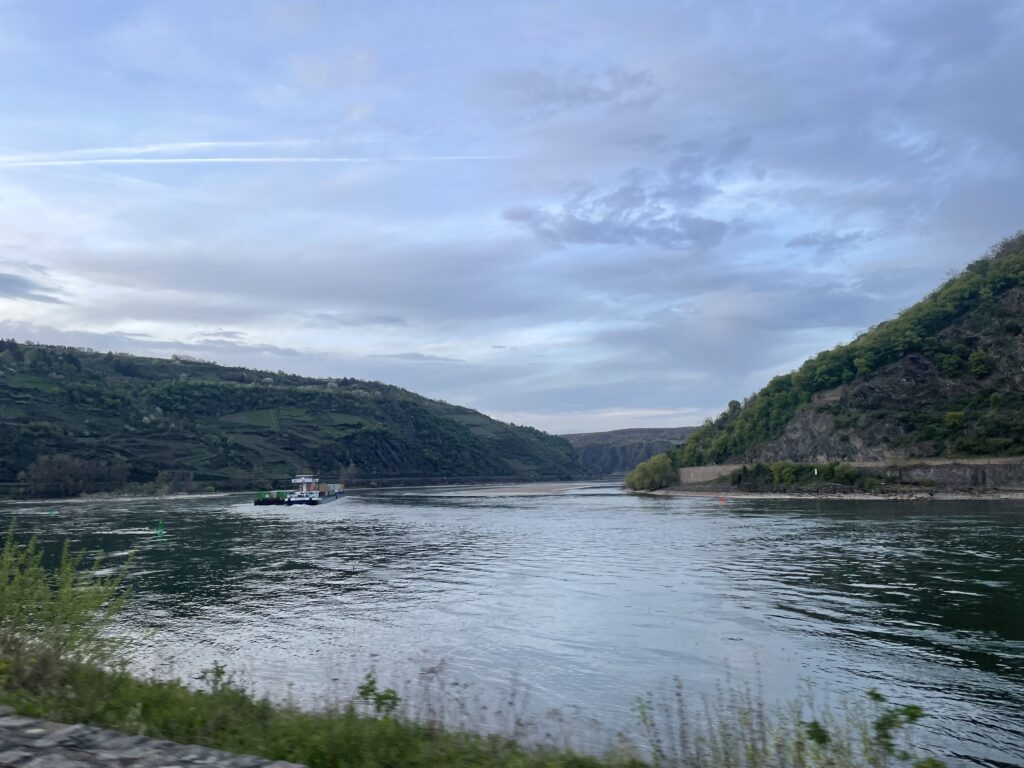
About 30 km (19 mi) before the hotel, I tried to book it via Booking.com. What I didn’t know at the time was that the site had been hacked and was essentially non-functional. When the app failed, I tried calling the hotel, only to be greeted by a German AI. It didn’t understand me, I didn’t understand it, and after unsuccessfully attempting to spell out my email, I gave up. Fortunately, about an hour later, Booking.com came back to life and I was able to complete the reservation without issue. The self check-in worked flawlessly.
We got into the room, showered, and went straight to sleep. At 03:00, I woke up with severe pain in both hands. I took some ibuprofen and applied diclofenac cream, but by 05:00 it was clear the situation was not improving.
Day 3
The alarm went off at 06:00, but to be honest, it was unnecessary since I had been awake most of the night due to the pain. We packed our things and went downstairs. The hotel owners were already up and immediately curious about the tandem. They asked a lot of questions, which Marco handled, as I was operating on minimal cognitive bandwidth.
We had breakfast at a nearby bakery and re-evaluated our plans. With the RATN only about three weeks away, we decided not to risk injury and planned a route to the train station in Koblenz to head home.
The 8 km (5 mi) ride to the station went smoothly, and fortunately, my hands didn’t flare up again.
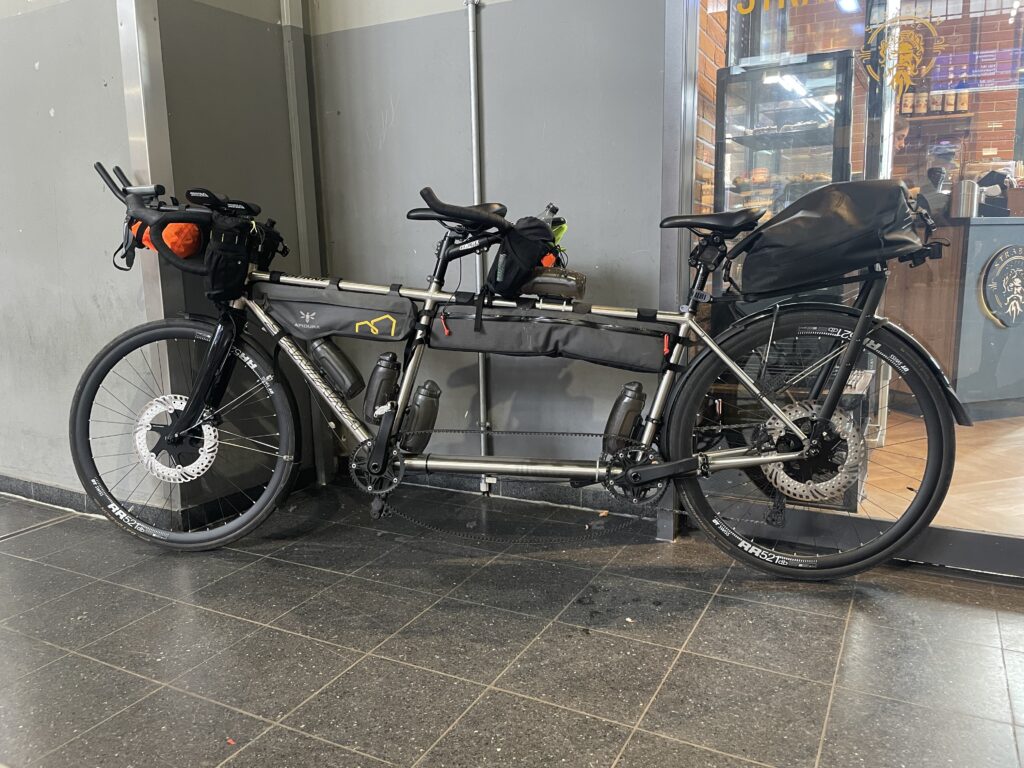
Despite their website explicitly allowing tandems on regional trains, the ticket agent informed us that we would probably be kicked off anyway. He was still willing to sell us the tickets, but clarified that this would not guarantee us a ride home.
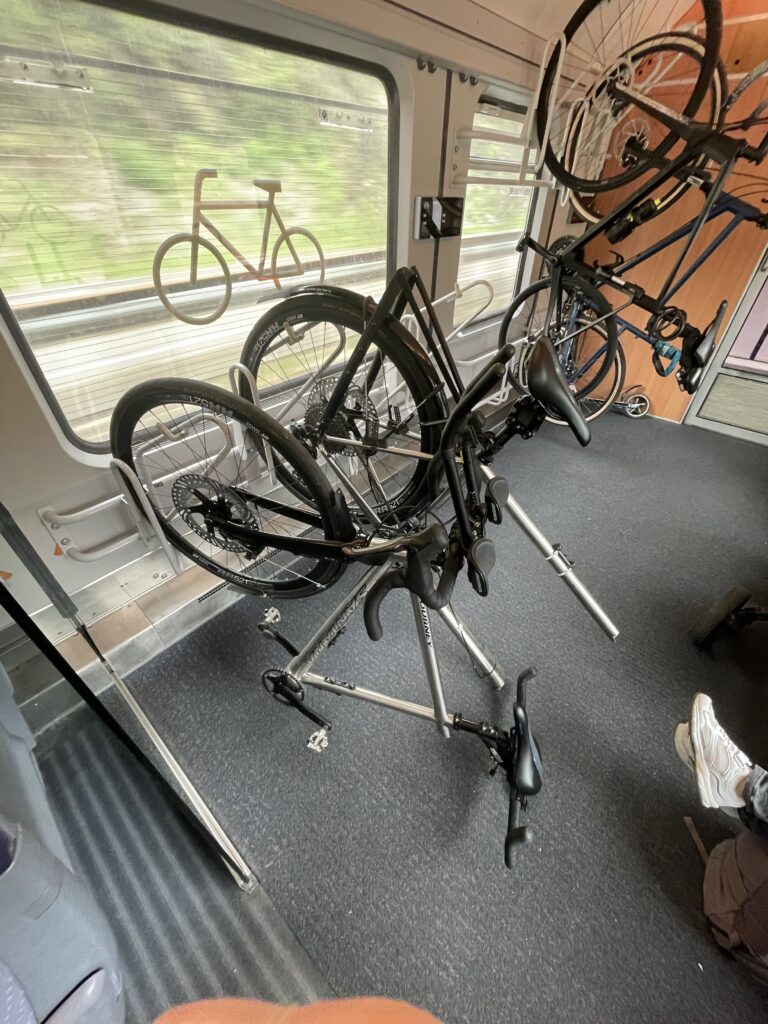
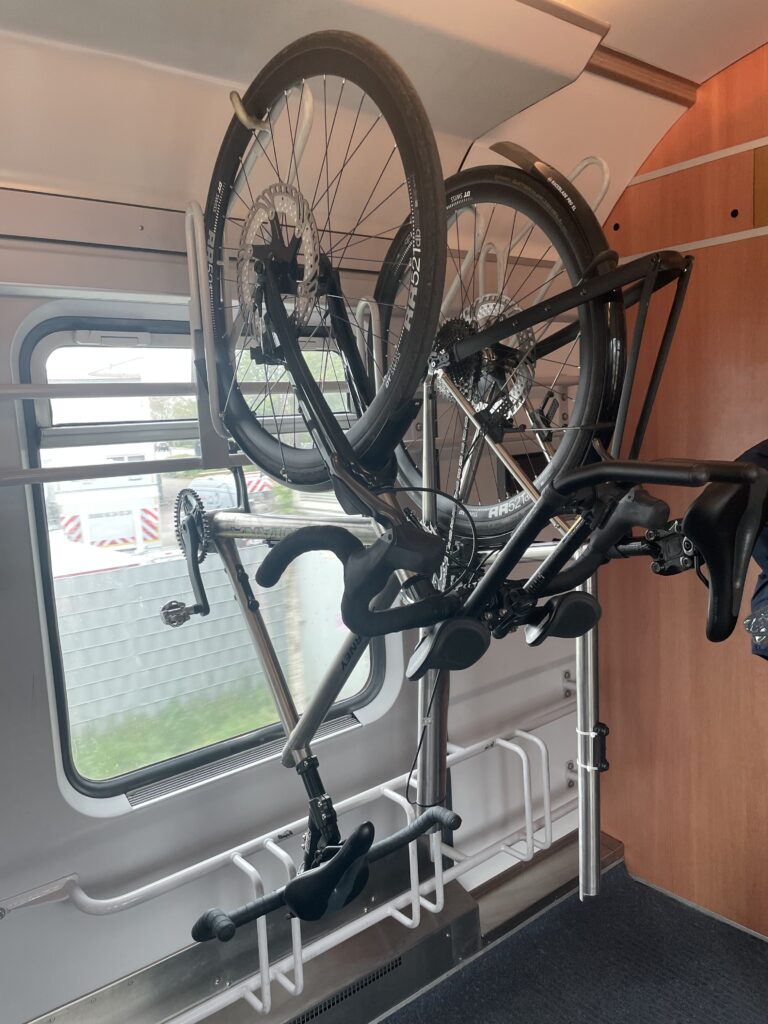
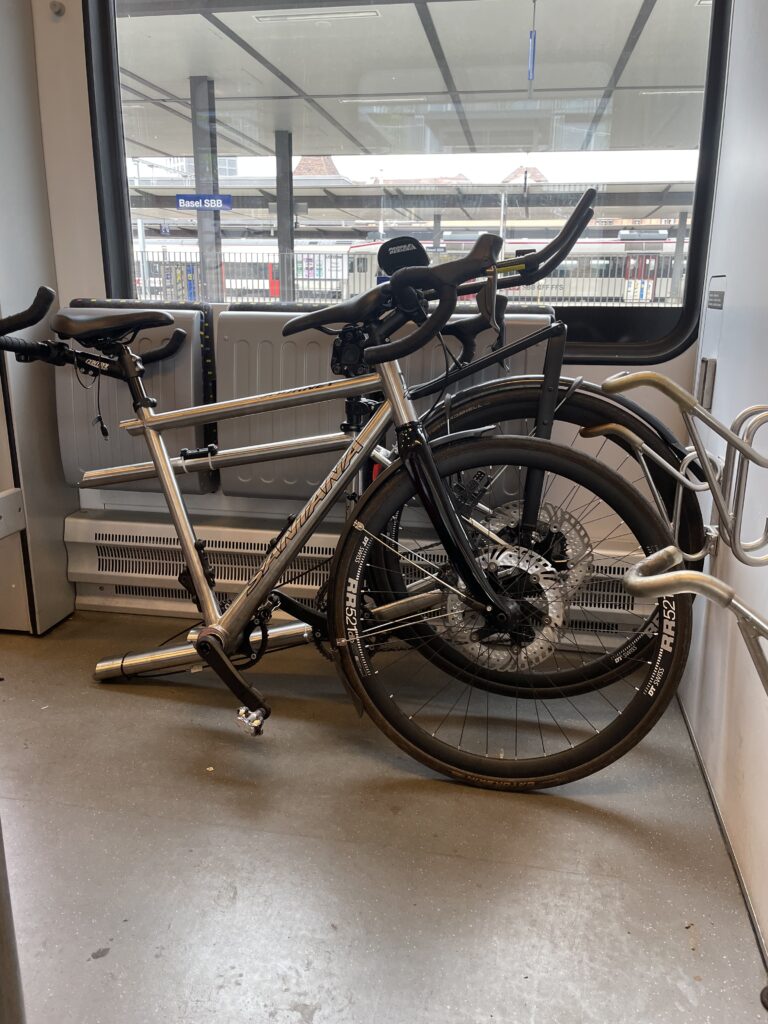
After some brainstorming, we discovered a loophole: a disassembled tandem does not count as a tandem, but as luggage. So we split the Limousine into two pieces and transported it as such, buying two train tickets to ensure we had enough space.
At that point, the bike entered a Schrödinger’s bicycle state: simultaneously a tandem and not a tandem, with its classification depending entirely on whether it was being observed by us or by railway personnel. A phenomenon closely related to my previously described Schrödinger’s VO₂ max, where reality politely waits to see who is looking before deciding whether you are doing a Zone 2 ride or a VO₂ max effort.
Ever since we bought the tandem, reality itself seems to have become slightly… negotiable. The bike has effectively turned into a portable reality distortion device, forcing the world to reconcile conflicting inputs in real time. Barriers become puzzles, bike paths become amusement parks, ropes become potential game shows, and railway personnel suddenly develop strong opinions on quantum mechanics.
On the train we met an older audax rider. I recognised him immediately as he entered with his bicycle. Steel frame, dynamo hub, paper map. The kind of bike that looks like it has seen continents, and very likely has.
It didn’t take long to strike up a conversation. A tandem in two pieces tends to attract attention. He told us he had completed Paris-Brest-Paris four times. His last finish was in 65 hours, which is, even by my standards, completely unreasonable, especially considering he was over 70 years old. Although it is extremely impressive, it’s not entirely unheard of, with a tandem team (both about 55-60 years old) finishing in about 52 hours a couple of years ago.
For the uninitiated: Paris-Brest-Paris is the oldest cycling event in the world. Riders complete a 1200 km (746 mi) route from Paris to Brest and back within 90 hours. It has been held every four years since 1891, and was run as a race until 1951, and legend has it the Tour de France was born from it. To qualify, you need to complete a Super Randonneur series in the same year: 200 km (124 mi) in 13.5 hours, 300 km (186 mi) in 20 hours, 400 km (249 mi) in 27 hours, and 600 km (373 mi) in 40 hours. It remains firmly on my bucket list, once I locate the time required to attempt it.
He generously shared his experience, along with stories of rides he completed and others he didn’t. The conversation lifted my mood considerably.
There is something about these riders. The ones who do these distances for fun. They carry a kind of quiet certainty that is difficult to describe. A calm assumption that things will work out, and that whatever the kilometres decide to throw at them can be managed, one way or another.
After arriving at our final stop, we reassembled the tandem without issue and cycled the last few kilometres home.
Conclusion
In hindsight, most of the problems we encountered were related to bike fit.
Lowering Marco’s saddle by 5 mm (0.2 in) indirectly triggered a cascade of hand overload, which ultimately led to a scratch. At the time, this wasn’t something we could have prevented, as there was no way to raise my handlebars in response. The bike is going to the mechanic next week, where I’ll have a riser installed to prevent this in the future.
Second, removing my 2 mm (0.08 in) cleat shim was… unwise, and likely cascaded into a range of avoidable issues. Cycling roughly 460 km (286 mi) with active intercostal neuralgia also does not rank among my better decisions.
The fragility of long rides remains fascinating. Millimetres matter. Five millimetres at the handlebars resulted in a scratch. Two millimetres under my foot led to saddle pain and intercostal neuralgia. These are rounding errors in normal life. Out here, they become plot twists.
Despite the adversity, the ride had many high points. Even when things started to unravel, we remained a functioning team, looking out for each other and supporting one another along the way. Riding with a partner is often considered harder in the ultra world, but I wouldn’t describe it that way. The support you can offer each other more than compensates. It turns something difficult into something shared.
In retrospect, I realized I was suffering from a fairly advanced case of “get-there-itis”, an aviation term for the very human tendency to push on toward a destination long after good judgment has quietly left the cockpit. If I had been riding alone, I would almost certainly have kept going. Marco, however, remained firmly in possession of common sense. And that, more than anything, is why riding with a partner is not a disadvantage, but an advantage.
In the first few days after the ride, I was quite disappointed. With a bit of distance, that feeling shifted. We rode 500 km (311 mi) in two days, which is objectively solid. The audax rider was right. Scratches happen. They don’t matter in the grand scheme. You adapt, you keep moving, and over time, things tend to work out.
So, dear reader: may your pedals avoid your shins, may your meals remain within your gastrointestinal tract, and may hotel AI grant you mercy.
I’ll catch you at the next one, and until then, remember to keep the rubber side down!
This was a very good training session. It’s a shame that technical issues—specifically the height of the handrail—forced you to stop, but you achieved a lot. You demonstrated that, despite the challenges, the goal is within reach and attainable. Sometimes, it’s better to take a step back when things aren’t going as planned, rather than pushing forward and risking injury. As they say in Croatia, ‘Don’t go through a wall with your head, it hurts.’ 😘